Zazika's take

while on a thoughtful wander

Wednesday, April 16, 2014

Bosnian war

javascript:adx_lo0_341827_js("loop","")
www.yahoo.co.uk

Bosnians see victims excavated from mass grave

Associated PressBy AIDA CERKEZ | Associated Press – 47 minutes ago

SEJKOVACA, Bosnia-Herzegovina (AP) — Denisa Hegic pulled her scarf around her nose to guard against the stench, and drew back the plastic shroud. Shaking, she reached down to touch her mother's skull, and caressed it.
The last time she touched her mother she was bleeding on the floor of the family home, slain by Bosnian Serb soldiers storming their tiny village in northwestern Bosnia. On Wednesday, mother and daughter were reunited in a cavernous building used to house the remains of victims newly excavated from the mass grave in Tomasica, 200 kilometers (125 miles) northwest of Sarajevo.
"I found her body," she said.
Hegic's experience is being repeated this week by many survivors of Bosnia's 1992-1995 war, as experts begin allowing families to view the remains meticulously pulled from the earth and identified through DNA analysis. Hundreds of families are expected to make the sad pilgrimage to see the dead.
So far, 430 victims were found in the Tomasica grave, a vast pit 10 meters (about 30 feet) deep and covering 5,000 square meters (54,000 square feet). The pit contains victims of Bosnian Serb military units who killed Muslim Bosniaks and Roman Catholic Croats in hopes of creating an ethnically pure region.
Many believe more people were originally buried there. Diaries confiscated from former Bosnian Serb Gen. Ratko Mladic suggest that some of the bodies in the Tomasica pit were dug up and moved, which now complicates efforts to identify the dead.
But some progress has been made. Family members coming to view remains are also offering statements to local prosecutors to assist in efforts to prosecute Mladic, who is being tried on war crimes charges at the U.N. tribunal in the Netherlands. The war crimes tribunal has sentenced 16 Bosnian Serbs to a total of 230 years for the crimes committed in the closest town, Prijedor, but no one has yet been held responsible for the killings in Hegic's village.
On July 20th, 1992, when Hegic was 8, people in the tiny village of Biscani heard the Bosnian Serbs were coming. Her parents hid their only child in the basement. When the soldiers came, they shot her mother, her father, her grandparents, her three uncles and her three cousins.
An aunt pulled her away from mother's bloody body.
"My aunt was there with my mother, but she managed to escape and took me with her," Hegic said, her green eyes misty and red as she recalled the day.
They ran, but were caught. Eventually the two survivors were sent to a Nazi-style camp with thousands of others. But international journalists working in Bosnia at the time embarrassed Bosnian Serb leader Radovan Karadzic with images of starving people at the gates of the camp, and he was forced to shut it down and free those inside.
Hegic and her aunt, survived. She eventually settled in Germany and married a boy from her village that she knew as a child.
They both gave DNA samples, as he too, lost his father in the attack. They were called Tuesday and drove back to Bosnia as soon as they heard. They found themselves early Wednesday, waiting with others, looking for corpses, as they have been for 22 years.
Here, at the Sejkovaca Identification Center, they bring the families in one at a time, where they are faced with bodies placed on shelves, preserved in salt and covered in plastic. Some of the corpses are only partially decomposed, a result of soil heavy in lime.
The stench makes the viewings difficult. Most people spend only a short amount of time with the dead. They will wait for that, planning to mourn together at a mass funeral in July.
Hegic was no exception. She could bear only a few minutes and buried her face in tissue after she said goodbye to her mother, for a second time.

  • Bosnian woman Denisa Hegic reacts as she enters at the Sejkovaca identification center, near the Bosnian town of Sanski Most, 260 kilometers (162 miles) northwest of Sarajevo ,on Wednesday, April 16, 2014. Denisa Hegic was eight when Serb soldiers stormed her house and killed her entire family at the beginning of the 1992-95 Bosnian war. An aunt pulled her away from her mother's bloody body and they tried to run away, were caught but escaped again. After 22 years, Hegic reunited with her family on Wednesday at the freezing mortuary where the remains of hundreds of Muslim Bosniaks killed during the Bosnain Serb ethnic killings campaign are stored after they were excavated from Bosnia's biggest mass grave. (AP Photo/Amel Emric)View PhotoBosnian woman Denisa Hegic reacts as she enters at the Sejkovaca identification center, …

  • Bosnian woman Denisa Hegic hugs her husband as she enters at the Sejkovaca identification center, near the Bosnian town of Sanski Most, 260 kilometers (162 miles) northwest of Sarajevo ,on Wednesday, April 16, 2014. Denisa Hegic was eight when Serb soldiers stormed her house and killed her entire family at the beginning of the 1992-95 Bosnian war. An aunt pulled her away from her mother's bloody body and they tried to run away, were caught but escaped again. After 22 years, Hegic reunited with her family on Wednesday at the freezing mortuary where the remains of hundreds of Muslim Bosniaks killed during the Bosnain Serb ethnic killings campaign are stored after they were excavated from Bosnia's biggest mass grave.(AP Photo/Amel Emric)View PhotoBosnian woman Denisa Hegic hugs her husband as she enters at the Sejkovaca identification …

  • Bosnian woman Denisa Hegic reacts as she enters at the Sejkovaca identification center, near the Bosnian town of Sanski Most, 260 kilometers (162 miles) northwest of Sarajevo ,on Wednesday, April 16, 2014. Denisa Hegic was eight when Serb soldiers stormed her house and killed her entire family at the beginning of the 1992-95 Bosnian war. An aunt pulled her away from her mother's bloody body and they tried to run away, were caught but escaped again. After 22 years, Hegic reunited with her family on Wednesday at the freezing mortuary where the remains of hundreds of Muslim Bosniaks killed during the Bosnain Serb ethnic killings campaign are stored after they were excavated from Bosnia's biggest mass grave.(AP Photo/Amel Emric)View PhotoBosnian woman Denisa Hegic reacts as she enters at the Sejkovaca identification center, …
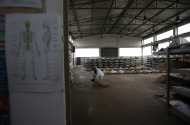
  • Bosnian technical worker Zlatan Music inspects the personal belongings of victims whose bodies were exhumed from the Tomasica mass grave at the Sejkovaca identification center, near the Bosnian town of Sanski Most, 260 kilometers (162 miles) northwest of Sarajevo ,on Wednesday, April 16, 2014. (AP Photo/Amel Emric)View PhotoBosnian technical worker Zlatan Music inspects the personal belongings of victims …
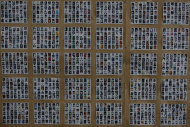
  • Bosnian technical worker Zlatan Music inspects the personal belongings of victims whose bodies were exhumed from the Tomasica mass grave at the Sejkovaca identification center, near the Bosnian town of Sanski Most, 260 kilometers (162 miles) northwest of Sarajevo ,on Wednesday, April 16, 2014. (AP Photo/Amel Emric)View PhotoBosnian technical worker Zlatan Music inspects the personal belongings of victims …


Posted by Zazika at Wednesday, April 16, 2014 No comments:
Email ThisBlogThis!Share to XShare to FacebookShare to Pinterest
Labels: serious non-medical

Saturday, April 12, 2014

Save the Children UK video


Posted by Zazika at Saturday, April 12, 2014 No comments:
Email ThisBlogThis!Share to XShare to FacebookShare to Pinterest
Labels: serious non-medical

Wednesday, April 09, 2014

A good man in Rwanda

This article has moved me to tears.

http://www.bbc.co.uk/news/special/2014/newsspec_6954/index.html

A good man in Rwanda

Twenty years ago, Rwanda descended into the madness of genocide. UN peacekeepers were stretched to breaking point – but one stood out, taking huge risks to save hundreds of lives.As Rwanda plunged into genocide in 1994, one UN officer took huge risks to save hundreds.

By Mark Doyle

 
This is the story of the bravest man I have ever met.
I’ve covered many wars and seen many acts of courage. But for sheer grit and determination I’ve never known anyone to compare with Capt Mbaye Diagne, a United Nations peacekeeper in Rwanda.
I was there in 1994, when 800,000 people were killed in 100 days, and I returned to reconstruct the story of this remarkable, charismatic officer from the west African state of Senegal.
The country plunged into war and genocide on 6 April 1994, when the plane carrying the Rwandan president, a member of the majority Hutu population, was shot down. Everyone on board was killed. Within hours Hutu extremists seized power and a tidal wave of murder was unleashed against the minority Tutsi population, and anyone prepared to defend them.
Genocide memorial, Kigali, 2014
The army came for Prime Minister Agathe Uwilingiyimana that first night.
As gunfire rang out, her five children, the youngest just three, were bundled through a chain link fence to be hidden in a neighbour’s house.
The children were cowering in the brick-built bungalow, occasionally peeping out of the window, when they spotted soldiers looking for their parents.
“There was more gunfire," says Marie-Christine, the prime minister's daughter, who was 15 at the time.



Then we heard the soldiers scream for joy. And after that there was nothing but an eerie silence.”

Agathe Uwilingiyimana was a moderate Hutu, not a Tutsi, but she was killed because she was ready to share power with them. Had the killers found the children they would have been slaughtered too.
Marie-Christine Umuhoza, Lake Geneva, 2014
Hours later, when UN soldiers arrived to pick up UN aid workers from the compound behind the prime minister’s residence, they discovered Marie-Christine and her brothers still hiding in the bungalow.
A fierce argument broke out about what to do with the children. It was not clear that the UN soldiers were authorised to move them, says Adama Daff, one of the aid workers, but “on humanitarian grounds we definitely could not leave them there”.
It was extremely dangerous to travel anywhere. Roadblocks manned by Hutu killers had already appeared, and the armoured personnel carriers which were supposed to have taken UN aid workers to safety had not shown up.
In the end, Daff says, it was decided that Capt Mbaye, an unarmed military observer, would take the children in his unarmoured car to the relative safety of the nearby UN-guarded Hotel des Mille Collines.
Romeo Dallaire, Ottawa, 2014
“He decided to load the kids up,” says Gen Romeo Dallaire, the Canadian commander of the small and poorly equipped UN force. “He hid them under a tarpaulin and just drove like stink.”



The gutsiness of that. There are no limits to describe how gutsy. It’s Victoria Cross-type action.”

They were the first of many people Mbaye took to the Hotel des Mille Collines - an unremarkable edifice of glass and concrete set on a hill overlooking the capital Kigali, but one of the few sanctuaries for Tutsis in the city.
Capt Mbaye Diagne was in his mid-30s, from a small village in northern Senegal, and a man of immense charm. Tall, gap-toothed and easygoing in Aviator sunglasses, his humour put people at their ease even in one of the darkest chapters of modern history.

2. No refuge
The first, bloody days of the genocide felt like pandemonium.
There was hot lead flying in all directions and bodies lying, sometimes piled up, on the sides of the roads.
The terrifying roadblocks were mainly manned by the Hutu Interahamwe militia. The word means “those who work together”- and the work was killing Tutsis with machetes, knives and sticks. I saw one man attack another in the head with a screwdriver.
Radio stations urged them on, calling for the death of Tutsi “cockroaches”.
Sainte Famille church, Kigali, 2014
The shooting down of the president’s plane had rekindled a civil war between the government army and rebel forces of the Rwandan Patriotic Front (RPF) which had been briefly on hold following a tentative peace deal. Led by the Tutsi Paul Kagame, the RPF was advancing on the capital, saying it would stop the massacre.
In between the two sides was the beleaguered UN force. Its vehicles were sometimes attacked by Hutus - especially if the militia thought there were Tutsis inside them.
Within the first 48 hours, a lot of the unarmed military observers like Mbaye - especially those outside the capital - disappeared. “It took us nearly a month to find some who had gone to different countries,” says Dallaire. “Some ended up in Nairobi before we knew where they were.”
With virtually no-one to defend them, tens of thousands of Tutsis sought refuge in churches, but even here they were not safe. One of them, Concilie Mukamwezi, went with her husband and children to the Sainte Famille church, a large religious compound in the centre of Kigali. She remembers her time there with digital clarity.
“I had just bought some laundry soap from a stall when a priest in military uniform came up to me,” she says.
“He had four militiamen with him and he was armed with a Kalashnikov rifle, a pistol and grenades.
“This priest accused me of being a collaborator with the rebels.



He pointed his Kalashnikov at me like this,” she says, picking up a stick from the ground and holding it up like a rifle, “and he said he was going to fire.”

Concilie Mukamwezi at the church, 2014
Incredible though it may seem, some Hutu clergy were collaborating in the genocide, and some were even taking part.
One of Mbaye’s jobs was to be the eyes and ears of the UN mission, and he made it his business to check occasionally on the people sheltering at Sainte Famille.
He knew Concilie by sight because before the genocide she had worked at the office of the national telephone company, Rwandatel, where he paid his phone bills. And by coincidence he happened to walk into the church compound at her moment of need.
“Captain Mbaye ran over and stood right between the priest and I,” says Concilie. “He shouted, ‘Why are you killing this woman? You must not do this because if you do the whole world will know.’” The priest backed down.
There was no large-scale killing inside the Sainte Famille compound, partly as a result of the efforts of Mbaye and the other UN peacekeepers - although plenty took place just outside.
In many churches where people had taken sanctuary, soldiers and militiamen broke in and massacred them in the pews.
Sainte Famille church, Kigali, 2014
Concilie Mukamwezi at the church, 2014

3. Flight
Other desperate Rwandans attempted to take advantage of rescue operations launched for the country’s expat community.
Ancilla Mukangira, a Rwandan working for a German aid agency, made her way to the American Club in the mistaken belief that the Americans would give her a place in one of the vehicles due to leave the country.
“I went in to register for the convoy,” she tells me outside the old club, which is today a Chinese restaurant. “But they said no Rwandans were allowed, and told me to leave.”
Ancilla was standing, crying, on the pavement outside, when Mbaye approached her.
“What are you doing here?” he asked. “If they see you they will kill you.”
Ancilla Mukangira, Kigali, 2014
She told him she had been kicked out. He was appalled, and could barely believe it, she says, but then offered to help her himself.
“Mbaye was shocked by the behaviour of the Wazungu [whites],” says Andre Guichaoua, a French academic staying at the Mille Collines hotel, who got to know Mbaye well in the first few days of the genocide.
French, Belgian and Italian troops were flying into Kigali - but only to save their own nationals.



For a man who was a UN soldier this evacuation of Europeans by European soldiers was an absolute scandal.

“Because if you had put the French and Belgian soldiers alongside the United Nations troops it would have been perfectly possible to confront the army and militia who were directly involved in the massacres," Guichaoua says.
“There was no co-ordination - and Mbaye was deeply horrified by this.”
In fact, there was very little co-ordination even within the UN system. While officers like Mbaye were bravely protecting those they could, UN bosses in New York were still arguing how - or even if - to support them. Soon after hostilities began they actually reduced the number of UN troops on the ground from 2,500 to less than 300.
The US, meanwhile, was determined to avoid putting boots on the ground. It was just six months after the humiliation of its forces in Somalia when 18 US rangers were killed in an incident which became known as Black Hawk Down.
Hotel des Milles Collines, Kigali, 2014
So Mbaye drove Ancilla Mukangira to the Hotel des Mille Collines, past the militia men who were waiting at the gate to kill the Tutsis inside.
He told her to stay in his room and not open the door to anyone, returning only late at night, with an extra mattress for her to use.
“He saw me reading my Bible,” Ancilla remembers.



He said I should pray for my country, as awful things were happening.”

Ancilla Mukangira, Kigali, 2014
Hotel des Milles Collines, Kigali, 2014

4. The day he saved my life
I had got to know Mbaye a little myself. Soldiers are normally wary of journalists, but, in this, as in other ways, he was different.
One day, we drove together in his white UN car to gather information about an orphanage in a suburb of the city called Nyamirambo, where it was believed several hundred vulnerable children might be hiding.
Mbaye chatting to journalists - including Mark Doyle (r)
On our way there, we were stopped at a militia roadblock. One of the militiamen walked over to the car and leaned through the window holding a Chinese stick grenade. It looked like an old-fashioned sink plunger, but instead of having a rubber sucker on the end of a stout stick, it had a bomb.
He waved it at me.
“Who’s this Belgian?” he asked menacingly.
The militia considered Belgians, the former colonial power in Rwanda, to be their enemy. They had recently killed 10 Belgian soldiers, who were part of the UN force, calculating that this would make the entire Belgian UN contingent leave Rwanda – which it did.
I was terrified I was about to be killed, but Mbaye looked at the man, smiled, and cracked a joke.
“I’m the only Belgian in this car. See?” he said, pinching some of the jet-black Senegalese skin on his arm. “Black Belgian!”
The joke broke the tension of the moment. Mbaye then ordered him out of the way, the militiaman instinctively obeyed - and we drove on.
Sharing a joke with Babacar Faye
“He loved joking with people, he loved talking,” says one of his former comrades in the UN mission, Babacar Faye, now a colonel in the Senegalese army.



He used his sense of humour to talk his way through the roadblocks.”

Mbaye was a devout Muslim, but he carried alcohol in his UN 4x4 to buy the lives of people he was taking through the deadly checkpoints.
“In his car, he would often have cases of beer, bottles of whisky and lots of packets of cigarettes,” says Faye. “And he always had wads of cash.”
I once saw a list of names on a scrap of paper that had fallen out of his pocket. It was a list of first names –“Pierre”, “Marie’ - with sums of money written next to them - $10, $30 and so on.
These were his records – the amounts he had paid, often on someone else’s behalf, to get people through the checkpoints.
Col Faye, Dakar, 2014
He sometimes even gave away his military food rations – and when his colleagues found out, they donated theirs to add to the valuable stash on the back seat of his car.
“When he was stopped at these roadblocks, the militiamen would say ‘Boss, I’m hungry’ or ‘Boss I’m thirsty’ so he’d give them a cigarette, or if it was one of the militia chiefs he’d give a beer or a whisky,” says Faye.
“This allowed him to go everywhere without making the militiamen too angry. And that’s how he saved people the militia wanted to kill – five or six people in his car at a time.”
Mbaye chatting to journalists - including Mark Doyle (r)
Sharing a joke with Babacar Faye
Col Faye, Dakar, 2014

5. Escape attempt
As time went on, the war split Kigali into two zones – one controlled by the government, the other by the RPF.
The Hotel des Mille Collines was in the government-controlled zone, right next to a barracks where some of the militia leaders were based. But thanks to its armed UN guards, many Tutsis and moderate Hutus did what they could to get inside. Most had to have money or contacts.
The prime minister’s children were smuggled out of the hotel after a few days – hidden under suitcases in the back of a UN vehicle. They were taken to the airport and flown to safety, still dressed in the pyjamas they were wearing when they fled their home.
But more and more people arrived at the hotel and conditions steadily worsened. Water supplies were cut off, forcing those sheltering there to drink water from the swimming pool. At first they would boil it, but after the power was cut too, they couldn’t even do that.
On one occasion Mbaye and other UN officers tried to organise a convoy of UN trucks from the Mille Collines to the airport. A doctor, Odette Nyiramilimo was on one of the lorries with her family, while Mbaye was in the lead vehicle.
The convoy made it out of the hotel gates, but it only got a few hundred metres down the road before it was stopped by a crowd of militiamen.
A government propaganda radio station had got hold of the list of the people in the lorries, and was reading it out on air, whipping the militia into a frenzy.
“They were trying to pull us off the lorries,” recalls Dr Nyiramilimo, “shouting ‘Kill the cockroaches!’
“Then Captain Mbaye ran up. And he stood between the lorry and the militiamen holding his arms out wide.



He shouted, ‘You cannot kill these people, they are my responsibility. I will not allow you to harm them – you’ll have to kill me first.’”

Jump media player
Media player help
Out of media player. Press enter to return or tab to continue.
Eventually, Mbaye, along with other Senegalese officers, dissuaded the militia from killing the people on the convoy. But the crowd of militiamen was too big to drive through so they had to turn the convoy back to the hotel. They had not been able to get to the airport and out of the country, but they were alive.
Back at the Mille Collines, while the doctor was giving first aid to passengers who had been dragged from the vehicles and attacked, Mbaye came up to her.
“He seemed shocked,” Dr Nyiramilimo says. “He was saying, ‘They almost killed you, you know, they really wanted to do it.’ And he was upset – he was almost crying.



What really struck me was that he seemed far more worried about us than he had been about himself. He was a hero.”

Dr Nyiramilimo and Ancilla Mukangira eventually left the hotel in later convoys. The UN organised “swaps”, with Tutsis trapped on one side of the front line exchanged for Hutus stranded on the other. In this way thousands were saved.

6. A final roadblock
We will never know exactly how many people owe their lives to Mbaye.
His old friend Col Faye puts it at “400 or 500, minimum”. He believes all of the people in the Hotel des Mille Collines would have been killed had it not been for Mbaye’s pivotal role in defending it.
An official estimate by the State Department in Washington, which in 2011 honoured Mbaye with a Tribute To Persons Of Courage certificate, says the figure is “as many as 600”.
But the American Fulbright Scholar Richard Siegler, who lives in Rwanda and plans to publish a book on Mbaye, thinks the correct figure may be 1,000 or more.
“The full extent of Captain Mbaye's actions has yet to be recognised, because those who saw him act only saw a small part of what he was doing,” Siegler says.



When you put everything he did together, it becomes clear that this was one of the great moral acts of our times.”

It would be wrong to suggest that Mbaye was the only one to have saved lives in Rwanda in 1994 - there were countless cases of extreme bravery by Rwandans themselves.
But in all of the years since the genocide, researchers have pored over the details of what happened, and none has found anyone involved in as many rescues as Capt Mbaye Diagne.
His luck finally ran out on the morning of 31 May 1994.
By this time the RPF had the upper hand but government forces were making a last stand in central Kigali. Almost every day there were big battles in the city – fights so intense that the sounds of individual guns firing merged together to make a deafening noise like rolling thunder.
It was on one of these days that Mbaye was asked to take an important written message from the head of the government army, Augustin Bizimungu, to the UN commander, Romeo Dallaire, who was based in the zone now held by the RPF.
Mbaye would have to leave the government-controlled sector by driving through a government army checkpoint.
He stopped at the checkpoint and a mortar round exploded on the road a short distance from his car.
Shrapnel tore through the bodywork.
Mbaye was hit and died instantly.
Jump media player
Media player help
Out of media player. Press enter to return or tab to continue.
“It was a very, very difficult day,” says Dallaire, who is now a senator in the Canadian Parliament. “[There were] so many, but it stood out because we lost one of those shining lights, one of those beacon-type guys who influences others.”
Mbaye was part of a small group who had been willing to risk their lives to save others, says Dallaire.
“He had a sense of humanity that went well beyond orders, well beyond any mandate.



He moved at least half a pace faster than everybody else.”

And he had been about to go home.
Mbaye and his wife, Yacine
“There are only 12 days left before my part in this mission ends,” he had told his wife, Yacine, on the phone three days before he was killed. “Then I will be back in Senegal. So you must pray for us.”
In that last call home to Dakar, he talked a lot about death. “That really upset me,” says Yacine. “He never used to talk like that before. I think the things he saw over there deeply affected him.”
Their two children, a boy, Cheikh and girl, Coumba, were just two and four years old when their father died. It would be two years before Yacine could bring herself to tell them the truth. “Daddy will be home when his mission ends,” she would tell them.
I asked Yacine how she had held the tragedy inside her and not shared it with her children.
“Yes, it was hard, but they would not have understood,” she says. "It was the right thing to do – to protect them from it until they could understand.”
Yacine Diagne, Dakar, 2014
The daughter of the assassinated prime minister, Marie-Christine Umuhoza, is now married with two children of her own.
She and her brothers were flown to France, but the country which had provided a home for the wife and family of the murdered president rejected the children of the murdered prime minister. Instead they ended up as refugees in Switzerland.
Marie-Christine lives in Lausanne, where she works as a psychiatric nurse. She had never spoken publicly about the events of 1994 before, but she told me her chilling tale with great poise and dignity.
She seems to have been able to put a tragic part of her life to one side and move on.
“When I agreed to speak to you, I did it in part so I could pay tribute to the memory of Captain Mbaye,” she says.



He is – he was – a good person. I owe him my life. If he hadn’t been there, I wouldn’t be here now.”

I heard about Mbaye’s death after noticing an unusual amount of chatter on the UN walkie-talkie network. I heard soldiers talking about a serious incident at a government roadblock in which a UN military observer may have been killed.
“Oh God, I hope it’s not Mbaye,” said a UN aid worker. But he was in denial – he knew it was Mbaye.
I rushed to the roadblock with a Canadian UN officer who also knew but couldn’t bring himself to say it.
When I found the car the body had been taken out. There was blood on the seat and in the footwell.
Cheikh, Yacine and Coumba Diagne, Dakar, 2014
The next day, when his body was being taken to a plane at Kigali airport for repatriation to Senegal there was no coffin available – the UN mission was operating on such a shoestring, and had been so abandoned by the rest of the world, that Mbaye was wrapped in a large piece of the blue plastic sheeting the UN normally uses for sheltering refugees.
A UN flag was placed on top.
Just before the body was loaded, one of the other Senegalese military observers, Capt Samba Tall, approached me.
“I am a soldier,” Capt Tall said, “but you are a journalist. You must tell the story of Capt Mbaye Diagne.”
Then Capt Tall and I both broke down in tears.
Posted by Zazika at Wednesday, April 09, 2014 No comments:
Email ThisBlogThis!Share to XShare to FacebookShare to Pinterest
Labels: history, serious non-medical

Sunday, April 06, 2014

Blueberry, lime and elderflower drizzle cake

225g self-raising flour
  • 75g ground almonds
  • 250g butter
  • 250g caster sugar
  • 6 tbsp granulated sugar
  • 4 large eggs
  • 1 tsp vanilla extract
  • 1 and a half limes, juice and zest
  • 2 tbsp whole milk
  • 150g blueberries
  • 100ml elderflower cordial
  • Icing sugar to decorate
  • (makes approx 12-16 squares)

    This cake is a really easy one to make; you start with a classic sponge mix. Preheat your oven to 180C and grease and line a 22cm square cake tin. Cream the butter and caster sugar together and then beat in the eggs until the mixture is no longer lumpy. You can do this in a food processor or the old-fashioned way with a wooden spoon (great for toning arms!). Sift in the flour and the almonds a little at a time and combine until smooth. Then add the milk, vanilla and the juice and zest from one of the limes.

    Pour into the tray and scatter over the blueberries. (Blackberries or raspberries would work equally well for this recipe.) Bake for 30 minutes, remove from the oven and leave in the tin to cool. Mix together the elderflower cordial, granulated sugar and zest and juice of the half lime, and then pour over the warm cake. When the cake has cooled, turn out of the tin and cut into squares.
    When you cut the cake you’ll get a gorgeous purple layer of blueberries, and the lime gives it a real zing. If left to stand for long enough the drizzle will sink through the cake, making each bite even more delicious and gooey. Keep in an airtight tin and take to work for some real brownie points (or keep at home and eat the lot yourself).
    Posted by Zazika at Sunday, April 06, 2014 No comments:
    Email ThisBlogThis!Share to XShare to FacebookShare to Pinterest
    Labels: recipe's i'd like to try

    Saturday, April 05, 2014

    The debate on London's Skyline

    http://www.theguardian.com/cities/2014/mar/29/london-skyline-lack-of-consultation

    London is being transformed with 230 towers. Why the lack of consultation?

    An explosion of high-rise buildings will change London forever. Now 80 public figures, shocked at the scale of the plans, are demanding a say in the way the city is reshaped
     
    Rowan Moore, architecture critic
  • The Observer, Saturday 29 March 2014 21.46 GMT
  • When the appearance of a great city is about to be radically transformed, it is a good idea for its citizens to be shown what is going to happen and have a say in it. It is also a good idea if the city's government has a vision, or at least an overview, of what is happening.

    Neither of these applies to the wave of towers about to hit London. There are plans for more than 230, at the last count. They range in height from 20 storeys to more than 60, in central and suburban locations. Yet it has taken a privately funded organisation, New London Architecture, to discover this number. When Kit Malthouse, deputy mayor for business, was presented with this figure, he was not only ignorant of it, but denied it could be possible.

    On these pages we show the cumulative effect of these planned towers on key locations along the Thames, where several of the proposals are concentrated. The images are of those that are known: many more can be expected in the coming months and years. It is the first time that the future skyline has been shown to this extent, even though the technology is there to do so.

    Today we also publish a statement signed by scores of leading figures in culture, politics and business, and societies representing citizens. They include architects who have won the profession's highest awards, contemporary artists, property developers, MPs, authors and the heads of colleges and museums. These are not Luddites or fogeys, they are not enemies of business or of the new, but they share simple shock at the thoughtlessness with which change on this scale is happening.

    Here's another good idea: buildings in cities should not be designed in isolation, but in relation to the places in which they are set, whether these are views to and from world heritage sites, or the fabric of adjoining streets. Together with its present and future neighbours, new development should make accessible public spaces that are a pleasure to inhabit – the effects of tall buildings are as important at ground level as they are in the sky. And the larger and more prominently placed a building is, the greater the care that should be taken over its design.

    Nobody could go to the places already being shaped by towers – Elephant and Castle, Vauxhall or Stratford High Street, a discus-throw from the Olympic Park – and say that these are great places to linger, or that the tall buildings now rising there enhance the experience. Images of these places in the future, when further skyscrapers will jostle for attention, suggest more of the same. New urban zones are being created with no overall idea of how the parts contribute to the whole, of the places that are being made at their base.

    Rather, new London tower design tends to go out of its way to be as assertive and architecturally antisocial as possible. Strata SE1 in Elephant and Castle, with its slashed rooftop, randomised aluminium cladding patterns and bulbous form, seems to be setting out to be as hostile as possible to any future neighbour. In Stratford the fashion is for arbitrary clashing colours – another idea that kills the prospect of making coherent public places.

    Nor, when you get close to a building such as St George's Tower in Vauxhall, would you say that you are in the presence of quality. Its details clash and its cladding looks cheap and plasticky. There is no great reason to believe that these surfaces will age well. Images of proposed future projects, such as the Quill in Bermondsey and 1 Merchant Square in Paddington, suggest little improvement in the future.

    Combined with frantic attempts at individuality is a profound sameness. These projects tend to use the same type of cladding and floor layouts. It is sometimes said that London needs skyscrapers to make an "iconic" statement on the world stage, but these developments make it look less distinctive. And if the city tries to engage in the global race for height, it can only lose. It is outpaced by the likes of Shanghai and Dubai, the height of whose Burj Khalifa is 2.7 times that of the Shard.

    If towers can sometimes look dramatic and impressive, they also bring drawbacks. They are inflexible, expensive to run and maintain and consume money, space and resources on lifts, air conditioning and structure that lower buildings do not require. Above a certain height such simple pleasures as opening windows and outdoor space become difficult. Towers disconnect residents from their surroundings.

    Overcoming these issues requires effort in design, effort that is hard to see here. It was decided in the 1970s that councils should no longer build high-rise blocks for families, particularly where there were not enough open spaces and communal facilities. Those now being built are for the higher end of the market, but the lessons of the past have not been learned.

    The majority of the tall buildings now proposed are residential. There is, of course, an acute shortage of homes in London, but stacks of high-rise, high-price flats are not what the city needs. In a recent Ipsos Mori poll commissioned by New London Architecture, a majority of Londoners said they would not want to live in towers. The transformation of the skyline is not driven by serving their needs, but by a bubble of overseas investment in high-end residential property. Many of these flats are likely to be left empty.

    The best thing about these buildings is that, under existing planning policy, developers must make a contribution to affordable housing, which can be spent at another location. But it would be possible to build developments that are both lower and better-designed and still achieve this benefit.

    We have got to this point through several factors. Early in Tony Blair's government, a taskforce led by Lord Rogers of Riverside produced a report on the "Urban Renaissance", arguing for using land more effectively and making cities more vibrant through higher densities, achieved with the help of good design and quality public spaces. As mayor of London, Ken Livingstone employed Rogers as an adviser and built these ideas into the London Plan, which guides development. The plan, and other policy statements, stress that towers are acceptable only if they "are well-designed and in the right place".

    What we have now is a bastardisation of Rogers's ideas. "Density" has been translated into height, and the pieties about design and siting are almost meaningless. Significant decisions have blown holes in such policies as exist. John Prescott and Hazel Blears, when they were the ministers responsible, overturned the advice of planning inquiries into key projects. The City of London, which had a plan to confine tall buildings in a cluster around the Bank of England, permitted 20 Fenchurch Street, aka the Walkie Talkie, which stands outside it.

    Boris Johnson, when first running for London mayor, vowed he would reverse Livingstone's friendliness to building high and prevent a "Dubai-on-Thames", but its creation has accelerated on his watch. The communities secretary, Eric Pickles, has told the Architects Journal: "We attach great importance to good design of buildings and neighbourhoods and have empowered communities so they can shape developments to reflect local needs."

    What this means in practice is that south London boroughs such as Southwark, Lambeth and Wandsworth readily give permission for tall buildings south of the river. They do this so they can collect contributions to affordable housing and because they lack the resources to argue for long with well-financed developers. The wall of towers forming along the river is a direct expression of this.
    But buildings of this prominence are a matter not just for boroughs, but for the city, the country and, given London's international importance, the world. For this reason Johnson has the power to intervene, but doesn't, much. Pickles pleads his love of communities, but, wanting to favour developers, he stands back.

    So what should be done now? Peter Murray of New London Architecture has proposed a mayoral London Skyline Commission, in which experts would scrutinise the quality of new proposals and guide developers. He also wants a publicly accessible digital model of the city, which would enable everyone to see the effects of any planning application. Both would be welcome steps, but they don't go far enough. Murray's commission sounds like a (possibly improved) version of the Commission for Architecture and the Built Environment, which has existed for 15 years and is now part of the Design Council, during which London's planning has got into this state.

    The city needs a clearer, more precise framework, one that states where height is acceptable and where not. It can identify opportunities for vertical growth as well as restrictions. Something like this exists already, in the rules controlling strategic views of St Paul's and the Palace of Westminster. The problem is that, where these rules do not prevail, there is often havoc.

    Such a framework would be more efficient than the current system, where it has taken 10 years, three architectural practices, and untold millions of professional and legal fees, for the proposed rebuilding of Elizabeth House in Waterloo to be permitted. New York has applied strict rules to the building of skyscrapers for nearly a century, during which it became the world's most dynamic city – so rules are not bad for business.

    It is not easy to work out the right policies for London. In the coming weeks the Observer, our Cities website and the Architects' Journal will develop the debate. But this effort is essential: the alternative is to accept that civic democracy is powerless to influence the effects of financial speculation.
     
    Posted by Zazika at Saturday, April 05, 2014 No comments:
    Email ThisBlogThis!Share to XShare to FacebookShare to Pinterest
    Labels: London

    Wednesday, March 19, 2014

    Solar storm

    What bothers me with this story -
    1 - A fairly dramatic tone for an event that happened 1.5 years ago. Did they only find out about it now?
    2 - They would be utterly powerless to do anything about it if Earth was in the way of this solar storm. What could there possibly be to 'prepare for', other than mass panic??
    3 - By the end of the article, I was actually very glad that there isn't anything that could be done about it, because it seemed like certain scientists would have been keen to move the Earth into the path of solar storm just to see what would happen (Luhmann said: "Some of us wish Earth had been in the way; what an experiment that would have been."). Scary.

    http://uk.news.yahoo.com/earth-narrowly-missed-catastrophic-solar-superstorm-equal-billion-114552344.html#hhB2erw

    'Earth Narrowly Missed Catastrophic 'Solar Superstorm' Equal to a Billion Hydrogen Bombs

    By Hannah Osborne | IB Times – 7 hours ago

    Earth very narrowly missed a catastrophic "solar superstorm" that would have seen satellites disabled, electronic devices disrupted and would have wreaked havoc on the electric grid.
    According research published in Nature Communications, scientists at University of California, Berkeley, together with experts from China, have found Earth narrowly dodged a "huge magnetic bullet" in July 2012.
    This was thanks to the Earth's position on the other side of the sun from where the eruptions took place.
    The study looks at a rapid succession of coronal mass ejections from the Sun that sent a pulse of magnetised plasma towards Earth's orbit.
    Had the eruptions taken place just nine days earlier, the effect on Earth would have been "tremendous", enveloping the planet in magnetic fireworks that match the largest magnetic storm ever recorded.
    The storm would have matched the Carrington Event, which took place in 1859 and knocked out communication systems and power lines across the US. During the event, the Northern Lights were visible as far south as Hawaii.
    One of the research leaders, Janet G Luhmann, said: "Had it hit Earth, it probably would have been like the big one in 1859, but the effect today, with our modern technologies, would have been tremendous."

    Ying D Liu, National Space Science Center of the Chinese Academy of Sciences in Beijing, added: "An extreme space weather storm – a solar superstorm – is a low-probability, high-consequence event that poses severe threats to critical infrastructures of the modern society. The cost of an extreme space weather event, if it hits Earth, could reach trillions of dollars with a potential recovery time of four to 10 years.

    "Therefore, it is paramount to the security and economic interest of the modern society to understand solar superstorms."
    Last year, a study estimated the cost of a magnetic storm similar to the Carrington Event would cost $2.6tn (£1.5tn) worldwide.
    In their study, the researchers found that a huge coronal mass ejection on 22 July propelled a magnetic cloud towards Earth at 2,000km/s, four times faster than a normal magnetic storm.
    Luckily, the Earth and other planets were on the other side of the Sun at the time of the eruption, however. The team found that the solar superstorm was from two simultaneous coronal mass ejections that released the energy equal to a billion hydrogen bombs.
    Luhmann said: "Some of us wish Earth had been in the way; what an experiment that would have been."
    Discussing solar events such as these, she added: "People keep saying that these are rare natural hazards, but they are happening in the solar system even though we don't always see them. It's like with earthquakes – it is hard to impress upon people the importance of preparing unless you suffer a magnitude nine earthquake."'


    In other advice....


    Posted by Zazika at Wednesday, March 19, 2014 No comments:
    Email ThisBlogThis!Share to XShare to FacebookShare to Pinterest
    Labels: cautionary tale, science

    Night shift

    From the ever wonderful medical blog lifeinthefastlane.com - an emergency medicine registrar and mother movingly describes why she doesn't mind working the night shift. - night shift paying it forward/


    This was followed up by another article by the same author on the practicalities and difficulties of working the dark hours.
    Posted by Zazika at Wednesday, March 19, 2014 No comments:
    Email ThisBlogThis!Share to XShare to FacebookShare to Pinterest
    Labels: life, medicine, serious medical musings

    Thursday, March 06, 2014

    A realistic portrayal of A+E

    http://www.theguardian.com/society/video/2014/mar/04/why-doctors-leaving-nhs-inside-britains-busiest-a-and-e-video
    Posted by Zazika at Thursday, March 06, 2014 No comments:
    Email ThisBlogThis!Share to XShare to FacebookShare to Pinterest
    Labels: medicine, serious medical musings

    Sunday, February 02, 2014

    article - for the love of money.

    http://www.nytimes.com/2014/01/19/opinion/sunday/for-the-love-of-money.html?_r=0

  • For the Love of Money

    By SAM POLKJAN. 18, 2014
     
     
    IN my last year on Wall Street my bonus was $3.6 million — and I was angry because it wasn’t big enough. I was 30 years old, had no children to raise, no debts to pay, no philanthropic goal in mind. I wanted more money for exactly the same reason an alcoholic needs another drink: I was addicted.
    Eight years earlier, I’d walked onto the trading floor at Credit Suisse First Boston to begin my summer internship. I already knew I wanted to be rich, but when I started out I had a different idea about what wealth meant. I’d come to Wall Street after reading in the book “Liar’s Poker” how Michael Lewis earned a $225,000 bonus after just two years of work on a trading floor. That seemed like a fortune. Every January and February, I think about that time, because these are the months when bonuses are decided and distributed, when fortunes are made.


    I’d learned about the importance of being rich from my dad. He was a modern-day Willy Loman, a salesman with huge dreams that never seemed to materialize. “Imagine what life will be like,” he’d say, “when I make a million dollars.” While he dreamed of selling a screenplay, in reality he sold kitchen cabinets. And not that well. We sometimes lived paycheck to paycheck off my mom’s nurse-practitioner salary.
     
    Dad believed money would solve all his problems. At 22, so did I. When I walked onto that trading floor for the first time and saw the glowing flat-screen TVs, high-tech computer monitors and phone turrets with enough dials, knobs and buttons to make it seem like the cockpit of a fighter plane, I knew exactly what I wanted to do with the rest of my life. It looked as if the traders were playing a video game inside a spaceship; if you won this video game, you became what I most wanted to be — rich.
     
    IT was a miracle I’d made it to Wall Street at all. While I was competitive and ambitious — a wrestler at Columbia University — I was also a daily drinker and pot smoker and a regular user of cocaine, Ritalin and ecstasy. I had a propensity for self-destruction that had resulted in my getting suspended from Columbia for burglary, arrested twice and fired from an Internet company for fistfighting. I learned about rage from my dad, too. I can still see his red, contorted face as he charged toward me. I’d lied my way into the C.S.F.B. internship by omitting my transgressions from my résumé and was determined not to blow what seemed a final chance. The only thing as important to me as that internship was my girlfriend, a starter on the Columbia volleyball team. But even though I was in love with her, when I got drunk I’d sometimes end up with other women.
     
    Three weeks into my internship she wisely dumped me. I don’t like who you’ve become, she said. I couldn’t blame her, but I was so devastated that I couldn’t get out of bed. In desperation, I called a counselor whom I had reluctantly seen a few times before and asked for help.
     
    She helped me see that I was using alcohol and drugs to blunt the powerlessness I felt as a kid and suggested I give them up. That began some of the hardest months of my life. Without the alcohol and drugs in my system, I felt like my chest had been cracked open, exposing my heart to air. The counselor said that my abuse of drugs and alcohol was a symptom of an underlying problem — a “spiritual malady,” she called it. C.S.F.B. didn’t offer me a full-time job, and I returned, distraught, to Columbia for senior year.
     
    After graduation, I got a job at Bank of America, by the grace of a managing director willing to take a chance on a kid who had called him every day for three weeks. With a year of sobriety under my belt, I was sharp, cleareyed and hard-working. At the end of my first year I was thrilled to receive a $40,000 bonus. For the first time in my life, I didn’t have to check my balance before I withdrew money. But a week later, a trader who was only four years my senior got hired away by C.S.F.B. for $900,000. After my initial envious shock — his haul was 22 times the size of my bonus — I grew excited at how much money was available.
     
    Over the next few years I worked like a maniac and began to move up the Wall Street ladder. I became a bond and credit default swap trader, one of the more lucrative roles in the business. Just four years after I started at Bank of America, Citibank offered me a “1.75 by 2” which means $1.75 million per year for two years, and I used it to get a promotion. I started dating a pretty blonde and rented a loft apartment on Bond Street for $6,000 a month.
     
    I felt so important. At 25, I could go to any restaurant in Manhattan — Per Se, Le Bernardin — just by picking up the phone and calling one of my brokers, who ingratiate themselves to traders by entertaining with unlimited expense accounts. I could be second row at the Knicks-Lakers game just by hinting to a broker I might be interested in going. The satisfaction wasn’t just about the money. It was about the power. Because of how smart and successful I was, it was someone else’s job to make me happy.
     
    Still, I was nagged by envy. On a trading desk everyone sits together, from interns to managing directors. When the guy next to you makes $10 million, $1 million or $2 million doesn’t look so sweet. Nonetheless, I was thrilled with my progress.
     
    My counselor didn’t share my elation. She said I might be using money the same way I’d used drugs and alcohol — to make myself feel powerful — and that maybe it would benefit me to stop focusing on accumulating more and instead focus on healing my inner wound. “Inner wound”? I thought that was going a little far and went to work for a hedge fund.
     
    Now, working elbow to elbow with billionaires, I was a giant fireball of greed. I’d think about how my colleagues could buy Micronesia if they wanted to, or become mayor of New York City. They didn’t just have money; they had power — power beyond getting a table at Le Bernardin. Senators came to their offices. They were royalty.
     
    I wanted a billion dollars. It’s staggering to think that in the course of five years, I’d gone from being thrilled at my first bonus — $40,000 — to being disappointed when, my second year at the hedge fund, I was paid “only” $1.5 million.
    Launch media viewer
    Owen Freeman
    But in the end, it was actually my absurdly wealthy bosses who helped me see the limitations of unlimited wealth. I was in a meeting with one of them, and a few other traders, and they were talking about the new hedge-fund regulations. Most everyone on Wall Street thought they were a bad idea. “But isn’t it better for the system as a whole?” I asked. The room went quiet, and my boss shot me a withering look. I remember his saying, “I don’t have the brain capacity to think about the system as a whole. All I’m concerned with is how this affects our company.”
    I felt as if I’d been punched in the gut. He was afraid of losing money, despite all that he had.
    From that moment on, I started to see Wall Street with new eyes. I noticed the vitriol that traders directed at the government for limiting bonuses after the crash. I heard the fury in their voices at the mention of higher taxes. These traders despised anything or anyone that threatened their bonuses. Ever see what a drug addict is like when he’s used up his junk? He’ll do anything — walk 20 miles in the snow, rob a grandma — to get a fix. Wall Street was like that. In the months before bonuses were handed out, the trading floor started to feel like a neighborhood in “The Wire” when the heroin runs out.
     
    I’d always looked enviously at the people who earned more than I did; now, for the first time, I was embarrassed for them, and for me. I made in a single year more than my mom made her whole life. I knew that wasn’t fair; that wasn’t right. Yes, I was sharp, good with numbers. I had marketable talents. But in the end I didn’t really do anything. I was a derivatives trader, and it occurred to me the world would hardly change at all if credit derivatives ceased to exist. Not so nurse practitioners. What had seemed normal now seemed deeply distorted.
     
     
    I had recently finished Taylor Branch’s three-volume series on the Rev. Dr. Martin Luther King Jr. and the civil rights movement, and the image of the Freedom Riders stepping out of their bus into an infuriated mob had seared itself into my mind. I’d told myself that if I’d been alive in the ‘60s, I would have been on that bus.
     
    But I was lying to myself. There were plenty of injustices out there — rampant poverty, swelling prison populations, a sexual-assault epidemic, an obesity crisis. Not only was I not helping to fix any problems in the world, but I was profiting from them. During the market crash in 2008, I’d made a ton of money by shorting the derivatives of risky companies. As the world crumbled, I profited. I’d seen the crash coming, but instead of trying to help the people it would hurt the most — people who didn’t have a million dollars in the bank — I’d made money off it. I don’t like who you’ve become, my girlfriend had said years earlier. She was right then, and she was still right. Only now, I didn’t like who I’d become either.
     
    Wealth addiction was described by the late sociologist and playwright Philip Slater in a 1980 book, but addiction researchers have paid the concept little attention. Like alcoholics driving drunk, wealth addiction imperils everyone. Wealth addicts are, more than anybody, specifically responsible for the ever widening rift that is tearing apart our once great country. Wealth addicts are responsible for the vast and toxic disparity between the rich and the poor and the annihilation of the middle class. Only a wealth addict would feel justified in receiving $14 million in compensation — including an $8.5 million bonus — as the McDonald’s C.E.O., Don Thompson, did in 2012, while his company then published a brochure for its work force on how to survive on their low wages. Only a wealth addict would earn hundreds of millions as a hedge-fund manager, and then lobby to maintain a tax loophole that gave him a lower tax rate than his secretary.
     
    DESPITE my realizations, it was incredibly difficult to leave. I was terrified of running out of money and of forgoing future bonuses. More than anything, I was afraid that five or 10 years down the road, I’d feel like an idiot for walking away from my one chance to be really important. What made it harder was that people thought I was crazy for thinking about leaving. In 2010, in a final paroxysm of my withering addiction, I demanded $8 million instead of $3.6 million. My bosses said they’d raise my bonus if I agreed to stay several more years. Instead, I walked away.
    The first year was really hard. I went through what I can only describe as withdrawal — waking up at nights panicked about running out of money, scouring the headlines to see which of my old co-workers had gotten promoted. Over time it got easier — I started to realize that I had enough money, and if I needed to make more, I could. But my wealth addiction still hasn’t gone completely away. Sometimes I still buy lottery tickets.
     
    In the three years since I left, I’ve married, spoken in jails and juvenile detention centers about getting sober, taught a writing class to girls in the foster system, and started a nonprofit called Groceryships to help poor families struggling with obesity and food addiction. I am much happier. I feel as if I’m making a real contribution. And as time passes, the distortion lessens. I see Wall Street’s mantra — “We’re smarter and work harder than everyone else, so we deserve all this money” — for what it is: the rationalization of addicts. From a distance I can see what I couldn’t see then — that Wall Street is a toxic culture that encourages the grandiosity of people who are desperately trying to feel powerful.
     
    I was lucky. My experience with drugs and alcohol allowed me to recognize my pursuit of wealth as an addiction. The years of work I did with my counselor helped me heal the parts of myself that felt damaged and inadequate, so that I had enough of a core sense of self to walk away.
    Dozens of different types of 12-step support groups — including Clutterers Anonymous and On-Line Gamers Anonymous — exist to help addicts of various types, yet there is no Wealth Addicts Anonymous. Why not? Because our culture supports and even lauds the addiction. Look at the magazine covers in any newsstand, plastered with the faces of celebrities and C.E.O.'s; the superrich are our cultural gods. I hope we all confront our part in enabling wealth addicts to exert so much influence over our country.
     
    I generally think that if one is rich and believes they have “enough,” they are not a wealth addict. On Wall Street, in my experience, that sense of “enough” is rare. The money guy doing a job he complains about for yet another year so he can add $2 million to his $20 million bank account seems like an addict.
     
    I recently got an email from a hedge-fund trader who said that though he was making millions every year, he felt trapped and empty, but couldn’t summon the courage to leave. I believe there are others out there. Maybe we can form a group and confront our addiction together. And if you identify with what I’ve written, but are reticent to leave, then take a small step in the right direction. Let’s create a fund, where everyone agrees to put, say, 25 percent of their annual bonuses into it, and we’ll use that to help some of the people who actually need the money that we’ve been so rabidly chasing. Together, maybe we can make a real contribution to the world.
     
    Sam Polk is a former hedge-fund trader and the founder of the nonprofit Groceryships


    Posted by Zazika at Sunday, February 02, 2014 No comments:
    Email ThisBlogThis!Share to XShare to FacebookShare to Pinterest
    Labels: cautionary tale, economy, informative, serious non-medical

    Monday, November 25, 2013

    advice for the london underground - in poetry!


    Posted by Zazika at Monday, November 25, 2013 No comments:
    Email ThisBlogThis!Share to XShare to FacebookShare to Pinterest
    Labels: London's little secrets
    Newer Posts Older Posts Home
    Subscribe to: Posts (Atom)

    Pages

    • Home

    Previous posts

    • ▼  2019 (19)
      • ▼  October (1)
        • Twitter thread on Filipino-American History
      • ►  September (5)
      • ►  July (1)
      • ►  March (4)
      • ►  February (5)
      • ►  January (3)
    • ►  2018 (109)
      • ►  December (5)
      • ►  November (1)
      • ►  September (2)
      • ►  August (6)
      • ►  July (8)
      • ►  June (7)
      • ►  May (22)
      • ►  April (9)
      • ►  March (16)
      • ►  February (17)
      • ►  January (16)
    • ►  2017 (99)
      • ►  December (11)
      • ►  November (11)
      • ►  October (5)
      • ►  September (6)
      • ►  August (4)
      • ►  July (16)
      • ►  June (14)
      • ►  May (16)
      • ►  April (8)
      • ►  March (1)
      • ►  February (4)
      • ►  January (3)
    • ►  2016 (125)
      • ►  December (5)
      • ►  November (9)
      • ►  October (4)
      • ►  September (4)
      • ►  August (2)
      • ►  July (13)
      • ►  June (18)
      • ►  May (27)
      • ►  April (8)
      • ►  March (15)
      • ►  February (12)
      • ►  January (8)
    • ►  2015 (32)
      • ►  December (5)
      • ►  November (9)
      • ►  September (4)
      • ►  August (4)
      • ►  July (5)
      • ►  June (1)
      • ►  March (2)
      • ►  February (1)
      • ►  January (1)
    • ►  2014 (43)
      • ►  November (1)
      • ►  October (4)
      • ►  September (5)
      • ►  August (5)
      • ►  July (15)
      • ►  June (1)
      • ►  May (1)
      • ►  April (7)
      • ►  March (3)
      • ►  February (1)
    • ►  2013 (27)
      • ►  November (5)
      • ►  October (3)
      • ►  August (2)
      • ►  July (3)
      • ►  June (7)
      • ►  May (2)
      • ►  April (3)
      • ►  February (2)
    • ►  2012 (72)
      • ►  December (4)
      • ►  November (14)
      • ►  October (5)
      • ►  September (2)
      • ►  August (7)
      • ►  July (5)
      • ►  June (2)
      • ►  May (6)
      • ►  April (4)
      • ►  March (3)
      • ►  February (8)
      • ►  January (12)
    • ►  2011 (42)
      • ►  December (6)
      • ►  October (8)
      • ►  September (1)
      • ►  August (1)
      • ►  June (10)
      • ►  May (1)
      • ►  April (7)
      • ►  March (4)
      • ►  February (2)
      • ►  January (2)
    • ►  2010 (60)
      • ►  December (2)
      • ►  November (2)
      • ►  October (2)
      • ►  September (3)
      • ►  July (1)
      • ►  June (10)
      • ►  May (8)
      • ►  April (10)
      • ►  March (2)
      • ►  January (20)
    • ►  2009 (39)
      • ►  December (3)
      • ►  November (2)
      • ►  October (3)
      • ►  September (6)
      • ►  August (3)
      • ►  July (4)
      • ►  June (3)
      • ►  May (3)
      • ►  April (2)
      • ►  February (5)
      • ►  January (5)
    • ►  2008 (15)
      • ►  December (3)
      • ►  October (1)
      • ►  September (5)
      • ►  July (1)
      • ►  April (5)
    • ►  2007 (58)
      • ►  December (2)
      • ►  October (1)
      • ►  September (1)
      • ►  August (1)
      • ►  July (1)
      • ►  June (7)
      • ►  May (4)
      • ►  April (8)
      • ►  March (13)
      • ►  February (10)
      • ►  January (10)
    • ►  2006 (122)
      • ►  December (11)
      • ►  November (5)
      • ►  October (10)
      • ►  September (3)
      • ►  August (4)
      • ►  July (8)
      • ►  June (11)
      • ►  May (17)
      • ►  April (27)
      • ►  March (18)
      • ►  February (8)

    About Me

    Zazika
    View my complete profile

    Labels

    aging amusing medical musings animation architecture attire bored Borrelia cars cautionary tale clinical decision making clothesmaking comic comment crafty crochet disability dying economy education embroidery ethics exercise faith film finance food+drink fun furniture gardening geography german grief hair health delivery history home design human factors identity illness experience informative inspirational Iraq war Islam knitting language life literature London London's little secrets macrame medical history medical humanities medicine mmc Muslim history nature news NHS nutrition organisation pictures places to visit poem practical productivity psychology quote random recipe's i'd like to try rehabilitation research riddle satire science serious medical musings serious non-medical sewing sleep sports statistics sweets Syrian war system failures technology tempted to try something new and intriguing travel useful med website weather
    Simple theme. Theme images by gaffera. Powered by Blogger.