Showing posts with label Borrelia. Show all posts
Showing posts with label Borrelia. Show all posts
Monday, December 03, 2018


Wednesday, August 01, 2018
UK Lyme disease underestimated
https://uk.yahoo.com/style/cases-debilitating-lyme-disease-could-going-undiagnosed-025400365.html
Cases of debilitating Lyme disease could be going undiagnosed
 Lorna Shaddick, news reporter,Sky News 29 minutes ago
Cases of a bacterial infection that can lead to severe mental and physical problems could be much higher than previously thought, according to a new report.
The National Institute of Health and Care Excellence says the 3,000 cases of Lyme disease reported in the UK each year could be an underestimate, as many people go undiagnosed.
Spread through the bites of small parasites called ticks, its symptoms can be mild at first, but the long-term effects can be devastating.
Sophie Ward from Lancashire knows that all too well. Back in 2008, the then-champion GB youth swimmer enjoyed a family trip to Beijing to watch the Olympics.
But after a visit to a Chinese nature reserve, during which she cuddled a panda, Sophie began experiencing the migraines, muscle pains, infections and food intolerances that have plagued her ever since.
Only now, 10 years later have doctors finally diagnosed the 24-year-old with Lyme disease - probably given to her by a tick on the panda.
"One day you're way up and the next minute you can't get out of bed and you're bedridden," Sophie told Sky News.
"And it makes it very difficult to live. You can't make plans. Social events, activities have to be scaled down to a couple of hours coz they tire you out so quickly.
"And at 24, you know, you think I can travel the world, I should be going out partying, and you can't hack it."
Lyme disease can be hard to spot, since its symptoms are so varied. One of the most common is a pink or red circular "bull's eye" rash around the bite area - but fewer than half of those affected will get one.
Other characteristics such as a high temperature, feeling shivery and tiredness can be misdiagnosed as other conditions such as flu.
Dr Jack Lambert is Professor of infectious diseases at University College Dublin and says tick borne infections are "very common" in the UK and Ireland.
"We need better research, but we need better clinical management, we need better education in GP practices for early identification and prevention and early treatment," he says.
"That way the patients won't develop chronic conditions and there's lots of people out there with chronic conditions. I think we have to have better education of specialists and GPs that the tests are imperfect."
Lyme disease can also affect dogs as well as humans, giving them fever and swollen joints.
The largest UK survey of ticks and tick-borne diseases, the Big Tick Project, looked at more than 12,000 dogs and found that around a third of them were carrying a tick.
Despite that, a national survey showed 47% of dog owners did not know that ticks can spread disease to both dogs and humans.
"Check over your dog every day, especially if you've taken them into an area where you know there are ticks around," says vet James Greenwood.
"So checking over their fur, looking between their paws, around their ears, that's the first thing to do. And if you do find a tick, the key thing to do is to remove it safely and effectively.
Experts say you should take extra care to check for ticks after walking in long grass or wooded areas, even in urban parks and gardens.
Monday, July 09, 2018
Lyme disease/Borrelia article
https://blogs.scientificamerican.com/artful-amoeba/on-the-curious-motions-of-syphilis-and-lyme-disease-bacteria/

On the Curious Motions of Syphilis and Lyme Disease Bacteria
The bacteria that cause syphilis and Lyme Disease have something extraordinary in common: they manage to propel themselves through their environment in spite of the fact their tails are located inside their bodies.
The bacteria that cause syphilis and Lyme Disease have something extraordinary in common: they manage to propel themselves through their environment in spite of the fact their tails are located inside their bodies.
For bacteria, they're also unusually shaped and active. In this movie, you can see the bacteria that cause Lyme Disease moving like living, squirming cavatappi.
Syphilis and Lyme Disease -- which together have two of my very favorite Latin names -- Treponema pallidum and Borrelia burgdorferi -- belong to a group of bacteria called spirochetes that look like squiggles and move like corkscrews. Spirochetes don't just inflict misery on humans and other animals, though. Many of them do just fine on their own in rivers, ponds, lakes, and oceans. Here's one captured from a salt marsh in San Francisco Bay.
Today, we know that only some of them are actually helical like corkscrews, while others like T. pallidum and B. burgdorferi are flat waves like sines and cosines. In this slow-mo video of a tethered B. burgdorferi (the scientists somehow pinned it down) you can see how the bacterial profile briefly flattens as it turns. The first part of the video is in real time. The second slows the action down. Watch the third rotation in particular very carefully.
So how do bacteria that appear so athletic manage their acrobatics with tails planted quite firmly (and seemingly uselessly) inside their bodies?
Whatever their shape, all spirochetes have tails, or flagella, of the same type that other bacteria have: a long helix joined by an L-shaped connecter called a hook to a motor embedded in the cell's membrane. In most bacteria, these tails protrude from the back of their owners into the environment. They are rigid and rotate, powered by the motors at their base. These flagella function much like a corkscrew called a Screwpull -- their rotation generates thrust. In the case of the screwpull, the torque is used to extract a cork from a bottle.
In the case of bacteria, the torque pushes the bacteria forward or pull it backward, like the screws on a submarine or ship.
The many tails of spirochetes -- they usually have several -- are embedded in rows near each end of the organism and coil back around the body, terminating somewhere near the middle. Stripped of their flagella, these bacteria revert to straight rods, so the rigid tails must act like skeletons that bend the bacteria into their characteristic shapes. In this schematic of a flat-wave spirochete, the purple flagella are clustered together into band-like ribbons:
Fig. 1 from Harman et al, 2013. Click image for source.
The ribbons overlap somehow in mid-section of B. burgdorferi. It isn't clear yet whether the two ribbons form a continuous band or whether the ribbons terminate on opposite sides of the cell. This whole bundle is wrapped inside a protective outer membrane (the outer membrane has been omitted in the image above). It fits tightly around the spirochete -- so tight, in fact, that under high magnification it's possible to see that the outer membrane bulges where the flagella pass underneath, a bit like bacterial skinny jeans.
So how do this all this machinery push spirochetes forward? When the two ribbons of flagella turn in opposite directions (one end clockwise, the other end counterclockwise), the spirochete moves in a straight line. Since they are attached at opposite ends, they must rotate in opposite directions for a wave to propagate in the same direction down the length of the cell. In effect, they turn their entire body into one giant flagellum. In this illustration of how it might work, the spirochete slithers by like a sea serpent.
When the flagella spin in the same direction (i.e. both clockwise or both counter-clockwise), the spirochete flexes or bends irregularly, as you saw in the first film of this blog post.
There is fluid -- perhaps like transmission or brake fluid -- in the space between the cell body and the outer membrane in which the bands of flagella lie, and this fluid is vital to movement. It acts as lubricant and a purveyor of the forces acting on the outside of the cell, and without it, the flagella would tangle. Resistance from thick fluids or barriers outside the cell bearing down on the outer membrane are transmitted via the outer membrane and this fluid to the internal flagella, whose slow-down is in turn relayed to their motors, which bog down in response. In this way, the internal propulsion system of a spirochete senses and responds to the outside world.
When the viscosity, or thickness, of the fluid the bacterium is swimming in goes up, B. burgdorferi slows down. That's what you'd expect. But when scientists added chemicals that increase both the viscosity *and* elasticity of the bacterial environment, B. burgdorferi actually sped up. This counter-intuitive result makes more sense when you realize that our flesh is largely a mesh of collagen fibers that responds to bacteria with both elastic and viscous forces. B. burgdorferi bacteria are even able to squeeze through gelatin with pores significantly smaller than their own bodies.
Together, these results suggest that these bacteria may owe their success as pathogens to their ability to worm their way into the tight places of our bodies in a way externally flagellated bacteria cannot. Inside us, they can drive pretty much wherever they want.
Recently, scientists at the Universities of Arizona and Connecticut wanted to know more about the dynamics of B. burgdorferi motors, and whether Lyme Disease bacteria can serve as a good model for T. pallidum. Biologists have never managed to culture syphilis outside the human body, greatly hindering our ability to study it. Based on their models of the motions and physics of these bacteria, published in November inBiophysical Journal, they believe that B. burgdorferi is a reasonably good stand-in for studying T. pallidum movement, with the exception that B. burgdorferi can swim through thicker, more viscous fluids. That's probably because it has more flagella than T. pallidum, and hence, more horsepower.
In this movie, you can compare the motions of the two bacteria for yourself:
The remarkable engineering of these bacteria are probably a major reason spirochetes have been such successful pathogens in humans and other animals. Syphilis and Lyme Disease are better at penetrating our bodies than almost any other organisms. Spirochetes cross barriers that are impenetrable to almost anything else, including basement membranes and the linings of organs like intestines called endothelium that function to keep the kajillions of bacteria in your gut out of the rest of your body. In humans, syphilis and Lyme Disease bacteria easily penetrate the normally sacrosanct blood-brain barrier to infect the central nervous system. Syphilis can invade the placenta and infect an unborn child.
This extraordinary ability is reflected in the symptoms of these brutal diseases. The characteristic bullseye rash of Lyme disease seems to be the result of their penetrative ability, as the spirochetes burrow into the skin and soft tissue of their new host and trigger a destructive inflammatory response radiating from the bite that delivered them. Lyme Disease and syphilis sufferers -- the latter of which have been legion among the great and small in human history, including many people today -- may experience damage to multiple organs, joints, and the brain and nervous system as a result of the same damaging inflammation. In syphilis, the spirochetes seem to be amazingly good and fast at this, managing to find their way into blood, lymph nodes, bone marrow, spleen, and testes in laboratory animals in less than 48 hours. For an organism just a dozen or so micrometers long, which must penetrate countless tough membranes evolved to keep them out with no obvious means of propulsion -- which can, in fact, move only by engaging its whole body in a beautiful but lethal shimmy -- two days from tick to testis ain't bad.
Reference
Harman M., Vig D., Radolf J. & Wolgemuth C. (2013). Viscous Dynamics of Lyme Disease and Syphilis Spirochetes Reveal Flagellar Torque and Drag, Biophysical Journal, 105 (10) 2273-2280. DOI: 10.1016/j.bpj.2013.10.004
Charon N.W., Cockburn A., Li C., Liu J., Miller K.A., Miller M.R., Motaleb M.A. & Wolgemuth C.W. (2012). The Unique Paradigm of Spirochete Motility and Chemotaxis, Annual Review of Microbiology, 66 (1) 349-370. DOI: 10.1146/annurev-micro-092611-150145
Sunday, May 20, 2018
CDC case studies of deaths from Lyme Carditis
https://www.cdc.gov/mmwr/preview/mmwrhtml/mm6249a1.htm
(pdf - https://www.cdc.gov/mmwr/pdf/wk/mm6249.pdf)
Three Sudden Cardiac Deaths Associated with Lyme Carditis — United States, November 2012–July 2013
Weekly
December 13, 2013 / 62(49);993-996
Lyme disease* is a multisystem illness caused by Borrelia burgdorferi, a spirochete transmitted by certain species of Ixodes ticks. Approximately 30,000 confirmed and probable cases of Lyme disease were reported in the United States in 2012, primarily from high-incidence states in the Northeast (Connecticut, Delaware, Maine, Maryland, Massachusetts, New Hampshire, New Jersey, New York, Pennsylvania, Rhode Island, and Vermont) and upper Midwest (Minnesota and Wisconsin) (1,2).† Common manifestations include cutaneous, neurologic, and rheumatologic signs and symptoms. Symptomatic infection of the heart is rare in recognized Lyme disease cases and usually resolves promptly with appropriate antibiotic therapy. Nonetheless, cardiac involvement occasionally can cause life-threatening cardiac conduction abnormalities. During November 2012–July 2013, one woman and two men (ranging in age from 26 to 38 years) from high-incidence Lyme disease states experienced sudden cardiac death and, on postmortem examination, were found to have evidence of Lyme carditis. The three deaths were investigated by the Connecticut Department of Public Health, Massachusetts Department of Public Health, New Hampshire Department of Public Health, New York State Department of Health, and CDC. Donated corneas from two decedents had been transplanted to three recipients before the diagnosis of Lyme disease was established, but no evidence of disease transmission was found. Although death from Lyme carditis is rare, it should be considered in cases of sudden cardiac death in patients from high-incidence Lyme disease regions. Reducing exposure to ticks is the best method for preventing Lyme disease and other tickborne infections.§
Case Reports and Public Health Investigation
Patient 1. In November 2012, a Massachusetts resident was found unresponsive in an automobile after it veered off the road. No evidence of traumatic injury was found. An electrocardiogram (EKG) performed by emergency responders showed no cardiac activity, and the patient was pronounced dead at a nearby hospital. The patient had no serious preexisting medical conditions. No rash was noted at autopsy, although some atherosclerosis was present. Interviews with next-of-kin revealed that the patient had described a nonspecific illness with malaise and muscle and joint pain during the 2 weeks preceding death. The patient lived alone with a dog that was reported to have ticks frequently.
The decedent's corneas and skin, musculoskeletal, cardiac, and vascular tissues were recovered for potential transplantation. The heart was sent to tissue bank A for valve recovery. Microscopic examination of cardiac tissue found extensive myocarditis with mixed perivascular lymphoplasmacytic inflammation suggestive of Lyme carditis. A postmortem serum sample tested at CDC yielded serologic evidence of recent infection with B. burgdorferi, reacting strongly in both whole cell sonicate (WCS) and C6 enzyme immunoassay (EIA), and against all three scored bands (23 kDa, 39 kDa, and 41 kDa) by immunoglobulin M (IgM) Western blot. Western blot testing for immunoglobulin G (IgG) antibodies demonstrated reactivity against four of 10 scored bands (23 kDa, 39 kDa, 41 kDa, and 45 kDa); these serologic findings were consistent with early disseminated Lyme disease.
Histopathologic evaluation of postmortem tissues at CDC also was suggestive of Lyme pancarditis (Figure 1) and abundant spirochetes were observed by Warthin-Starry silver stain (Figure 2). Spirochetes also were detected in the myocardium by immunohistochemistry (IHC). Polymerase chain reaction (PCR) assays detected B. burgdorferi in extracts of formalin-fixed, paraffin-embedded heart tissue based on outer surface protein A, flagellin, and plasminogen-binding protein gene targets. No donor tissues were transplanted.
Patient 2. In July 2013, a New York state resident experienced chest pain and collapsed at home. Cardiopulmonary resuscitation was unsuccessful, and the patient was pronounced dead at a local hospital. The patient's past medical history included a diagnosis of Wolff-Parkinson-White syndrome, a cardiac conduction abnormality. The patient had no known tick contact or rash but was reported to be a hiker. Evidence of hypertensive and atherosclerotic cardiovascular disease was noted at autopsy. The decedent's corneas and skin, musculoskeletal, vascular, and cardiac tissue were recovered for potential transplantation. Examination of cardiac tissue at tissue bank A revealed moderate diffuse, perivascular lymphoplasmacytic pancarditis, similar to that seen in patient 1. Serologic testing at CDC was consistent with recent infection with B. burgdorferi; WCS and C6 EIAs were strongly reactive, IgM Western blot demonstrated strong reactivity to all three scored bands, and IgG Western blot demonstrated reactivity to four scored bands (23 kDa, 41 kDa, 58 kDa, and 66 kDa). Rare spirochetes were identified in cardiac tissue by Warthin-Starry silver stain and IHC; heart tissues tested positive for B. burgdorferi by PCR.
Before diagnosis of B. burgdorferi infection, the decedent's corneas were transplanted to two recipients. The transplanting physicians and cornea recipients subsequently were notified of the donor's infection. Neither recipient 1 nor recipient 2 reported signs or symptoms of Lyme disease or problems with the transplanted cornea. Both recipients elected to receive antibiotic therapy with doxycycline. None of the remaining donated tissues were transplanted.
Patient 3. In July 2013, a Connecticut resident collapsed while visiting New Hampshire and was pronounced dead at a local hospital. The patient had complained of episodic shortness of breath and anxiety during the 7–10 days before death. No rash, arthralgia, or neurologic symptoms were noted. A physician consulted 1 day before death prescribed clonazepam for anxiety; an EKG was not performed, nor were any antibiotics prescribed. The patient lived on a heavily wooded lot and had frequent tick exposure; there was no known history of cardiovascular disease. Autopsy revealed myocarditis, and the medical examiner submitted heart tissues to CDC for evaluation of suspected viral myocarditis. Corneas and skin were recovered for donation, and one cornea was transplanted to recipient 3. No other tissue was transplanted. Recipient 3 was examined 1 week after corneal transplant and was recovering as anticipated. Examination of heart tissues at CDC again demonstrated diffuse mixed perivascular lymphoplasmacytic pancarditis. Warthin-Starry stain revealed spirochetes in the myocardium, and IHC and PCR assays confirmed the spirochete as B. burgdorferi. WCS and C6 EIAs were positive, IgM Western blot was positive for all three scored bands, and IgG Western blot demonstrated reactivity to one scored band (41 kDa).
The eye bank was informed of the Lyme disease status of the donor and the recommendations for therapy. Before notification of the Lyme disease status of the donor, recipient 3 died of unrelated causes. No tissues or serum from recipient 3 were available for evaluation.
Reported by
Gregory Ray, MD, Thadeus Schulz, MD, Wayne Daniels, DO, Cryolife, Inc. Kennesaw, GA. Elizabeth R. Daly, MPH, New Hampshire Dept of Health and Human Svcs; Thomas A. Andrew, MD, New Hampshire Office of the Chief Medical Examiner. Catherine M. Brown, DVM, Massachusetts Dept of Public Health; Peter Cummings, MD, Massachusetts Office of the Chief Medical Examiner. Randall Nelson, DVM, Matthew L. Cartter, MD, Connecticut Dept of Public Health. P. Bryon Backenson, MS, Jennifer L. White, MPH, Philip M. Kurpiel, MPH, Russell Rockwell, PhD, New York State Dept of Health; Andrew S. Rotans, MPH, Christen Hertzog, Linda S. Squires, Dutchess County Dept of Health; Jeanne V. Linden, MD, Wadsworth Center, New York State Dept of Health; Margaret Prial, MD, Office of the Medical Examiner, Orange County, New York. Jennifer House, DVM, Pam Pontones, MA, Indiana State Dept of Health. Brigid Batten, MPH, Dianna Blau, DVM, PhD, Marlene DeLeon-Carnes, Atis Muehlenbachs, MD, PhD, Jana Ritter, DVM, Jeanine Sanders, Sherif R. Zaki, MD, PhD, Div of High-Consequence Pathogens and Pathology; Paul Mead, MD, Alison Hinckley, PhD, Christina Nelson, MD, Anna Perea, MSc, Martin Schriefer, PhD, Claudia Molins, PhD, Div of Vector-Borne Infectious Diseases, National Center for Emerging and Zoonotic Infectious Disease; Joseph D. Forrester, MD, EIS Officer, CDC. Corresponding contributor: Joseph D. Forrester, jforrester@cdc.gov, 970-266-3587.
Editorial Note
This report describes three cases of sudden cardiac death associated with Lyme carditis, with subsequent transplantation of corneas from two of the decedents into three recipients. Only rarely has death been attributed to Lyme carditis (3–6), and review of pathology reports at tissue bank A did not identify any additional confirmed cases among 20,000 cardiac specimens received since 2004. Whether the preexisting heart conditions found in two patients increased their risk for death is unclear.
Borrelia burgdorferi has been shown to affect all layers of the heart, but tends to spare the great vessels and heart valves (7). Inflammation is characteristically diffuse, perivascular, lymphohistiocytic, and plasma cell-rich. Spirochetes can be found within the myocardial cellular infiltrates; IHC and PCR testing can provide additional evidence of infection. Although Lyme carditis usually is present in conjunction with other features of the disease, such as erythema migrans, arthritis, or neurologic disease, it can be observed independently (8). The most common cardiac manifestation is atrioventricular block, which can fluctuate between first, second, and third degree (7,8). Second-degree or third-degree atrioventricular block occurs in approximately 0.8% of all Lyme disease cases reported to CDC (2). Symptoms of atrioventricular block, including lightheadedness, palpitations, shortness of breath, chest pain, and syncope can occur 4 days to 7 months after onset of disease, with a median of 21 days (7,8). With appropriate therapy (9), prognosis is excellent, and signs of cardiac involvement typically resolve within 1–6 weeks, depending on the degree of conduction disturbance (10). Some cases of complete heart block might require temporary pacing.
Although no cases of Lyme disease transmission through organ or tissue transplantation have been reported, the identification of organisms in tissue suggests the risk for transmission could exist. Ophthalmologic manifestations of Lyme disease are rare but can involve any of the ocular structures and occur during any stage of Lyme disease.¶ Given the rarity of ocular Lyme disease, and of corneal Lyme disease in particular, and the absence of ocular symptoms in the deceased patients, the need for antibiotics in this setting was equivocal. However, if administered, oral doxycycline would be expected to penetrate eye structures well.
Medical examiners and pathologists should be aware that Lyme carditis is a potential, albeit rare, cause for sudden cardiac death in persons from high-incidence Lyme disease areas. Diffuse, mixed perivascular lymphoplasmacytic infiltrates seen on pathologic examination of heart tissue from patients who have sudden cardiac death in high-incidence Lyme disease areas should prompt serologic evaluation for Lyme disease and further histopathologic examination for spirochetes, including IHC evaluation and PCR. Lyme disease is a nationally notifiable disease; all suspected cases of fatal Lyme carditis should be reported to state or local public health authorities, and the cases should be investigated.
Prompt recognition and early, appropriate therapy for Lyme disease is essential. Health-care providers should ask patients with suspected Lyme disease about cardiac symptoms and obtain an EKG if indicated. Conversely, they should ask patients with unexplained heart block about possible exposure to infected ticks. Health-care providers also should remind their patients of steps to prevent infection, including use of repellent, daily tick checks, prompt showering after potential exposure, and landscape management. The three deaths described in this report underscore the need for better methods of primary prevention of Lyme disease and other tickborne infections.
References
* Additional information available at http://www.cdc.gov/lyme.
† Additional information regarding how many persons receive a diagnosis each year of Lyme disease is available at http://www.cdc.gov/lyme/faq/index.html#humancases.
§ Additional information available at http://www.cdc.gov/lyme/prev/index.html.
¶ Additional information available at http://www.sciencedirect.com/science/article/pii/S0161642099001281 .
.
.
What is already known on this topic?
Carditis with heart block is a known but uncommon complication of early disseminated Lyme disease that is generally treated effectively with appropriate antibiotic therapy. Four deaths from Lyme carditis have been reported.
What is added by this report?
This report describes three new cases of sudden cardiac death associated with Lyme carditis. The decedents were aged 26 to 38 years and lived in high-incidence Lyme disease areas.
What are the implications for public health practice?
Pathologists and medical examiners should be aware that Lyme carditis can be a cause of sudden cardiac death. All suspected cases of fatal Lyme carditis should be reported to state or local public health authorities, and the cases should be investigated. Physicians and health-care providers should ask patients with suspected Lyme disease about cardiac symptoms, and conversely, ask patients with acute, unexplained cardiac symptoms about possible tick exposure and symptoms of Lyme disease. Clinicians should encourage all patients to practice recommended tick bite prevention strategies.
FIGURE 1. Hematoxylin and eosin stain at 6.25X magnification demonstrating interstitial perivascular lymphoplasmacytic pancarditis in postmortem tissue of one of three patients whose death was associated with Lyme carditis — United States, 2013
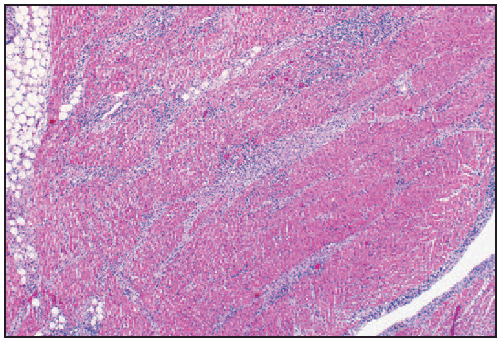
Alternate Text: The figure above shows Hematoxylin and eosin stain, demonstrating interstitial perivascular lymphoplasmacytic pancarditis in postmortem tissue of one of three patients whose death was associated with Lyme carditis in the United States in 2012.
FIGURE 2. Warthin-Starry stain of cardiac tissue at 158X magnification demonstrating Borrelia burgdorferi spirochetes (arrow) in one of three patients whose death was associated with Lyme carditis — United States, 2013
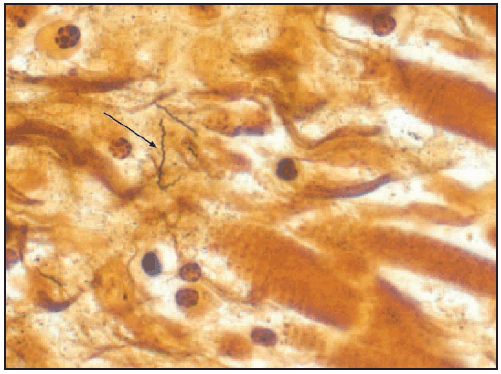
Alternate Text: The figure above shows a Warthin-Starry stain of cardiac tissue demonstrating Borrelia burgdorferi spirochetes in one of three patients whose death was associated with Lyme carditis during November 12–July 2013.
Use of trade names and commercial sources is for identification only and does not imply endorsement by the U.S. Department of Health and Human Services.
References to non-CDC sites on the Internet are provided as a service to MMWR readers and do not constitute or imply endorsement of these organizations or their programs by CDC or the U.S. Department of Health and Human Services. CDC is not responsible for the content of pages found at these sites. URL addresses listed in MMWR were current as of the date of publication.
References to non-CDC sites on the Internet are provided as a service to MMWR readers and do not constitute or imply endorsement of these organizations or their programs by CDC or the U.S. Department of Health and Human Services. CDC is not responsible for the content of pages found at these sites. URL addresses listed in MMWR were current as of the date of publication.
Tuesday, November 14, 2017
Monday, November 13, 2017
New Yorker article on Lyme disease and the politics
https://www.newyorker.com/magazine/2013/07/01/the-lyme-wars
'
The Lyme Wars
The Lyme-disease infection rate is growing. So is the battle over how to treat it.


Kaleigh Ahern was twelve years old when a tick bit her. She noticed it “perched” on her shoulder when she was taking a shower one morning. “I thought it was your average, everyday bug,” Ahern told me recently. But, when she tried to brush it off, the tick wouldn’t budge. “The legs wiggled but it was embedded in my skin. I freaked out and started screaming.” Kaleigh’s mother, Holly Ahern, came running and removed it. “I took the kid and the tick to the doctor,” she said. “I told him, Here is my kid, here is the tick, and there is the place where it was attached to her.” That was in 2002. The Aherns live near Saratoga Springs, New York, where Lyme disease has been endemic for years. The infection is transmitted by tick bites, so Ahern assumed that the doctor would prescribe a prophylactic dose of antibiotics. But he said that he wasn’t going to treat it. “If a rash develops or she starts to have flulike symptoms, bring her back,” he told her. At the time, Ahern, an associate professor of microbiology at suny Adirondack, didn’t know much about tick-borne illnesses. She took Kaleigh home and watched for the signature symptom of Lyme disease: a rash that begins with a bright-red bull’s-eye around the tick bite.
No rash developed, and Kaleigh was fine—strong enough to become an all-American swimmer both in high school and at Union College. There were times during high school when she felt mentally hazy and not quite right physically, which she attributed to allergies or a teen-age bout of mononucleosis. But at the end of her freshman year in college she found herself crippled by anxiety, depression, and insomnia. She was beset by searing headaches, her muscles often felt as though they were on fire, and her brain seemed wrapped in a dense fog. Kaleigh tested positive for Lyme disease. Like most physicians, her doctor followed the standard medical practice, endorsed by public-health officials throughout the United States, and prescribed a three-week course of antibiotics. “I was so happy to know what was wrong with me,” Kaleigh said. “For a while, I didn’t mind the pain.”
The drugs didn’t work, though. At her mother’s insistence, the doctor extended the prescription three more weeks, but Kaleigh only got sicker. This brought the Aherns to a clinical impasse. The Centers for Disease Control and Prevention has established highly specific criteria for the diagnosis of Lyme disease: an acknowledged tick bite, the appearance of a bull’s-eye rash, and, for those who don’t live in a region where Lyme is common, laboratory evidence of infection. Most people who fit the profile respond well to antibiotics, even months or years after the initial infection. Many Lyme specialists, however, believe that short-term antibiotic therapy may suppress symptoms but rarely cures the disease. Kaleigh switched doctors and began a course of antibiotics that lasted eight more months.
There was no change. Furthermore, there is no evidence that prolonged antibiotic therapy helps patients with Lyme disease, so insurance companies almost never pay for it. “I realized that my parents were shovelling thousands of dollars into these antibiotics,” she said. “After the oral approach failed, I was recommended to go onto I.V. treatment, but I had had enough.” Kaleigh’s condition had become so grave that she withdrew from school. “I would have episodes where I would just lie on the ground writhing. And my parents could do nothing but watch. I wish they had taken videos and put them online, so people would know.”
Kaleigh turned to alternative treatments often recommended by Lyme patients with similar experiences. She took herbs—turmeric and ginger, which are thought by some to strengthen the immune system—and she gave up gluten, grains, refined foods, and sugar. The goal was to reduce inflammation caused by her body’s production of insulin and to inhibit the growth of the bacterium that causes Lyme. She also began treatments with a Rife machine, an electromagnetic device invented in the nineteen-twenties which emits radio signals that, some researchers suggest, can destroy harmful bacteria. Although thousands of people are convinced that Rife therapy has helped them with Lyme and other diseases, little empirical evidence exists to demonstrate that it works. Nonetheless, Kaleigh began to feel better. She still has headaches and severe muscular pain at times, but she returned to Union a year ago and graduated this spring. She knows that her approach to Lyme disease is controversial and acknowledges that the improvements might be due to her dietary regimen or to Rife treatments or to a placebo effect. She doesn’t mind; after enduring such pain, she has found that fine points don’t matter.
Lyme disease is the most commonly reported tick-borne illness in the United States, and the incidence is growing rapidly. In 2009, the C.D.C. reported thirty-eight thousand cases, three times more than in 1991. Most researchers agree that the true number of infections is five to ten times higher. Although some of that increase is due to heightened awareness, transmission is rising in areas, like New England, where the disease is well established, and is spreading to regions as far south as Florida, through changes in climate and the movements of infected animals.
The disease is caused by the bacterium Borrelia burgdorferi. In the Northeast and the Midwest, B. burgdorferi is transmitted by the bite of a black-legged tick, Ixodes scapularis. (In the Western United States, a related tick, Ixodes pacificus, prevails, and in Europe the main vector is Ixodes ricinus.) Lyme was all but unknown until 1977, when Allen Steere, a rheumatologist at Yale, produced the first definitive account of the infection. The condition was initially thought to have been an outbreak of juvenile rheumatoid arthritis in and around Lyme, Connecticut. In 1982, Willy Burgdorfer, a medical entomologist at the National Institutes of Health’s Rocky Mountain Laboratories, determined that the infection was caused by the previously unknown spirochete borrelia. As is common in scientific practice, the bacterium was named for him: Borrelia burgdorferi.
Those facts are undisputed. But nearly everything else about Lyme disease—the symptoms, the diagnosis, the prevalence, the behavior of the borrelia spirochete after it infects the body, and the correct approach to treatment—is contested bitterly and publicly. Even the definition of Lyme disease, and the terminology used to describe it, has fuelled years of acrimonious debate. The conventional medical assessment is straightforward: in most cases, the tick bite causes a skin rash, called erythema migrans, which is easily identified by its bull’s-eye. If left untreated, the bacteria can spread to muscles, joints, the heart, and even the brain. Public-health officials say that a few weeks of antibiotic treatment will almost always wipe out the infection, and that relapses are rare. In this view, put forth in guidelines issued by the Infectious Diseases Society of America, Lyme is normally easy to treat and easy to cure.
For many people, though, the clinical situation is far more complicated. Some who have been infected with borrelia don’t notice the rash. Others—up to a quarter of those with Lyme, including Kaleigh Ahern—never even get one. Most troubling, some patients who are treated continue to suffer from a variety of symptoms long after their therapy has ended. Nobody really knows why they fail to get better. Infectious-disease experts refer to the phenomenon, which can affect up to twenty per cent of patients, as Post-Treatment Lyme Disease Syndrome. Researchers have attempted to resolve the mystery in experiments with monkeys, mice, and dogs; human studies are also under way. As the number of infections grows, so does the number of people struggling to figure out what is wrong with them.
Many of these patients say that medical officials pay little attention to their persisting symptoms, and that Lyme disease is anything but easy to treat or to cure. They believe that the bacteria can hide in the body for years, potentially causing harm long after treatment ends. This condition, they say, is pernicious, difficult to diagnose, rarely cured, and widely ignored. Moreover, at least four pathogens, in addition to the Lyme bacterium, can be transmitted by the black-legged tick: Anaplasma phagocytophilium, which causes anaplasmosis; Babesia microti, which causes babesiosis; Borrelia miyamotoi, a recently discovered genetic relative of the Lyme spirochete; and Powassan virus. Some of these infections are more dangerous than Lyme, and more than one can infect a person at the same time. Simultaneous infection, scientists suggest, may well enhance the strength of the assault on the immune system, while making the disease itself harder to treat or recognize.
“I am not sure why we act as if we know the answers,” Brian Fallon told me. Fallon, a psychiatrist who has studied the neurological impact of Lyme for years, is the director of the Lyme and Tick-Borne Diseases Research Center, at Columbia University. “The evidence that something more complex is going on is tantalizing and substantial.”
Fallon is right, yet the medical issues have largely been eclipsed by the attention generated by another faction in the Lyme wars. These people—patients, advocates, politicians, and “Lyme literate” physicians, led by the International Lyme and Associated Diseases Society—refer to the illness as “chronic Lyme,” and argue that the traditional approach to diagnosis and treatment, put forth by most American physicians, all but guarantees failure. The Lyme Action Network, one of many political groups that have formed to increase awareness and raise funds, recently released a pamphlet called “It Might Be Lyme.” The group lists dozens of possible symptoms, including headache, joint pain, neck stiffness, chest pain, bladder dysfunction, hypersensitive skin, unexplained fevers, weight loss, sweats, chills, fatigue, blurry vision, heart murmurs, sleep disturbances (including too little or too much), difficulty with concentration, lightheadedness, and mood swings. Physicians associated with the network argue that a cure requires not weeks but months or years of strong antibiotics, and that relapses are common.
“There are two standards of care when it comes to Lyme,” Holly Ahern said. “One in which patients are diagnosed and treated until they get better, and the other where people are treated for three weeks with antibiotics—and, if you don’t get better, then there must be something else wrong with you, or perhaps you are making it up.” Ahern is a scientist, and hers is a measured critique. But emotion and despair are often the driving forces behind Lyme activism. The documentary “Under Our Skin: The Untold Story of Lyme Disease” essentially accused organized medicine of ignoring the illness. Scores of highly read blogs—Lyme Policy Wonk, Touched by Lyme, Living the Lyme Life—regularly overflow with fury.
Nobody disagrees that more research into the long-term effects of Lyme is needed. But most doctors reject the term “chronic Lyme,” in part because many people who say they have it are not infected with borrelia. Without biological proof—a positive blood test or the telltale skin rash—the symptoms are vague and varied and could apply to many conditions. Infectious-disease experts say that the lingering symptoms might be an autoimmune response to the original illness or residual damage to tissues caused by the infection. “There is no doubt that people can have symptoms after being treated for Lyme disease,” Roy Gulick told me when I visited him recently in his office at the Weill Cornell Medical College, where he is a professor of medicine and the chief of infectious diseases. “They can hang on for weeks or months. But you have to be specific about whether it’s plausibly related to Lyme.
“I am sympathetic to people who are suffering,” he continued. “And I have no doubt that they are. But if you have not been infected with borrelia you can’t have Lyme disease. We don’t have all the answers. We never do. These people are true believers. But I’m an infectious-disease doctor. I understand pathogens that cause disease and I understand the manifestations of those infections. Believing or not believing is not part of the process.”
I grew up in Connecticut, attended college in the Hudson Valley, and graduated in 1977, the year Lyme was first identified. I don’t recall hearing about the disease. I do remember going to a professor’s house for dinner one night that year and having him urge me to arrive before dusk, so that we might look for deer. We drove around for an hour without luck, and I wondered whether to believe him when he said he had seen one just the day before.
Today, deer are no longer exotic in the Hudson Valley, and the area has the highest rate of Lyme disease in the country. If you drive the back roads of Columbia County at dusk, deer are nearly impossible to avoid, and accidents are common. Ticks are constantly on residents’ minds, and watching children run barefoot to the edge of the bucolic woods is no longer a carefree delight. Deer are not Ixodes’s most important host, but they have come to symbolize the spread of Lyme, and represent an ecology that has changed dramatically in the past thirty-five years. “Once you have Lyme disease in the area, and once you start to carve up the forest into little bits, and especially when the fragmentation is done by suburban development, you get an increase in Lyme risk,” Richard Ostfeld told me recently when I met with him at the Cary Institute of Ecosystem Studies, in Millbrook, New York. Ostfeld, a senior scientist there, has studied Ixodes for more than a decade. “The best host for the tick and pathogens is not deer but white-footed mice,” he said. “And they do beautifully when you chop the forest into bits. They thrive. And competitors do not.”
Ixodes scapularis is surprisingly sophisticated for an organism that, until it is engorged with blood, is less than half the size of a pea. “These ticks are nimble, durable, and adaptable,” Ostfeld said. The black-legged tick passes through three distinct phases—larva, nymph, and adult—and females require a blood meal at each stage. They usually pick up the spirochete, which under the microscope looks like a spiral French fry, in their first meal, and pass the disease to the host—small mammals, birds, deer, and sometimes humans—during the second or the third. To insure that it becomes engorged, the tick can attach its barbed mouth to a host for up to a week. First, though, the tick releases a series of anti-inflammatory chemicals and antihistamines to numb the skin and make a bite difficult to notice. It then secretes a compound called cementum, a kind of glue that helps the tick adhere to its prey. With those tasks accomplished, the tick bores its mouthparts into its host. While it feeds, the tick can inject borrelia, and other pathogens, into the bloodstream.
Ostfeld is a thoughtful, soft-spoken man, not unduly excitable. But when he talks about the Lyme bacterium he sounds like a proud parent. “Borrelia is a remarkable creature,” he told me. “It has all my respect.” He went on to explain that the bacterium, after slipping through the tick’s mouthparts, can change its form, cloaking itself in the surface proteins of the tick’s saliva. Then, much like H.I.V., the bacterium hijacks the immune system. “It doesn’t stay in the bloodstream for long,” he said. “Instead, borrelia manages to insinuate itself into parts of the body that have fewer circulating antibodies, where it is harder for antibiotics to reach.”
The relationship between the tick and borrelia can be compared to the deadly, symbiotic partnership of Plasmodium falciparum parasites and the anopheles mosquitoes that transmit malaria, which have evolved together for thousands of years. Genetically, the bacteria are so adaptable that it is possible to find different strains of borrelia in the same tick. “Some of these infections are really very worrying,” Ostfeld said, as we sat, one sunny morning, in his green, airy office at the institute. “We can’t even know yet how big a problem a bacterium like miyamotoi will become. But it is possible that Lyme will turn out to be among the least threatening of the pathogens carried by Ixodes.”
Ostfeld, a field biologist, received his Ph.D. from the University of California at Berkeley, and studies the ecology of small mammals—skunks, possums, chipmunks, and white-footed mice—which are found in large numbers in the Hudson Valley. Soon after he arrived at the institute, in 1990, he noticed something striking about the thousands of mice he had trapped: their ears were often covered in ticks the size of poppy seeds. Those ticks, Ixodes nymphs and larvae, were feeding on the mice. “That was the beginning of my interest in Lyme disease,” he said. His 2010 book, “Lyme Disease: The Ecology of a Complex System,” describes the environmental relationship in detail. Before European colonists arrived in America, ninety per cent of New England and New York was covered in forest. Lyme was unknown. In the next century, forested areas were cut by half. “But it was a shitty life here,” Ostfeld said. “Colonists had a rough go of it. The rocky soil was infertile and difficult for agriculture.” In the eighteen-thirties, when the Erie Canal opened the Ohio Valley to agricultural development, the farms of the Northeast were abandoned. The forests returned, along with deer. Mice and other small mammals accompanied them.
Diagnostic failures cause much of the confusion associated with Lyme disease. It takes the tick at least thirty-six hours to transmit borrelia. If ticks are removed immediately, the threat of infection falls dramatically. But it takes weeks, and sometimes longer, for blood tests to detect antibodies; a test taken too soon will produce negative results. Even then, many people who become infected will test negative in error, while others who aren’t infected will test positive.
“You get people all the time who have Lyme but who do not know it,” Ostfeld said. “Their doctors don’t know it.” The basic blood tests look for antibodies but are not always sensitive enough to pick out the right ones. Another test for Lyme disease involves PCR, a technique that allows scientists to amplify the number of copies of a specific region of DNA. When done properly, that test can detect the Lyme spirochete directly. Yet it is prone to contamination, and it often produces positive results for people who are not infected. The situation is similar to one in India, where tens of millions of people test positive for tuberculosis. Few of them will actually get sick, but many are mistakenly treated with highly toxic drugs. A relatively new, but expensive, diagnostic machine can differentiate between latent and active t.b. infections. “We badly need that kind of diagnostic certainty with Lyme,” Ostfeld told me. “And we do not have it.”
Public-health officials stress that if doctors see a bull’s-eye rash they should assume that the patient has Lyme and prescribe antibiotics. The advice is often ignored. Nor do many doctors or patients consider the potential impact of simultaneous infection with several pathogens. “This is not resolved science,” Ostfeld said. “Clearly, not everyone claiming to have Lyme disease is sick, particularly those who have never tested positive for borrelia. But there are just too many questions we still have to answer about those who are infected: Does the bacterium persist after treatment? If so, is it capable of harm? What is the impact of co-infections, and what is really the best way to treat advanced stages of Lyme?
“The conventional view is that several studies have answered the most important questions about persistence and treatment,” Ostfeld went on. “But look at heart disease. How many thousands of studies were conducted on the relationship between cholesterol and heart disease? Over how many decades? And we still go back and forth. When it comes to Lyme, we have a long way to go.”
The controversy over Lyme disease is unlikely to diminish until scientists resolve at least two critical, but related, questions. Can the bacteria persist in the body, causing harm and illness months or even years after treatment has ended? And can prolonged antibiotic therapy destroy the remaining bacteria? Here, as with nearly every issue related to Lyme and its treatment, there is disagreement not only about the answers but also about the questions.
Determining whether Lyme spirochetes cause illness after treatment is difficult in part because the symptoms are so diverse. Moreover, it is nearly impossible, with current tests, to know whether the infection has been cured. Recent studies with mice and macaques provide interesting clues. In a study published last year in the online journal Plos One, a team of scientists led by Monica E. Embers, of the Tulane National Primate Research Center, and Stephen W. Barthold, the director of the Center of Comparative Medicine at the University of California at Davis, carried out two experiments on rhesus macaques to determine whether borrelia persists after antibiotic treatments.
First, twenty-four rhesus macaques were infected with the Lyme bacteria in the laboratory. After four to six months, half the macaques received aggressive antibiotic therapy, which, in theory, should have cured them, but the bacteria persisted in some of the animals. Then the scientists used a method called xenodiagnosis to determine if treatment worked in three other monkeys. They planted ticks that had been reared in the lab under sterile conditions on macaques that had received antibiotics, and let them feed for four days. When the ticks were removed and examined, the scientists found small numbers of intact, functioning spirochetes in two of them, which could have come only from the blood of the macaques. A team of scientists led by Adriana Marques, of the National Institute of Allergy and Infectious Diseases, and Linden Hu, of Tufts University School of Medicine, is conducting a similar study in humans. (The scientists have obtained permission from patients to permit ticks to feed on them.)
Other research, by Brian Fallon, the Columbia psychiatrist, found metabolic abnormalities in the brains of patients with confirmed cases of Lyme disease and chronic, post-treatment symptoms, when compared with the brains of healthy control subjects. That, too, suggests the bacterium continues to have an impact. None of these studies provide conclusive evidence, but together they strongly suggest that the infection can survive treatment in a primate. This finding raises the possibility that the bacteria could continue to cause illness long after a patient is supposedly cured. Similar research in mice, published last year in the Journal of Clinical Investigation by a team from Yale Medical School, found that while antibiotics stopped the infection, spirochete antigens persisted in areas adjacent to cartilage—a condition that could produce swelling.
None of these studies have swayed Gary Wormser, the chief of the division of infectious diseases at New York Medical College, and the lead author of the often criticized Infectious Diseases Society of America guidelines for Lyme. He says that, in the absence of new data, doctors should continue to treat Lyme with courses of oral antibiotics that generally take no more than thirty days.
“Right now, in the published literature, there is no evidence of persistence in humans, and if there were I would say, ‘So what?’ ” he told me recently. “You would have to show me that the spirochetes continue to produce disease and you would have to show me that they would respond to antibiotics.” Like most established scientists, Wormser maintains that one can rely only on the best current science-based evidence to practice medicine; otherwise, he may as well rely on voodoo. Furthermore, he stressed that it is dangerous to diagnose a disease based on symptoms alone. “There is a group of people with aches and pains and medically unexplained symptoms that are being treated for chronic Lyme.” He said these patients often go “from doctor to doctor” without a satisfactory diagnosis. “They are suffering and unhappy, and finally they go to a doctor who says, ‘I know what you have, it’s chronic Lyme.’ Then they get treated and treated and treated for chronic Lyme. And patients are happy because somebody has finally taken interest in them.”
Wormser continued, “If you had Lyme and nobody disputes it and you don’t feel back to normal, it’s logical to ask, ‘Does the antibiotic work?’ Or maybe the organism is still there. Those questions have been explored, and we continue to explore them.” Yet he added that the majority of people who are being treated as if they had post-Lyme symptoms have never had the disease. “Never had the test, the rash, swelling, not the slightest credible evidence of Lyme. If somebody walked into your office and said, ‘I have renal failure, I need dialysis,’ you would do a test. If it was negative, nobody in his right mind would give the patient dialysis.”
Wormser’s many critics regard his view of the disease as willfully limited. In response, he and others cite four double-blind, placebo-controlled trials funded by the N.I.H. over the past fifteen years. Each attempted to determine whether prolonged antibiotic treatment, given after the initial courses were completed, helps eliminate persistent symptoms of Lyme disease. The two largest studies reported no evidence of improvement; the results of the other two studies were equivocal. But none of the researchers concluded that the theoretical benefits outweighed the tangible risks of extended intravenous therapy, which included severe infections. In a separate case, a woman on intravenous antibiotics died after a blood clot.
Physicians who regularly see people with Lyme symptoms say that the conventional methods simply don’t work. “I think a lot of these people who are set in their ways need to see more patients,” Richard Horowitz told me when I called him at his office in Hyde Park, New York. Horowitz is one of the most prominent “Lyme literate” physicians: he is board certified in internal medicine and has practiced in the Hudson Valley for more than twenty-five years. Officials who endorse the Infectious Diseases Society of America’s approach to Lyme disease consider Horowitz a pariah, but patients wait for months to see him, and several told me that he had essentially cured them of a disease that nobody else seemed able to treat.
Horowitz told me that he has seen more than twelve thousand patients, all of whom have a tick-borne ailment. Whenever possible, he avoids antibiotics. “Most of my patients do not present simply with Lyme,” he told me. “They almost always have multiple co-infections. That means they have a suppressed immune system with complex symptomology. Thirty days of doxycycline”—the most common drug used to treat Lyme—“just isn’t going to cure this. Each of these pathogens requires different regimens.”
Horowitz offers a complex combination of dietary restrictions and supplements to help “detoxify” the body and starve the bacteria. He argues that organized medicine, by relying on a few double-blind trials, focusses only on borrelia and Lyme. “But we know the ticks can spread many pathogens. More than half of my patients present with babesiosis,” he told me. (It causes symptoms similar to those of Lyme, though it more frequently begins with fevers and chills.) The incidence of babesiosis, which is caused by microscopic parasites that infect red blood cells, has been increasing dramatically in the Hudson Valley, according to research done by Wormser. “That infection has to be treated in an entirely different way from Lyme, and together they cause far more harm than either one does alone,” Horowitz said. “I have never understood why that is a controversial assertion.”
David Roth is not a scientist, but he believes that only science can end the Lyme wars. I met with him one gray, cloudy day on the forty-third floor of the Blackstone Investment Group building in Manhattan, where he is a managing director. Roth was dressed in pinstripes, a crisp white shirt, a yellow tie, and spit-shined brogues. He has an air of distinguished nonchalance, and his brown hair is tousled in the manner of a Kennedy. Three years ago, Roth became very sick, and while it has been difficult for him, and for his family, his illness may be the best thing that has happened for people infected with tick-borne ailments.
“I started working on this problem because I was shocked by the approach of the medical community,” he told me. “I felt there was a real social injustice.” Roth’s story was similar to those of others I had heard. His illness began with flulike symptoms, enlarged lymph nodes, and insomnia. Doctors found no apparent cause. His symptoms worsened; full-body shakes, numbness in his feet and hands, pain in his tendons, and immense fatigue. “I went up and down this city seeing doctors,” he said. “I had cat scans and pet scans and M.R.I.s.” Those tests also turned up nothing, but eventually—about four months after falling ill—he tested positive for both Lyme disease and babesiosis. He was treated with antibiotics as well as with malaria medication; they helped, but only for a while. “When I stopped, things got worse,” he told me.
The more he looked into the treatment of Lyme, the angrier he became. “Here is what I don’t understand,” he said. “Somebody can get ill and not know what it is and the symptoms get worse and worse. Two years or more later, they can learn that they have Lyme. They take antibiotics for a month. And then, according to their doctors and insurance companies, they are done. Cured. Sometimes that is enough. But many people continue to be sick, and the government’s position, in a world where there are ten times as many bacterial cells as human cells in our body, is that this particular bacteria has been removed forever and the problem must be due to something else.”
Roth is forty-six, goes to the gym several times a week, and looks robust. (“One of the problems with Lyme is that people tend to look better than they are,” he said.) He has received treatment—dietary supplements and dietary changes—from Horowitz, and his health has improved greatly. Like Kaleigh Ahern, he has difficult days, but they are less frequent. Recently, he was appointed to a federal advisory committee that is working on ways to improve Lyme diagnostics. He was one of the hosts of a gala, held by the Tick-Borne Disease Alliance, earlier this year, which raised eight hundred thousand dollars. “I try to act rationally and work with rational people,” he went on. “Sometimes that is hard to do.”
For Lyme activists to be taken seriously, they will have to be led more by people like Roth than by those who foster dark conspiracies. I was told by several Lyme activists that the government created the infection on Plum Island, that reporters at the Times have been “muzzled” and prevented from reporting honestly about Lyme, and that the N.I.H. has made a pact with pharmaceutical companies to ignore chronic Lyme. There is now a bill before the legislature in New York that would require insurance companies to reimburse long-term treatment with antibiotics—even though no study has proved their effectiveness, and treatment with I.V. antibiotics can cause serious, and sometimes fatal, complications.
Meanwhile, the scientists sometimes seem to respond more comfortably to data than to people. Researchers at the N.I.H. are pursing several lines of inquiry, including the possibility of bacterial persistence. The atmosphere resembles that of the early days of aids activism, when many of the individuals most at risk lost confidence in their doctors and sought their own medical answers. In the end, organizers of act up and the Gay Men’s Health Crisis became well known for their public protests, but they succeeded for another reason: they did their homework. Nobody was more knowledgeable about the course of H.I.V. infection than the best-informed activists.
Lyme-advocacy organizations need to rely on similarly well-informed people. Kaleigh Ahern is one of them. She recently presented a paper on the behavior of black-legged ticks at the annual meeting of the Federation of American Societies for Experimental Biology. “It was my thesis at Union,” she explained. “I looked at the effects of soil pH on molting success. I wanted to know the ecological factors that make Lyme increase so steadily in this region.” She has applied to graduate school, where she hopes to help develop more useful diagnostics for Lyme.
I asked if her parents were surprised that she has chosen to work with Lyme ticks. “They are horrified,” she told me, laughing. “But, if I don’t do it, who will? ” ♦
Subscribe to:
Posts (Atom)