
Showing posts with label illness experience. Show all posts
Showing posts with label illness experience. Show all posts
Sunday, September 15, 2019


Friday, January 25, 2019
Wednesday, November 21, 2018
Friday, September 21, 2018
'Our family's story has a different ending than I'd hoped for'
https://uk.yahoo.com/news/rob-delaney-pain-losing-two-210000757.html
Rob Delaney on the pain of losing his two-year-old son: 'Our family’s story has a different ending than I’d hoped for'

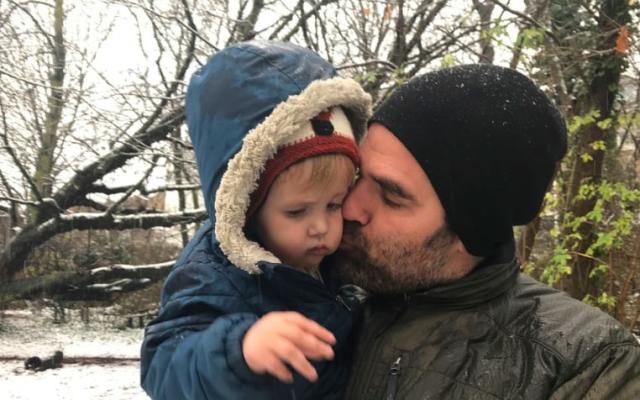
I’m on the bus to go see my son Henry at the hospital. I have to take him in a taxi to another hospital for some specialist doctor appointments they don’t do at the hospital at which he lives. I don’t want to take him on the bus to the other hospital because I don’t want to have to jostle with other curious passengers when I have to turn on his suction machine to suck out the saliva and mucus that collects in his tracheotomy tube.
He would love to go on the bus though. He’s two. Despite the physical disabilities he has from the surgery to remove his brain tumor, he’s very sharp mentally and gets as excited about a big red double decker bus as any other little boy. I’ll take him on a bus soon and if it makes anyone uncomfortable they can suck my d***.
Metaphorically; my family needs me too much for me to get sent to prison for trying to force a stranger to suck my d*** on a bus. I go past two prisons on the way to the hospital though so maybe it could work.
I’m so f*****g tired. The front of my head feels like it’s stuffed with hot trash. My chest and throat feel constricted and I’m reminded that while my life is and will remain stressful for the foreseeable future, I could at least lose some weight to reduce my heart’s workload, so a cardiac event doesn’t take me out before I turn fifty.
My biggest fear had always been that I wind up somehow being conscious for eternity. Like that I die, wind up in heaven or hell or wherever and I remain “me” and just never shut off and have to endure being conscious and aware and nothing is wonderful enough or horrible enough to engage me for that long, i.e. eternity. That might be a factor in the heavy drinking I quit 15 years ago; the idea that I could really effectively hit my own consciousness’ kill switch as needed. Might also be why I’ve always enjoyed naps more than food or money.
I could just call to mind the image of one of my sons, or the smell of their heads, or the feel of one of their little feet in my hand and I’d be happy
That fear went away when my wife and I had kids. Or boys, specifically. My sperm only makes boys for some reason. The fear went away because I realised I could now do eternity and be okay. I could just call to mind the image of one of my sons, or the smell of their heads, or the feel of one of their little feet in my hand and I’d be happy. Give me a Polaroid of one of them to hold on to and I could do two eternities.
I may wish Henry wasn’t in the hospital and it may make me f*****g sick that my kids haven’t lived under the same roof for over a year. But I’m always, always happy to enter the hospital every morning and see him. It’s exciting every day to walk into his room and see him and see him see me. The surgery to remove his tumor left him with Bell’s palsy on the left side of his face, so it’s slack and droops. His left eye is turned inward too, due to nerve damage. But the right side of his face is incredibly expressive, and that side brightens right up when I walk into the room.
There’s no doubt about what kind of mood he’s in, ever. It’s particularly precious when he’s angry because seeing the contrast between a toddler’s naked rage in one half of his face and an utterly placid chubby chipmunk cheek and wandering eye in the other is shocking in a way that makes me and my wife and whatever combination of nurses and/or doctors are in the room laugh every time. And when he smiles, forget about it. A regular baby’s smile is wonderful enough. When a sick baby with partial facial paralysis smiles, it’s golden. Especially if it’s my baby.
A little over a year ago Henry vomited at his oldest brother’s fifth birthday party. No big deal; he was our third kid and we’d cleaned up enough gallons of puke not to be fazed. I’d been feeding him blueberries so there were maybe fifteen or twenty recognizable blueberries in there. Did I feed him too many? Had I done something wrong? He was eleven months old at the time. Was I being a lazy parent and had I just let him keep eating them because it kept him quiet?
Those questions ran through my mind but if he’d puked them all up it didn’t really matter. He was our third; I’m pretty sure I let him eat chorizo before he was nine months old. It’s not like your first kid where you bug out over every little thing that goes into their mouth. Want some chorizo? Go nuts little man. Chorizo’s good, why wouldn’t you want some?

I’m glad I gave it to him too because he hasn’t eaten anything via his mouth for a year now. Now he’s fed through a tube in his stomach. Some s*** called Pediasure Peptide. One nurse I know hates it because it smells the same when kids vomit it up as it does fresh out of the bottle. And kids on chemo vomit a lot. So she feels like she’s feeding kids vomit.
After Henry vomited that first time at his brother’s birthday party, we cleaned it up and kept on partying. The next day he vomited a couple more times so my wife called a nurse who said to bring him into Accidents and Emergency. She wanted to make sure he didn’t get dehydrated. For some reason at the A and E they got the idea he might have a urinary tract infection.
Since he couldn’t really keep fluids down very well, they asked me to feed him five mils of some electrolyte juice through a syringe every 5 minutes and hold a little cup next to his penis to catch any urine he might produce so they could see if it was in fact a UTI. That was actually fun, holding a cup under his adorable little eleven-month-old penis and nursing him little squirts of juice every five minutes.
It was sort of meditative and we just stared at each other the whole time. I couldn’t look at my phone or watch Finding Nemo on the A and E TV, lest I miss a drop of that precious pee he was resisting giving me. He finally made a little pee and I gave it to them and we left with some antibiotics, with the understanding they’d call us and tell us if a UTI was the culprit.
He continued to vomit, but it tapered off a bit and it seemed like he was at least taking in more calories then he’d bring back up onto the floor from time to time. Still though we were concerned so we brought him to our local general practitioner. A doctor examined him and while we were there, Henry vomited all over the floor. I was glad he vomited in front of the doctor. I wanted to point at the vomit on the floor and say, “See asshole? That’s vomit alright. Now what are you going to do about it?” What he did was give us an appointment to see a gastroenterologist. That made sense to me, since up to that point in my life, vomit-related issues generally centered in the stomach.

The vomiting plateaued a bit and we decided to keep the plans we’d had to visit the United States for the Easter holiday. Henry turned one. Then the vomiting intensified. While visiting my mom in Massachusetts we took Henry to an American hospital. For a five-hundred-dollar deposit, they did an ultrasound on his kidneys to see if they were infected. They didn’t seem to be. They put him on different antibiotics.
We returned to London and started to get scared. Henry was losing weight. Every time he vomited I would freak out. I would feed him so gently, so slowly, and assume I’d done something wrong when he vomited. Why, if I’d been able to feed Henry’s ravenous, feral older brothers, couldn’t I feed him? I would imagine collecting the vomit somehow and pouring it back into him with a funnel.
My baby was getting smaller, and that is a f****d up thing to see. The total amount he weighed was less than the amount of weight I should lose. Henry didn’t have any weight to lose! His vomit became the most precious substance in the world to me and I would often start crying whenever he threw up. I would try not to cry in front of his older brothers and fail and they’d ask why, and I would say it was because I was scared.
The gastroenterologist prescribed a drug that’s supposed to make you not puke. He puked anyway. By this point we knew we were going to get some kind of bad news, we just prayed it would be celiac disease or a twist in his gut that could be surgically fixed or something.
Then my friend Brian, whose kids are older than ours, recommended we go see their family pediatrician. He said he’d helped them solve a medical mystery with their son a few years ago and what the hell, it was worth a shot.

Like every other appointment, I took Henry to Dr Anson myself. My wife is a magnificent mom and is insane about our children and would have happily taken Henry but for whatever reason I’d taken him to the first appointment so we just kind of stuck with that and he became my little project. My wife stayed with our older boys who were five and three and were, frankly, usually the more difficult job posting.
Dr Anson called Henry and I into his office. He was pleasant and probably in his late sixties. He checked out Henry and was as alarmed as anyone to see the loose skin on his inner thighs.
He asked some routine questions but then he asked one that stuck out from the others: “Is his vomiting effortless?”
“Effortless.”
“Yes, does he retch, or seem distressed when he vomits? Or does it just come up and out?”
“Hmm, huh, um, it is effortless, yeah. He’s not troubled at all.”
“Okay, I think we should schedule an MRI. Of his head.”
“Okay, why?”
“Just to make sure there’s nothing in there that shouldn’t be. Pressing on his emetic center, making him vomit.”
“What, like a tumor?”
He paused.
“I’m glad you said it.”
Henry just turned two. We didn’t dare assume he’d have a second birthday with the prognosis he received after they took out the tumor and confirmed what kind it was. It was a real c*** of a tumor. An ependymoma they call it. Ependymomas kill most babies who get them. If I’d had one when I was Henry’s age in the 1970s I would’ve almost certainly died.
You probably would have to if you’re old enough to be f****d up enough to want to read a story about a baby who got a brain tumor. They still kill people today but if they can remove the entire thing surgically your chances improve somewhat. Henry’s was on his posterior fossa, wrapped snugly around several important cranial nerves. To get them out, his surgeon, Dr. Mallick had to damage these cranial nerves. Thus, the Bell’s palsy and the lazy left eye.
The cranial nerve that serves the left ear was severed, so he’s deaf in that ear now. All those things are awful, but they’re really nothing compared to the tracheotomy. The nerves that handle swallowing and gagging were damaged, so Henry can’t prevent saliva from getting into his lungs. You and I swallow about a liter and a half of saliva every day without knowing it. Lose your swallow and you’d get pneumonia pretty quickly, and pneumonia kills people as dead as cancer does.
Henry’s tracheotomy tube prevents him from speaking, so I haven’t heard him make a peep for over a year. My wife recently walked in on me crying and listening to recordings of him babbling, from before his diagnosis and surgery. I’d recorded his brothers doing Alan Partridge impressions and Henry was in the background, probably playing with the dishwasher, and just talking to himself, in fluent baby. F*****g music, oh my God I want to hear him again. Now he has a foam-cuffed tracheotomy tube in his beautiful throat, rendering him mute.
My wife recently walked in on me crying and listening to recordings of him babbling, from before his diagnosis and surgery
The other day I had to use no small amount of my adult strength to hold him down on a hospital bed while a nurse and a doctor took out his tracheotomy tube, which had broken. It bled like hell because of aggravated scar tissue around the stoma, so I suctioned the blood out of the hole in his throat, while they got ready to put in the replacement tube. It was awful, and Henry was terrified, begging me to pick him up and take him away. But I didn’t. I held him down. The hole in his throat is about the same circumference as a bullet hole.
I’ve gotten to know his tracheotomy nurse rather well. She was a captain in the British Territorial Army and served in Iraq and Afghanistan. She also helped turn Great Ormond Street Hospital for Children into a triage unit for adults on the day of the bombings in London on July 7th, 2005, which killed 52 people. So even though I f****** hate what she’s taught me to do to my beautiful baby boy’s neck, I’m grateful to have her around to talk me back to sanity afterward.
I’m aware this ends somewhat abruptly. The above was part of a book proposal I put together before Henry’s tumor came back and we learned that he would die. I stopped writing when we saw the new, bad MRI. My wife and his brothers and I just wanted to be with him around the clock and make sure his final months were happy. And they were.
The reason I’m putting this out there now is that the intended audience for this book was to be my fellow parents of very sick children. They were always so tired and sad, like ghosts, walking the halls of the hospitals, and I wanted them to know someone understood and cared. I’d still like them to know that, so here these few pages are, for them. Or for you.
But I can’t write that book anymore because our family’s story has a different ending than I’d hoped for. Maybe I’ll write a different book in the future, but now my responsibility is to my family and myself as we grieve our beautiful Henry.
Note: I wrote all of this except the last paragraph in April or May of 2017. I changed names as well, except for Henry’s.
Friday, July 13, 2018
Thoughts on sewing and illness
https://www.instagram.com/p/BRNVAc2gmi1/?taken-by=laurenpoole94
The comments below are taken from a post on instagram (link above), from a lady known as laurenpoole94, who posts incredible photos of her sewing projects. She has had some serious illnesses, and spoke eloquently about how craft work has aided the process of recovery. It has sparked a very insightful discussion, from which, much can be learned.
The comments below are taken from a post on instagram (link above), from a lady known as laurenpoole94, who posts incredible photos of her sewing projects. She has had some serious illnesses, and spoke eloquently about how craft work has aided the process of recovery. It has sparked a very insightful discussion, from which, much can be learned.
Thursday, June 28, 2018
A person's reflections on living with chronic illness
https://mobile.nytimes.com/2018/01/10/opinion/in-my-chronic-illness-i-found-a-deeper-meaning.html?smid=fb-share&referer=http%3A%2F%2Fm.facebook.com
In My Chronic Illness, I Found a Deeper Meaning
I became disabled overnight in a car accident. The car accident was a dream, but the disability was real.
I dreamed I was driving through the ravaged streets of Oakland, Calif., at the end of the world. I turned the corner and careened inescapably into a white chemical blaze. I woke with a start, the white flash still burning behind my eyes, the worst headache of my life piercing my left temporal lobe. I remembered my mother having a brain aneurysm years before and knew the “worst headache of my life” was not to be ignored. My wife and I hurried to the hospital, expecting life to change forever. Once at the emergency room, things moved quickly: CT scans were ordered, crystal clear spinal fluid was drawn from my back. Eight hours later, I was told I was perfectly healthy.
What they meant, but wouldn’t say, was that they didn’t know what was wrong. Over the next weeks and months, it became obvious that I was far from well. The terrible headaches continued, I developed burning nerve pain all over my torso, I was wrapped in a thick brain fog, I sprouted mouth ulcers, I was crushed with exhaustion. I would open my mouth and be unable to speak. I could get lost in my own house between bedroom and bathroom, and forget my wife’s name. I started having seizures.
By then, I had discovered that I was no longer trusted by my doctors about my own body or experiences. I reported odd, terrifying and sudden physical changes; they recommended cognitive behavioral therapy and Weight Watchers. I felt exiled from the world of the well, isolated by thick walls of suspicion. I’m used to feeling like an outsider; I’m the first openly transgender rabbi ordained by a mainstream movement (Reform Judaism). I am used to being rejected and told I should not exist. But nothing prepared me for the outsider status of being chronically ill.
Think about that for a moment: Approximately 0.6 percent of American adults identify as transgender, just under 0.2 percent of the world population is Jewish, and 100 percent of us will get sick, yet it is being chronically sick that makes me feel like an outsider. That’s how much our society fears and rejects the core human experience of being ill, of having a body that gets sick, that ages, that is not controllable.
I went from doctor to doctor looking for answers, but overnight I had gone from being a trusted rabbi and chaplain (who works with seriously ill and dying people on hospital medical teams) to a “hysterical” chronically ill person. Though I had seen it happen to my clients, I now understood firsthand that being disbelieved is nearly universal for people with chronic illnesses, especially those that are largely invisible or hard to diagnose or both. I had believed that as a health care professional, equipped with skills and advocates to navigate the system, I would be treated differently. I soon learned how hubristic that was.
Eventually, because of the tireless advocacy of my wife, I was diagnosed with central nervous system lupus (an autoimmune disease that attacks the brain and central nervous system), as well as fibromyalgia, chronic fatigue syndrome and complex migraines. My lupus diagnosis would later be taken away and then given back countless times as suited the needs of health insurance and disability insurance companies to sort and manage me and decide how much care I was entitled to. The needs of my body were virtually irrelevant in this process as my diagnosis become a monetized affair where I had to jump through increasingly difficult hoops to “prove” it.
Like most of us, I had been raised to see illness as something temporary: a stopover on the way to recovery or to death, not a place to live. But weeks, months and then years passed, and I did not get better. My doctors, and even some friends and family members, suggested that I could get better if only I tried harder, relaxed more deeply, thought more positively. I became a lightning rod for others’ fears of disability, dependence and fragility. In a political moment where health care is treated as a luxury and hurricane victims are blamed for their own disasters, an ethic of personal responsibility reigns. But sometimes, sick people just stay sick. And there’s no meditation, medication, positive outlook, exercise or smoothie that can fix it.
Eventually, I stopped hoping to be well, or even pretending that I lived in that future-heavy land of hope anymore. I stopped trying to “overcome” my body and started living a present-tense life in chronic illness. As the pace of my life slowed, I could appreciate sensual pleasures in a new and heightened way: sunlight outside my bedroom window, my dog’s velvety fur, a cool breeze in my garden, richly colored flowers. On days when my brain was too fogged to do anything, I let myself float in and out of a rich, infinitely layered dream world.
With great difficulty, I learned how to accept care. A child of neglectful and absent parents, I had been fiercely independent for most of my life; now, as fatigue gripped my body, I needed help preparing food, showering, doing laundry, managing my medications. This demanded a difficult, profoundly spiritual vulnerability. I realized that if I were truly to see myself as equal to my seriously ill clients, and not performing a kind of “charity” in my work, I had to come to terms with the necessity of interdependence.
We are born needing care and die needing care, and I am no exception. At brief moments in the middle of life, we hold the illusion of independence, but we are always driving on roads we did not build, eating foods we did not pick or raise. Allowing the illusion of my own independence to drop away unmasked a fundamental truth of being human.
Like many people, I had once measured my worth by my capacity to produce things and experiences: to be productive at work, share responsibilities at home, “show up” equally in my friendships and rack up achievements. Being sick has been a long, slow detox from capitalist culture and its mandate that we never rest. Slowly, I found a deeper value in relationship beyond reciprocity: an unconditional love and care based in justice, and a belief that all humans deserve relationship, regardless of whether we can offer anything measurable back. In these discoveries, I’ve been led by other sick and disabled people, whose value had always been apparent to me. Amid the brilliant diversity of power wheelchairs, service dogs, canes and ice packs, it’s easy to see that we matter just as we are.
Eventually, my body did change. I am now able to stay awake longer, and my pain has receded to a dull throb. I can leave the house more; I can visit my clients and mentor my hospice volunteers, for which I am grateful. But I don’t see myself as cured, nor do I imagine a cure will come. This is merely another chapter in the life of my body. If I’m lucky enough to get old, my body will change again. Because of my illnesses and family history, I’m more likely to develop dementia. As I age, my body and mind will surely become more disabled. I will lose cognitive and sensory capacities. My skin and muscles will sag and disintegrate. I will depend more and more on other people. I will not be able to control my bowels or my surroundings as tightly. I will lose teeth, hair and precious memories. This is not a tragedy. This is what it means to be human.
Elliot Kukla is a rabbi at the Bay Area Jewish Healing Center in San Francisco and a co-director at the Kol Haneshama: Jewish End of Life Care volunteer hospice program.
Saturday, May 19, 2018
An experience of a perforated appendix in the modern US healthcare system
Essay written by Dr Michelle Au (of http://theunderweardrawer.blogspot.co.uk/), who is currently an attending in Anaesthesia, but was a medical student at the time of writing this sobering piece (approx 2003).
These blog posts also provide the context around the illness (https://web.archive.org/web/20061108114936/http://theunderweardrawer.homestead.com/03_02_13.html, https://web.archive.org/web/20061108120147/http://theunderweardrawer.homestead.com/03_03_01.html, https://web.archive.org/web/20061108122346/http://theunderweardrawer.homestead.com/03_03_11.html)
https://web.archive.org/web/20061108124625/http://theunderweardrawer.homestead.com/patient.html
These blog posts also provide the context around the illness (https://web.archive.org/web/20061108114936/http://theunderweardrawer.homestead.com/03_02_13.html, https://web.archive.org/web/20061108120147/http://theunderweardrawer.homestead.com/03_03_01.html, https://web.archive.org/web/20061108122346/http://theunderweardrawer.homestead.com/03_03_11.html)
https://web.archive.org/web/20061108124625/http://theunderweardrawer.homestead.com/patient.html
"PATIENT"
"Sometimes these things happen, and even though it's not the ideal situation, you're just going to have to be patient and wait this thing out. You'll be admitted today, no question, and we're going to need to keep you here for five days, a week."
"Excuse me?" From my vantage point on the stretcher, I struggle to look the surgeon in the eye. Maybe he's making a bad joke.
"Like I said," he repeats, already whisking open to curtain to make his exit, "you're going to have to be patient."
It's five o' clock in the morning on Valentine's Day, and I'm in the Columbia Presbyterian Emergency Department, having just been admitted to the surgical service in Milstein Hospital for a small bowel obstruction secondary to a perforated appendicitis.
(I)
THE ER. THE CURSE OF NOT LOOKING SICK ENOUGH. THE ER REDUX.
The pain started early Monday morning, with some left upper quadrant dull cramping and vomiting. I chalk it up to gastroenteritis and stay home from class for the day. The next day, the pain is more intense, and has moved lower, to a U-shaped band under my umbilicus. I hobble around home for most of the morning, but when I realize that I can no longer stand up straight because of the discomfort, I take a cab to the CPMC Emergency Room.
Joe, my fiancée, is waiting for me at the ambulance bay as I arrive, having already spoken with the triage nurse and the attending on service, briefing them on my arrival. I am relieved to be a patient at Columbia--after all, I'm a fourth-year medical student, one of their own--and I imagine that the response to my plight will be speedy and efficacious.
I wait on a stretcher for two hours before an ER attending comes by. Despite the fact that I know that many patients in triage won't be seen for three times as long, all I can do is complain. I see residents I know from my rotations, attendings that I recognize, and wonder why they can't come over here, give me treatment, pay attention to me. I run through the differential diagnosis in my mind--appendicitis, ovarian torsion, incarcerated hernia--and will them to hurry. When my attending finally arrives bearing my chart, I see the green triage sticker over my admission vitals as feel somehow insulted. I would have thought I was at least a blue sticker.
Over the course of the next ten hours, I get an abdominal CT with contrast, a surgical consult, and a gynecology consult. I have an elevated white count and the CT is read as "highly suspicious for appendicitis," but no one is particularly impressed. My symptoms don't correlate. The time course is wrong. I have been given some pain medication by the ER attending, and by late night, feel fantastic. I am sent home after fluid resuscitation with instructions to return with worsening symptoms. "You know what to look for," they tell me as they sign my discharge papers, "you're a medical student."
Wednesday morning, I feel a little better, but receive a call from a nurse in the Emergency Department that I am to return to the hospital immediately. My CT has been re-read by another attending as "definite appendicitis," and I need to be re-evaluated.
Back in the ED, I am once again given fluids and paraded in front of the surgical residents. Aside from being dehydrated (I have not been able to eat since Sunday night) and having some moderate crampy abdominal pain, I'm feeling not too bad. I can walk around, jump up and down, and am even in a good enough mood to joke to Joe about the long wait in the ER, where I have been stuck for six hours in a wheelchair in the hallway. "If they're the ones who are so worried about my appendix, shouldn't they be rushing down here to see me?"
This time around, I am diagnosed with subacute appendicitis, sent home on a five-day course of oral antibiotics, and again instructed to return if my symptoms worsened. "You look too well to have acute appendicitis," the fifth-year surgical resident tells me. "We could go in and take it out your appendix now, and we probably would for most patients, but it would probably be normal. Anyway, you're a medical student, you're reliable, so we know that you'll come back if your symptoms get any worse." I am proud to be considered a "reliable" patient, and am happy to be able to avoid a surgical procedure that all involved seem to feel would be overly aggressive. After all, if not even the surgeons want to cut, why should I demand it?
My symptoms do not improve the next day, despite the antibiotics, and by nightfall, they are decidedly worse. The pain has become unbearable, and I have started to dry heave, painful on my empty stomach. It is one o'clock in the morning, and I wait for another hour, hoping the symptoms will go away, hoping that I will be able to sleep it off. But I know deep down what's happening is more than a night's sleep can fix. Finally, I wake up Joe and tell him that something is very wrong, and that I need to go back to the hospital.
(II)
THE SURGICAL RESIDENT. THE NG TUBE. A ROOM OF MY OWN.
"I'm not going to force you to take it, but I'm telling you, it'll make you feel a lot better, and it will make taking the contrast easier." It's 5:30am, I'm in the ER, and the fifth-year surgical resident is trying to convince me to let them drop an NG tube.
"Do I really need one?" I croaked, already knowing the answer. I remember my third year surgical rotation on the Colorectal service all too well. What's the first thing we do for a patient who comes in with an SBO? I was once asked during a particularly protracted pimp session. "Take them to surgery?" another student suggested. "But first put down an NG tube," I piped up, proud to know the right answer. It all seemed so simple in the abstract.
The second year surgical resident enlisted with the ignominious task of dropping my tube is a nice enough guy, but not anyone I had ever imagined would be my doctor. I remember him as an intern from my surgical clerkship, a well-meaning but bumbling sort who was fun to talk to, but who didn't exactly inspire confidence. Right on cue, he fumbles the NG tube he has just unwrapped, drops it on the floor, and has to go scouring the ED for another. I am grateful for the few minutes it buys me to prepare.
I have seen patient's getting NG tubes inserted, and I have put NG tubes into patients, and all of them react the same way--spluttering, flailing, coughing, and gagging. I would tell them to swallow the tube, to help me, to cooperate. I know now that it has nothing to do with being a good patient. Having the NG tube inserted is one of the more unpleasant experiences I've had to endure, and one that I hope never to have to repeat. There's a burning and pressure high in the bridge of my nose as the tube passes, followed by the sensation of a foreign object snaking down along the back of my throat, making me choke and heave no matter how many sips of water I take to help the tube along. And it doesn't help that it takes three tries to finally get the tube down. Happy Valentine's Day.
I am finally hooked up to suction and do indeed feel better as the backed-up contents of my stomach are evacuated. I only have a few moments to enjoy this sensation, however, as another surgical resident now appears and proceeds to unhook my suction and pump two full pitchers of CT contrast directly down my NG tube and back into my stomach. I am grateful to not have to taste the contrastI doubt if I would have been capable of taking that volume of liquid by mouth anywaybut as the pressure of the contrast in my stomach builds, I have to struggle not to vomit, lest we have to begin this whole process again. Joe wanders out to the nursing station to ask the senior surgical resident, formerly Joe's senior resident during our third-year surgical clerkship, if I can be given an anti-emetic. "Joe, it's an intra-abdominal process!" the resident snaps back, just like in the old days.
I am filled with contrast and taken to CT, where I am made to lie flat, much to my discomfort. The CT tech remembers me from Tuesday. The first-year radiology resident sweeps in to administer my IV contrast, and I recognize him, a former Pediatrics resident who changed fields after his intern year. "Didn't you used to be a Peds intern?" I manage to ask. He looks surprised. "I'm a medical student here." I explain. "I worked with you in the Peds ER last year." He nods. The IV contrast goes in.
Finally, there is relief as the CT is completed and the contrast is suctioned out through my NG tube. We are told that a room has been made available for me upstairs, but it is still two and a half hours before transport finally arrives to take me there. ("You're still here?" a nurse exclaims, peeking past my curtain. "I called transport before lunch!") I am wheeled on a stretcher through familiar corridors and elevators, out of the ER, through PH, where I had walked many, many times before, back to the elevators that would take me to Milstein. The view is much different from the horizontal, from what I can observe when I can manage to open my eyes. Finally, we arrive at Milstein 7 Garden South, to Room 340, Bed B. I do not know it at the time, but this room will be my home for the next nine days.
(III)
PAIN CONTROL. THE LONG WEEKEND. THE MEDICAL STUDENTS.
"We don't give IV opiates on the floor," the nurse tells me. "You'll have to take it IM."
"But I got...IV Demerol...in the ER," I protest, the pain in my abdomen making it difficult for me to speak in full sentences.
"That's the ER. They can do that there. Here, we have to give it IM." I'm in no mood to argue, despite the fact that the needle stings, and the Demerol burns going in. I am written for IM Demerol Q4° PRN, and need ring my call button to request my dosage every single time.
It quickly becomes clear that the pain control I'm receiving is not enough. Two hours after I receive each dose, I need another one, and spend the next hour and a half watching the clock, until the nurse can finally give me my next shot. Additionally, both of my buttocks are becoming extremely sore from the number of injections that I've been receiving, and despite nursing's efforts to rotate the injection sites, it feels as though I keep getting stuck in the exact same spot. Two days into my hospitalization, I finally grab one of the medical students on my team and ask them if they can suggest on rounds the possibility that I can be put on a PCA. I would have asked the residents directly, but, having the misfortune of being admitted over the long President's Day weekend, I haven't seen much of anyone besides my nurses.
Fortunately, the resident agrees, and the pain service comes by surprisingly fast to help me set up my PCA. Though the machine has been set to the lowest possible morphine dosage, it is a relief to be able to control my own pain meds, to not have the anxiety of waiting between doses, to not have to receive any more IM injections. I try to use my PCA as sparingly as possible, to not use it more than two or three times an hour, but over the course of the next two days, the pain service has to be called back to up the dosage. "Why was this set on such a low dose in the first place?" the anesthesia resident asks, fiddling with my machine. "Don't you have a perfed appy?"
My attending of record, Dr. A., had seen me in the ER on Friday, but is not working over the long weekend, and is being covered by another attending. I am aware that the covering attending is busy, has many patients to take care of, and, barring emergency, has little say in dictating the direction of my care, but this is of little comfort for the first three days of my hospitalization. In fact, I feel as though I might as well not have an attending at all, given the way that he breezes in for less than a minute each time, tells me nothing, and administers perfunctory abdominal exams on me while I'm standing up.
Despite the fact that my fiancée and I are both fourth-year medical students, and my parents are both doctors, we are left as mystified and clueless as any patient, wondering daily just what the hell is going on, what the plan is, and in which direction my care is going. The only people we can manage to get a hold ofthe nurses, the third-year medical students, the cross-covering interndon't seem to have much more of a clue than we do.
The third-year medical students, all three of whom I know personally, have been helpful in their own way. They have brought magazines, helped me bring up issues during rounds with the team (as with the PCA), and generally been comforting, friendly faces during a time of stress. I am, however, surprised at how uncomfortable I become when they are asked to see me in a health-care role. One morning, a male medical student who I had known outside the hospital setting performs a physical exam on me while pre-rounding. A medical student is later sent to pull out my NG tube. A medical student is asked to draw a set of blood cultures when I spiked through my IV antibiotics.
"Well, you know what it's like, being a third-year," the intern explains, after I ask him, and not the student, to draw my blood cultures. "Everyone needs to learn."
I feel like a hypocrite, having been a procedure-hungry third-year myself, but I can't help but to feel that it is inappropriate to have a medical student treated by another medical student from the same institution. I admit that part of me wants to be treated by the "real" doctors, who had more experience, and who would less likely fumble inelegantly through a procedure or require multiple sticks for a blood draw. But I doubt I would have felt as uncomfortable were I at another hospital, being seen by a medical student from another school. I know these students. I lived in the same apartment building as them, say hello to them in the library, see them at parties on campus. And I do not want them examining me, performing procedures on me, treating me as a patient.
I ask to speak to the fifth year surgical resident on the team about the matter, and he says he understands, and will handle the matter with discretion. From then on, the medical students do not pre-round on me in the mornings, and the intern takes care of most of the daily aspects of my care. But still, I feel guilty. I do not want the third-year students to think that I don't appreciate what they've done for me. I'm afraid to have hurt their feelings.
(IV)
SPIKING. INTERVENTIONAL RADIOLOGY. PLACING THE DRAIN.
I've been on IV Zosyn for five days and still spiking fevers. There are worries that I am forming an abscess. Further imaging will need to be done. If a collection is there, I may have to have it aspirated, or a drain may have to be placed.
I ask my attending if it's possible that I could get an ultrasound instead of yet another CT to look for a collection. I've already had three CT scans over the course of the last week, and would prefer imaging without radiation if at all possible. Dr. A.agrees that an ultrasound would be an acceptable option, and I am scheduled for later that day.
Down in the ultrasound suite, I watch the screen along with the tech as the probe detects what appears to be a medium-sized fluid collection in the right lower quadrant, the point of maximal abdominal tenderness. Over the past few days, I have finally developed pain at McBurney's point, along with rebound. It occurs to me that if I'd had these symptoms when presenting to the ER in the first place, I would have been rushed to the OR immediately and this whole ordeal could be over by now. But I try not to dwell on that too much. The radiologist confirms that there is indeed a collection, and that placement of a drain is recommended. I am scheduled for interventional radiology for the next day.
Later that night, a nurse comes into my room with a pitcher full of contrast, that I have been instructed to drink. It seems that IR wants another CT of the abdomen despite the fact that the ultrasound already detected a collection, and that tomorrow's drain placement will be CT guided anyway. I have been NPO for five days, not even yet advanced to sips, and now they want me to drink a pitcher full of contrast. And why in the world did they even have me get the ultrasound, if they knew that they would want a definitive CT anyway? But there's no arguing this one. Laboriously, slowly, I manage to drink the contrast, and am whisked down to radiology for my fourth CT scan in eight days.
The following afternoon, I am taken down to IR for my procedure. As of yet, I have signed no consent, received no explanation of what is going to be done to me, not even spoken with a radiologist. I'm not sure if it's because they assume that I know, or that they skipped that step in patient relations, but either way, the whole ordeal puts me on edge. A nurse starts to wheel me into the room, and I protest, demanding that I at least speak with a radiologist first about the details of the procedure, and sign a consent. Ten minutes later, a disheveled second-year radiology resident ambles over, flipping idly through my chart, and asks me, with no introduction or preamble, "What are you here for?"
"You're supposed to explain that to me!" I scream irritably. "And by the way, nice to meet you, my name is Michelle, and who might you be?" I feel like a CP lecture come to life. I have a feeling that I will be making a big effort to introduce myself to patients from now on.
The CT-guided drain placement is to be done under Versed sedation and local anesthetic with lidocaine. It is explained to me that I will be drowsy, but not asleep, and that while I would probably feel the lidocaine injection, I probably would not feel much else after that. I am more apprehensive, as my right lower quadrant, under which the abscess has formed, is exquisitely tender by this point. Even with my PCA, I jump off the table when the radiologist marks the spot with a radio-opaque pen, and wince when a hospital sheet is tucked into my pants.
Despite the Versed, I can remember most of the procedure, and can attest that it was painful. "This really shouldn't be hurting you right now," the radiologist said, acting surprised by my reaction as he first inserted the needle, then the dilators, then the guide-wire, and finally, the catheter in my abdomen. I don't remember saying anything aloud at the time, but can remember thinking quite clearly, "I don't care if this shouldn't be hurting me, what I'm telling you that it does hurt."
Post-procedure, still groggy, I spend some time in the recovery area and am wheeled back up to my now-familiar room on 7GS. When I finally wake up, I lift up my gown and look down. There, secured by an adhesive anchor and connected to a clear plastic leg bag, is a thin, white, pigtail catheter snaking out of my skin.
(V)
AFEBRILE. THE NPO SIGN REMOVED. DISCHARGE PLANNING.
The drain never puts out that much volume, not even initially, upon placement, but somehow, after my visit to IR, my temperature curve starts to drop. Maybe it was the drain. Maybe the antibiotics just needed a chance to work. Maybe my body just needed a chance to catch up. Regardless of the reason, after seven days in the hospital, I'm finally starting to get better.
Once things start improving, they start improving fast. My bowel function, stunned by the inflammation, is very gradually returning to normal. I am advanced to a clear diet, and then to regular. I no longer need pain medication, and I ask that my PCA be taken away. I begin to get restless, cranky, anxious. Now that I'm feeling better, I want to be discharged from the hospital as soon as possible. I want to go home.
I presume I will have to stay at least until Monday (after all, we all know that nothing productive happens in a hospital over the weekend), but it has been decided that I will be discharged on Sunday, after one last ultrasound to check for further collections before the drain is pulled and I am sent home.
The last day before my discharge is the longest. I have visitors throughout the day, movies to watch, books to read, but still, the time passes slowly. That night, I request my PRN dose of Benadryl to help me sleep. Ever since I stopped taking my pain medication, sleep has been difficult to come by, and the hospital bed increasingly uncomfortable. It is only 9:30pm, but I figure the sooner I go to sleep, the sooner the next morning will come.
I am wearing scrub pants and clogs, with a Columbia University sweatshirt. I am walking briskly, standing fully upright for the first time in many days, no longer guarding. In my right hand is my IV pole, which I'm wheeling along beside. I'm walking over to 7 Hudson North, where I know, from my experience as a medical student, there is a microwave in the lounge, where I can heat up a cup of hot soup to drink before bed.
As I pass the 7HN nursing station, one of the nurses does a double-take. "Are you a doctor here, or a patient?"
Grinning, I tell her, "Both."
|
Subscribe to:
Posts (Atom)