“Remember to look up at the stars and not down at your feet. Try to make sense of what you see and wonder about what makes the universe exist. Be curious. And however difficult life may seem, there is always something you can do and succeed at. It matters that you don’t just give up.” “In my case, medical care, personal life and scientific life are all intertwined.”
His foundation, which includes fundraising for supporting independence for those with MND - e.g. voice banking, and adapted wheelchairs.
The crisis in the health service has been created by politicians who want to privatise it – when public opinion, and the evidence, point in the opposite direction
Like many people, I have personal experience of the NHS. In my case, medical care, personal life and scientific life are all intertwined. I have received a large amount of high-quality NHS treatment and would not be here today if it were not for the service. The care I have received since being diagnosed with motor neurone disease as a student in 1962 has enabled me to live my life as I want, and to contribute to major advances in our understanding of the universe. In July I celebrated my 75th birthday with an international science conference in Cambridge. I still have a full-time job as director of research at the Centre for Theoretical Cosmology and, with two colleagues, am soon to publish another scientific paper on quantum black holes.
Last year my personal experience of the NHS and my scientific life came together when I co-signed a letter calling for healthcare policy to be based on peer-reviewed research and proper evidence. The specific issue addressed in the letter was the “weekend effect”. Jeremy Hunt, the health secretary, had claimed that thousands of patients died unnecessarilybecause of poor hospital care at the weekend, and used this to argue that we needed to implement a seven-day NHS. I had mixed feelings about the issue. Having spent a lot of time in hospital, I would like there to be more services available at weekends. Also, it seems possible that some patients spend more time in hospital than is necessary because certain diagnostic tests can only be done on weekdays.
However, as we showed in the letter, Hunt had cherry-picked research to justify his argument. For a scientist, cherry-picking evidence is unacceptable. When public figures abuse scientific argument, citing some studies but suppressing others to justify policies they want to implement for other reasons, it debases scientific culture. One consequence of this sort of behaviour is that it leads ordinary people to not trust science at a time when scientific research and progress are more important than ever.
This problem goes beyond the weekend effect. The NHS is in a crisis, and one that has been created by political decisions. These political decisions include underfunding and cuts, privatising services, the public sector pay cap, the new contract imposed on junior doctors, and removal of the student nurses’ bursary. Political decisions such as these cause reductions in care quality, longer waiting lists, anxiety for patients and staff, and dangerous staff shortages. Failures in the system of privatised social care for disabled and elderly people have placed an additional burden on the NHS.
So what is to be done? A physicist like me analyses a system in terms of levels of approximation. To a first approximation, one can see the situation facing healthcare in this country in terms of forces with different interests.
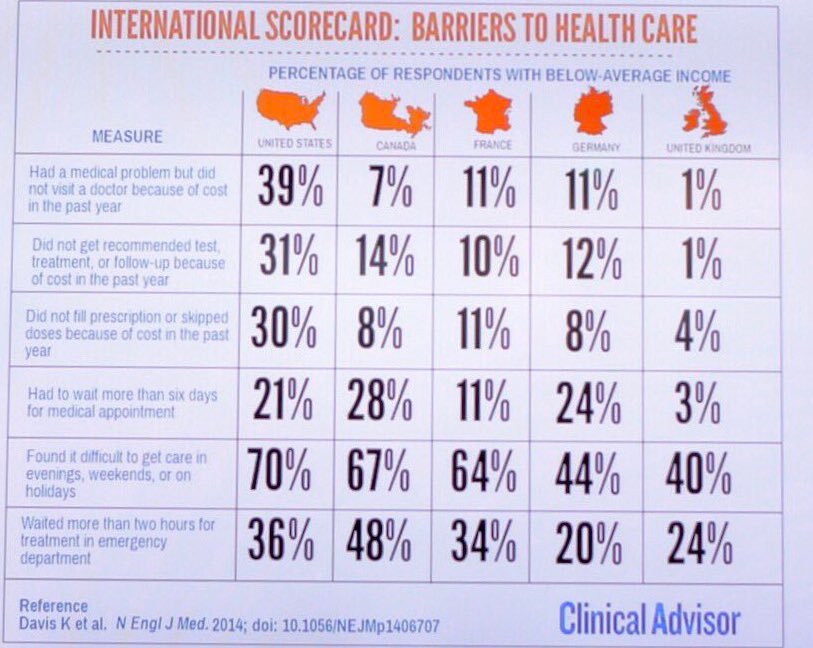
On the one hand, there is the force of the multinational corporations, driven by their profit motive. In the US, where they are dominant in the healthcare system, these corporations make enormous profits, healthcare is not universal, and it is hugely more expensive for the outcomes patients receive than in the UK. We see the balance of power in the UK is with private healthcare companies, and the direction of change is towards a US-style insurance system.
On the other hand, there is the force of the public, and of democracy. Opinion polls consistently show a majority in favour of a publicly provided NHS, and opposed to privatisation and a two-tier system. Therefore, the best way to support the NHS is to empower the public. There are two priorities. First, clear information that public provision is not only the fairest way to deliver healthcare, but also the most cost-effective. Second, a loud voice and the political power to make politicians act on our behalf.
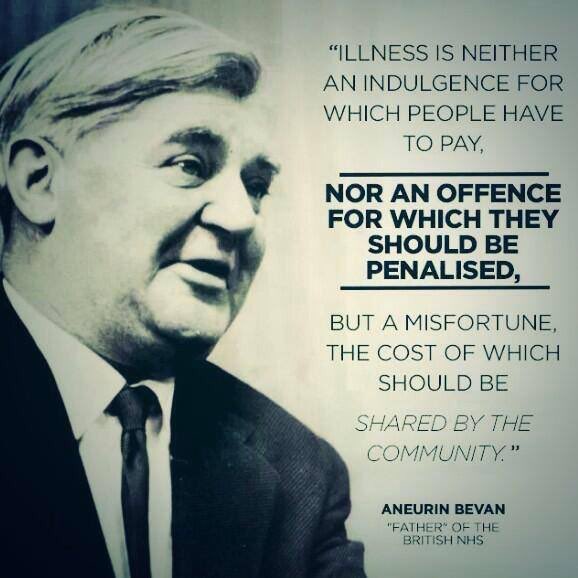
If that all sounds political, that is because the NHS has always been political. It was set up in the face of political opposition. It is Britain’s finest public service and a cornerstone of our society, something that binds us together. People value the NHS, and are proud that we treat everyone equally when they are sick. The NHS brings out the best in us. We cannot lose it.
• Stephen Hawking, the author of A Brief History of Time, is director of research at the Centre for Theoretical Cosmology at the University of Cambridge, where he was Lucasian professor of mathematics
A eulogy to the NHS: What happened to the world my generation built?
In 1926, Harry Leslie Smith's sister died of TB in a workhouse infirmary, too poor for proper medical care. In 1948, the creation of the NHS put a stop to all that. In an extract from his new book, Harry's Last Stand, he describes his despair at the coalition's dismantling of the welfare state
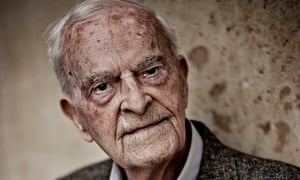
Harry Leslie Smith: 'The creation of the NHS made us understand that we were our brother’s keeper.' Photograph: Sarah Lee for the Guardian
Amidwife with a penchant for gin delivered me into the arms of my exhausted mother on a cold, blustery day in February 1923. I slept that night in my new crib, a dresser drawer beside her bed, unaware of the troubles that surrounded me. Because my dad was a coal miner, we lived rough and ready in the hardscrabble Yorkshire town of Barnsley. Money and happiness didn't come easily for the likes of us.
Considering the hunger, the turmoil and the squalor in Britain during the early years of the 20th century, it was miraculous that I lived to see my third birthday. That I survived colic, flu, infection, scrapes and bangs without the benefits of modern sanitation, hygiene or health care, I must give thanks to my sturdy peasant genes. As a baby, I was ignorant of the great sorrow that enveloped England and Europe like a damp, grey fog. The nation was still in mourning for her dead from the world's first Great War. It had ended only five short years before my arrival. Nearly a million British soldiers had been killed in that conflict. It had begun in farce in 1914 and ended in bloody tragedy in 1918. In four years, that war killed more than 37 million men, women and children around the world.
Even when the guns across the battlefields were made dumb by peace, the killing didn't stop. Death refused to take a holiday and a pestilence stormed across the globe. It was called the Spanish flu. The pandemic lasted until 1921 and erased 100 million people from the ledger book of the living.
Like most people in Barnsley, my family occupied a terraced house. They were built back-to-back and in a row of 10 units. There was little space, privacy or comfort for us or any of the other occupants. It was just a place to rest your head after spending 10 hours hacking coal from the side of a rock face hundreds of feet below ground. Three walls out of four were connected to another household.
Barnsley covered in snow, 1930. Photograph: Fox Photos
The floors were made of hard slate rock and were sparsely covered with old rags that had been hand-woven into coarse mats. The interior walls were comprised of wet limestone coated in a gruel-thin whitewash that never seemed to look clean.
In summer our home was hot, in autumn damp, and in winter bitterly cold, while spring was as wet as autumn again. The house had no electricity and only the parlour and scullery possessed a gaslight fixture. After sunset, it sputtered and hissed a gloomy yellow light that illuminated our poverty. I shared a room with my older sister, Alberta. We slept together on a straw mattress that was host to many insects and reeked of time and other people's piss. Its covering was made from a rough material that was as uncomfortable to me as the occasions when my father tickled my face with his moustache. Depending on the season, I slept in my undershirt or remained fully clothed. During the cold months, Alberta and I nestled together and shared our body heat to stave off the chilling frost beating against the windowpane. Our parlour had no furniture except a stool and an upright piano that had come as part of my dad's legacy from his father. But it stood mute against the wall because the room was occupied by my infirm and dying eldest sister, Marion.
At the age of four she had contracted tuberculosis, which was a common disease among our class. Her ailment was caused because my parents were compelled to live in a disease-ridden mining slum at the end of the Great War. Eventually my parents were able to leave the slum but by then the damage had already been done to my sister's health, and the TB spread into her spine. It left her a paraplegic with a hunchback. For the last 12 months of her life, Marion was totally dependent on my mother to be fed, bathed and clothed. In those days, there was no national health service; you either had the dosh to pay for your medicine or you did without. Your only hope for some medical care was the council poorhouse that accepted indigent patients.
Miners leaving a Yorkshire pit after an explosion, 1930. Photograph: Associated Newspapers/Rex
As a young lad, I was encouraged by my parents to spend time with my ailing sister. I think it was because they knew that she was dying and they wanted me to remember her for the rest of my life. I didn't comprehend illness or death because I was only three, so I contented myself with playing near her sick bed. On some occasions, I told her nonsense stories, but my sister couldn't respond to my kindness because the disease had destroyed her vocal cords.
Even though she was in extreme pain while the TB ate away at her spine and invaded her vital organs, she was silent. My sister always seemed to be looking past me with her large expressive eyes. Perhaps she was waiting for death, or perhaps she found the gaslight casting shadows on the opposite wall an appealing distraction from the monotony of the pain that consumed her 10-year-old body.
TB was known in the 19th century as the poet's disease, but I saw no lyricism in the way it killed Marion. As the autumn days grew shorter in 1926, so did the time my sister had to live. Her last weeks were unbearable but she still fought death. She thrashed her arms about in defiance against the coming end to her life. My parents tried to calm her by stroking her hair or singing to her, but she wasn't pacified. Instead, Marion wept silent tears and continued to struggle with so much ferocity that in the end my dad reluctantly restrained her to her bed with a rope.
My parents decided that there was nothing more that could be done for Marion in their care, so they arranged for her to be placed in our local workhouse infirmary. It was the last stop for many people who were too poor to pay for a doctor or proper hospital care. The workhouse in our community was a forbidding building that had been constructed during the age of Dickens. In the century before I was born it was used to imprison debtors, house orphans and provide primitive health care to the indigent. By the time Marion was sent there, it was no longer used as a prison. However, orphans, the sick and those with communicable diseases were still incarcerated behind its thick, towering black walls.
On one of the last days in September my mother pawned her best dress and my father's Sunday suit and hired a man with an old dray horse and cart to come to our house and collect Marion. When he arrived, my dad carried Marion outside and carefully placed her into the delivery carriage where my mother was waiting
Alberta and I stood on the side of the street and waved goodbye to Marion. I asked my dad where my sister was going and he mournfully replied: "She's going to a better place than here." Afterwards, he put his arms around me and Alberta and we watched the horse-drawn carriage slowly plod down our road towards the workhouse infirmary.
That was the last time I saw my sister alive.
Marion died a month later in the arms of my mother. There was no wake, no funeral service and even much later there was no headstone erected to mark her brief passage in life. My family, like the rest of our community, was just too poor to afford the accoutrements of mourning. We relied on my dad's minuscule salary just to keep us with a roof over our heads and dry in the perpetual hard luck rain of Yorkshire. Even my dead sister's landau was quickly dispatched to the pawnbroker's shop where it was swapped for a few coins to help feed her hungry living siblings.
My sister's body was committed to a pauper's pit and interred in an unmarked grave along with a dozen other forgotten victims of penury. My parents didn't even have a picture to remember their daughter's life. To the outside world, it was as if she was never there, but for our family her life and her end profoundly affected us. My father never mentioned Marion's name again. It wasn't out of callousness or disrespect, but because her death festered in his soul like a wound that never healed. For the rest of his life my dad carried with him an unwarranted guilt that he was responsible for Marion's tuberculosis, and it cut him deep. As for my mother, she often talked about Marion. As my family stumbled from misery to calamity, through the pitch dark of the Great Depression, my mother invoked my dead sister's name as a warning that the workhouse awaited each of us, unless the world and our circumstances changed.
It would be almost 20 years before, in 1948, the NHS was formed, and for the first time in my civilian life I went to a doctor's surgery and was treated for bronchitis with antibiotics that assured me a speedy and safe recovery. The cost to me was nothing, and I was grateful because I was skint, having just started back in the civilian working world.
An NHS immunization van in the 50s. Photograph: Popperfoto
As I convalesced, I was gobsmacked at the great consequences of free health care and the potential it offered to improve our society. It was a transformational shift in how we as a country viewed our fellow citizens. The creation of the NHS made us understand that we were in truth our brother's keeper, and that taxation benefits everyone through maintaining not just our roads and sewers but the health of our children, workers and elderly.
To me, the introduction of free health care was the first brick laid on the road to the social welfare state. So it has always been difficult for me to listen to politicians, proud possessors of health insurance and shares in private health care companies, when they talk about how the health service that we fought so hard to build must change. The coalition government's Health and Social Care Act will create a two-tier health care system. This act will see the NHS stripped down like a derelict house is by criminals for copper wiring.
Ukip has even proposed that A&E patients should have the right to buy their way to the front of the queue, while in Merseyside a private for-profit cancer clinic has set up shop under the NHS umbrella. Where will all of this end? What will be given the greatest priority in a new health care system that sends every service, from blood work to chemotherapy, out to the lowest bid tender?
It ends where I began my life – in a Britain that believed health care depended on your social status. So if you were rich and insured you received timely medical treatment, while the rest of the country got the drippings. One-fifth of the lords who voted in the controversial act – which provides a gateway to privatise our health care system – were found to have connections to private health care companies. If that doesn't make you angry, nothing will.
Sometimes I try to think how I might explain to Marion how we built these beautiful structures in our society – which protected the poor, which kept them safe at work, healthy in their lives, supported them when they were down on their luck – only to watch them be destroyed within a few short generations. But I cannot find the words.
Harry's Last Stand by Harry Leslie Smith is published by Icon Books at £12.99. To order a copy for £9.99, visit theguardian.com/bookshop or call 0330 333 6846.'
When it was revealed that Google’s London-based company DeepMind would be able to access the NHS records of 1.6 million patients who use three London hospitals run by the Royal Free NHS trust – Barnet, Chase Farm and the Royal Free – it rang alarm bells.
Not just because the British fiercely guard their intimate medical histories. Not just because Google, a sprawling octopus of a company with tentacles in all our lives, wishes to “organise the world’s information”. Not just because patients are unlikely to have consented to Google having this information.
The issue for many is the intertwining of these concerns with the idea of artificial intelligence (AI). DeepMind is no ordinary company. It specialises in AI, developing technology to exhibit something like intelligent reasoning.
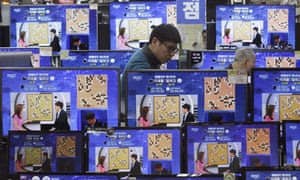
Last year its engineers produced a research paper showing it had created a program that could replicate the work of a “professional human video games tester”. In March, Google’s DeepMind made history by creating a program that mastered the 3,000-year-old Chinese board game Go, thought to be beyond current technology because of the number of possible moves. In what was considered a computing milestone, the company’s AlphaGo program beat the world Go champion 4-1.
Now such a company has a database containing detailed, private, albeit anonymised, records of all these people’s medical history, including HIV status, past drug overdoses and abortions. DeepMind says it needs the data to produce medical alerts for hospitals attempting to prevent acute kidney injuries.
The fear for some is that DeepMind’s database could allow for much more than the original stated purpose. The public is no stranger to the fact that NHS patient privacy has not been safeguarded – in 2014 the government was forced to halt and then scale back its proposals to produce a single English medical database over concerns that medical confidentiality could be put at risk.
DeepMind has not hidden its work with the NHS, announcing in February it was working with the health service to build an app called Streams to help doctors and nurses monitor kidney patients. What it did not reveal was the extent of its data haul, which encompasses historical patient records. Instead of the few thousand patients with kidney injuries, DeepMind got all the patient records of all three hospitals. That’s millions of confidential documents.
It says it needs the entire patient database to make Streams work. Backers of such databases claim that with such data powerful software packages can be created to diagnose diseases sooner.
The New Scientist magazine obtained the data-sharing agreement between DeepMind and the NHS, which revealed just how much information was being made available. The Google company’s skill is to discern complex patterns in huge quantities of data – and the NHS is a goldmine for such “deep learning”.
In this treasure trove of data are logs of day-to-day hospital activity, such as records of the location and status of patients – as well as who visits them and when. DeepMind will also obtain pathology and radiology test patient records.
As well as real-time data, DeepMind has access to the historical records from critical care and accident and emergency departments. Crunching this information, so the theory goes, allows DeepMind to develop predictions based on data that is too broad in scope for any one person to assimilate and analyse.
By comparing patient data, DeepMind might be able to predict that someone is in the early stages of a disease that has not yet become apparent. This is the medical holy grail: not treating a patient when they are ill, but treating them before they become ill.
Utopian? Perhaps. Behind the promise of these technologies lies the crux of the dilemma in the age we live. Google, Facebook and others feed on the fact we suspend our privacy rights in return for new technology built with our data.
Like Apple, Google is building a reputation in medical apps. It is also true that the use of machine learning in medicine by academics is nothing new. However this data is being passed to and controlled by one of the world’s biggest and most powerful companies. It raises questions over whether it might quickly become the biggest player, a de facto monopoly, over NHS health analytics.
AI also represents something new, a promise that a program could improve itself – and very quickly surpass human intellect. This is the so-called “intelligence explosion” – a point where humanity courts its own destruction. We are some way off this. No one has built a machine that respects social and ethical norms, even at the expense of its goals. It’s difficult enough to get humans to do that.
Some may say such extrapolation is ridiculous. After all Tay – the “intelligent” Twitter chatbot from Microsoft – lasted a few hours until she “learned” to become a racist, genocidal tweeter and was killed off. However as Elon Musk, the inventor who originally invested in DeepMind, said, it was worries over “Terminator” technology that drove him to warn about its dangers.
For perhaps sound commercial reasons, DeepMind operates under the radar. But this often raises more questions than answers. Google’s AI ethics board, established when Google acquired DeepMind in 2014 for £400m, remains one of the biggest mysteries in technology, with both companies refusing to reveal who sits on it.
Artificial intelligence needs data to learn. Hence the sucking up of all those patient records by Google’s DeepMind. So why the secrecy? If patients had been told what was going on and why, they could make informed choices. If they think the potential risks of Google dominance over a new critical technology for the NHS are outweighed by the benefits, then let’s have that debate. But if the company does not explain and carries on in secret, the public will rightly not go along with such plans.