Showing posts with label architecture. Show all posts

Thursday, March 31, 2016

RIP Zaha Hadid


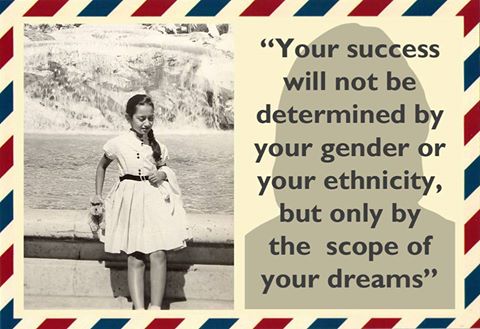
Zaha Hadid has sadly died. She recently wrote a postcard to her younger self for BBC Arts with these words of wisdom
http://www.zaha-hadid.com/

'

ZAHA HADID 1950-2016

It is with great sadness that Zaha Hadid Architects have confirmed that Dame Zaha Hadid, DBE died suddenly in Miami in the early hours of this morning. She had contracted bronchitis earlier this week and suffered a sudden heart attack while being treated in hospital.

Zaha Hadid was widely regarded to be the greatest female architect in the world today. Born in Baghdad in 1950, she studied mathematics at the American University of Beirut before starting her architectural journey in 1972 at the Architectural Association in London.
By 1979 she had established her own practice in London – Zaha Hadid Architects – garnering a reputation across the world for her ground-breaking theoretical works including The Peak in Hong Kong (1983), the Kurfürstendamm in Berlin (1986) and the Cardiff Bay Opera House in Wales (1994).

Working with office partner Patrik Schumacher, her interest was in the interface between architecture, landscape, and geology; which her practice integrates with the use of innovative technologies often resulting in unexpected and dynamic architectural forms.
Zaha Hadid’s first major built commission, one that affirmed her international recognition, was the Vitra Fire Station in Weil Am Rhein, Germany (1993); subsequent notable projects including the MAXXI: Italian National Museum of 21st Century Arts in Rome (2009), the London Aquatics Centre for the 2012 Olympic Games (2011) and the Heydar Aliyev Centre in Baku (2013) illustrate her quest for complex, fluid space. Buildings such as the Rosenthal Center for Contemporary Art in Cincinnati (2003) and the Guangzhou Opera House in China (2010) have also been hailed as architecture that transforms our ideas of the future with visionary spatial concepts defined by advanced design, material and construction processes.

In 2004, Zaha Hadid became the first woman to be awarded the Pritzker Architecture Prize. She twice won the UK’s most prestigious architecture award, the RIBA Stirling Prize: in 2010 for the MAXXI Museum in Rome, a building for the staging of 21st century art, the distillation of years of experimentation, a mature piece of architecture conveying a calmness that belies the complexities of its form and organisation; and the Evelyn Grace Academy, a unique design, expertly inserted into an extremely tight site, that shows the students, staff and local residents they are valued and celebrates the school’s specialism throughout its fabric, with views of student participation at every turn.

Zaha Hadid’s other awards included the Republic of France’s Commandeur de l’Ordre des Arts et des Lettres, Japan’s Praemium Imperiale and in 2012, Zaha Hadid was made a Dame Commander of the Order of the British Empire.  She was made Honorary Member of the American Academy of Arts and Letters and Fellow of the American Institute of Architecture.

She held various academic roles including the Kenzo Tange Chair at the Graduate School of Design, Harvard University; the Sullivan Chair at the University of Illinois, School of Architecture. Hadid also taught studios at Columbia University, Yale University and the University of Applied Arts in Vienna.

Zaha Hadid was recently awarded the RIBA’s 2016 Royal Gold Medal, the first woman to be awarded the prestigious honour in her own right. Sir Peter Cook wrote the following citation:
"In our current culture of ticking every box, surely Zaha Hadid succeeds, since (to quote the Royal Gold Medal criteria) she is someone “who has made a significant contribution to the theory or practice of architecture…. for a substantial body of work rather than for work which is currently fashionable.”  Indeed her work, though full of form, style and unstoppable mannerism, possesses a quality that some of us might refer to as an impeccable ‘eye’: which we would claim is a fundamental in the consideration of special architecture and is rarely satisfied by mere ‘fashion’.

And surely her work is special. For three decades now, she has ventured where few would dare: if Paul Klee took a line for a walk, then Zaha took the surfaces that were driven by that line out for a virtual dance and then deftly folded them over and then took them out for a journey into space. In her earlier, ‘spiky’ period there was already a sense of vigour that she shared with her admired Russian Suprematists and Constructivists – attempting with them to capture that elusive dynamic of movement at the end of the machine age.
Necessarily having to disperse effort through a studio production, rather than being a lone artist, she cottoned–on to the potential of the computer to turn space upon itself. Indeed there is an Urban Myth that suggests that the very early Apple Mac ‘boxes’ were still crude enough to plot the mathematically unlikely – and so Zaha with her mathematics background seized upon this and made those flying machine projections of the Hong Kong Peak project and the like. Meanwhile, with paintings and special small drawings Zaha continued to lead from the front. She has also been smart enough to pull in some formidable computational talent without being phased by its ways.

Thus the evolution of the ‘flowing’ rather than spikey architecture crept up upon us in stages, as did the scale of her commissions, but in most cases, they remained clear in identity and control. When you entered the Fire Station at Vitra, you were conscious of being inside one of those early drawings and yes, it could be done. Yet at perhaps its highest, those of us lucky enough to see the Heydar Aliyev Center in Baku in the flesh, can surely never have been in such a dream-like space, with its totality, its enormous internal ramp and dart-like lights seeming to have come from a vocabulary that lies so far beyond the normal architecture that we assess or rationalize.

So we are presenting her with this Medal as a British Institution: and as a Dame Commander of the Order of the British Empire: thus she might seem to be a member of our British Establishment. Yet in reality, many of our chattering classes and not a few fellow architects have treated her with characteristic faint praise, and when she heroically won the Cardiff Opera House competition, blocking the scheme. Or when we awarded her the RIBA Stirling Prize for the school in South London – her second win in a row - we, the jury, were loudly derided by a number of distinguished architects. Of course, in our culture of circumspection and modesty her work is certainly not modest, and she herself is the opposite of modest. Indeed her vociferous criticism of poor work or stupidity recalls the line-side comments of the tennis player John McEnroe. Yet this is surely characteristic of the seriousness with which she takes the whole business: sloppiness and waywardness pain her and she cannot play the comfy British game of platitudinous waffle that is the preferred cushion adopted by many people of achievement or power. Her methods and perhaps much of her psychology remain Mesopotamian and not a little scary: but certainly clear.
As a result, it is perhaps a little lonely there up at the top, surrounded now by some very considerable talent in the office, but feared somewhat and distanced from the young. Yet in private Zaha is gossipy and amusing, genuinely interested in the work of talented colleagues who do very different architecture such as Steven Holl, and she was the first to bring to London talent such as Lebbeus Woods or Stanley Saiotowitz. She is exceptionally loyal to her old friends: many of whom came from the Alvin Boyarsky period of the Architectural Association:  which seems to remain as her comfort zone and golden period of friendship. Encouraged and promoted at an early age by Boyarsky, she has rewarded the AA with an unremitting loyalty and fondness for it.

The history of the Gold Medal must surely include many major figures who commanded a big ship and one ponders upon the operation involved that gets such strong concepts as the MAXXI in Rome – in which the power of organization is so clear - or the Bergisel Ski Jump in Innsbruck where dynamic is at last captured – or the Aquatics Centre for the London Olympics where the lines diving boards were as fluid as the motion of the divers - made into reality. And she has done it time and time again in Vienna, Marseilles, Beijing and Guangzhou. Never has she been so prolific, so consistent. We realize that Kenzo Tange and Frank Lloyd Wright could not have drawn every line or checked every joint, yet Zaha shares with them the precious role of towering, distinctive and relentless influence upon all around her that sets the results apart from the norm. Such self-confidence is easily accepted in film-makers and football managers, but causes some architects to feel uncomfortable, maybe they’re secretly jealous of her unquestionable talent. Let’s face it, we might have awarded the medal to a worthy, comfortable character. We didn’t, we awarded it to Zaha: larger than life, bold as brass and certainly on the case.

Our Heroine.

How lucky we are to have her in London."'

Tuesday, January 19, 2016

Far Eastern architecture

Japanese Kitchen


 Japanese bathrooms


 Old Japanese homes

Innovation in Tatami mats


Traditional Japanese home


Layouts of homes

At 4 mins in the video below, toilet, with sink above flush allowing reuse of water used to wash hands.


Also at 1.30 below. Also, sections of bathroom separated by folding doors 2.30


1.90 bathroom set out, 3.10 kitchen sink


3.20 practical sink cabinet unit, 5.43 kitchen layout


General - What the Ancients knew


traditional style home

Photo
The largest restored palace in Kashan has several courtyards and is a tourist attraction.CreditNewsha Tavakolian for The New York Times
KASHAN, Iran — A petite woman in gray boots and a checkered scarf, Shanaz Nader had spent much of her adult life abroad, with long stretches in Tokyo, London and New York. But here she was braving a cold wind in this desert city three hours south of Tehran, making her way through a maze of high mud-brick walls.
Black-clad women waited at a small bakery as the rattling noise of a motorcycle in the distance echoed through the alleys. Finally, Mrs. Nader, an interior designer in Tehran, reached her destination: a large, two-panel wood door that opened up to her fully renovated weekend home, a majestic old Iranian house with four bedrooms, colored-glass windows, a separate office, two garden areas and a large rectangular marble fountain.
After boiling tea, Mrs. Nader, 68, sighed and sat down under an arched passageway. The sun reflected in the fountain, as the wind blew in faint sounds of the midday call to prayer.
“Whenever I dreamed of Iran while being in some faraway place, I dreamed of owning such a house,” she said.
Photo
Shanaz Nader, in the house that she bought and restored.CreditNewsha Tavakolian for The New York Times
For thousands of years, houses with secluded gardens and courtyards have been a cornerstone of Iranian architecture, which strongly influenced structures like the Alhambra and the Taj Mahal. Similar dwellings are described in literature from Achaemenid times, around 700 B.C., and their old Persian name is the root for the word “paradise.”
But in past decades the houses fell out of favor and were widely demolished to make way for glassed apartment blocks, especially in Tehran. The sprawling family gardens on the flanks of the Alborz Mountains in the capital have long since been demolished to make way for high rises, turning landowners into millionaires but wiping out Iran’s architectural heritage.
But Mrs. Nader and some others are beginning to reverse that trend. In recent years, dozens of houses and palaces in Kashan, a city known for its carpets and traditional Iranian architecture, have been painstakingly renovated into holiday homes and hotels.
She was drawn to Kashan in 2008 when the owner of one of the palaces,Manoucheri House, built 200 years ago by a local merchant family, asked for her help in transforming it into a boutique hotel. Well known in Tehran for her basic but tasteful furniture and printed textiles that strike a delicate balance between the old and the new, Mrs. Nader was an obvious choice for the job, and she jumped at the opportunity.
Now, all across the old neighborhoods of Kashan, laborers are renovating houses that until recently were neglected by their owners.
At first the newcomers stirred opposition from local people, apparently upset that some of the renovations were being done with government money, which they wanted for building modern housing. “Hundreds of people signed a petition asking for the old houses to be flattened instead,” said Akbar Arezugar, 54, a renovation supervisor from Kashan. “But when the renovation was done, the cleric who was leading the opposition personally called everybody involved, apologized and applauded the work we had done.”
Photo
While many Iranian cities face unemployment and an economic downturn, the burst of renovations — most of them by individuals — is keeping Kashan bustling.CreditThe New York Times
While many Iranian cities face unemployment and an economic downturn because of sanctions and mismanagement of the economy, the burst of renovations — most of them by individuals — is keeping Kashan bustling.
Mohsen Shahi, a 26-year-old architect, said he much preferred working on the renovations to designing apartment buildings, something that many of his university friends are doing. “If I had an unlimited budget I would buy old houses and rebuild them the way they were,” he said.
Mr. Shahi was working on the Ameri House, a huge property with seven courtyards with fountains and dozens of rooms that is scheduled to open as a hotel in April. “For a long time it seemed as though our love for culture had diminished in our country,” he said. “Those old families that once built these beautiful houses were not thinking of profits, but of their legacies. Thankfully, now we are starting to learn from them.”
When her work on the boutique hotel was finished, Mrs. Nader looked for a place of her own. The first time she saw her house it was run-down and filled with dirt. Parts were even slated for demolition. “I bought it for $20,000 and people said I was crazy,” she said, while giving a tour of the house. The restoration cost another $300,000, she said, and has been worth every penny.
She is planning to write a book on traditional Iranian architecture, and has also built an office where she wants to work with local architects.
For most people, it is a labor of love. For the hotels, renovation costs are high, without much prospect of making profits. There are almost no foreign tourists anymore making their way to Kashan, which lies 30 miles north of Iran’s main uranium enrichment facility in Natanz. Many people fear the nuclear site could one day come under attack, with possibly deadly consequences for those living in its vicinity.
“Sometimes I worry about the future,” she said, standing on one of the roofs of her house. In the distance, snow-capped mountain peaks basked in the sun. “But history shows that Iran always lands on its feet. I’m not abandoning ship.”

architecture ideas

ancient

https://en.wikipedia.org/wiki/Yakhchal


overview

http://www.archinomy.com/case-studies/682/traditional-house-in-yazd-city-iran

http://www.nytimes.com/2013/01/10/world/middleeast/restoring-irans-majestic-homes-in-a-high-rise-era.html

sociological

http://www.oikodomos.org/workspaces/app/webroot/files/deliveries/skahayyat13135_150_ProcessofHousingTransformationinIran.pdf

http://www.mukogawa-u.ac.jp/~iasu2012/pdf/iaSU2012_Proceedings_204.pdf

http://web.usm.my/jcdc/vol14_1_2009/5_Mahta%20(p.69-80).pdf

http://www.academia.edu/11858960/Overview_of_design_concepts_of_traditional_Iranian_architecture_and_its_reflections_in_Iranian_contemporary_architecture

the social relationship of contemporary residents in Iranian housing - http://pkukmweb.ukm.my/e-bangi/papers/2012/mohsen012.pdf


beauty and human elements

Architectural Space Affordance of Iranian Traditional Houses in Response to Levels of Physical and Spiritual Human Needs : (Case studies: Boroujerdiha house in Kashan and Zinatolmolk house in Shiraz) - 

http://ac.els-cdn.com/S1877042815048338/1-s2.0-S1877042815048338-main.pdf?_tid=7b4c33ca-bec1-11e5-b9c6-00000aacb35e&acdnat=1453217571_e563f9bbe704cf8aa3026c6d8ab06526

APPLICATION OF DECORATIVE ARTS IN IRANIAN TRADITIONAL HOUSES *Zahra Tamjidi1 and Alireza Bozorgvar2 - http://www.cibtech.org/sp.ed/jls/2015/01/47-JLS-S1-59-%20(21).pdf

functional and energy efficiency

Traditional rural house an example of energy efficient building in Fars province of Iran Khosro Movahed1,* , Kaveh Fattahi2  - http://www.silascience.com/articles/28102013102744.pdf

Daylight Design Strategies: A Lesson from Iranian Traditional Houses  -http://www.mcser.org/journal/index.php/mjss/article/viewFile/1050/1080

Energy Efficient Architectural Design Strategies in Hot‐Dry Area of Iran: Kashan Kamyar Tolou Behbood1 , Mohammad Taleghani2 and Shahin Heidari3 - https://c.ymcdn.com/sites/www.nibs.org/resource/resmgr/BEST/BEST2_051_WB13-2.pdf

https://www.britishcouncil.org/voices-magazine/how-iranian-architects-invented-ways-stay-cool

http://www.hedon.info/docs/EWB_HABITAT_Faranak_Zaimi_The_way_of_saving_energy_in_the_traditional_houses_of_Iran.pdf

THERMAL COMFORT ANALYSIS OF A TRADITIONAL IRANIAN COURTYARD FOR THE DESIGN OF SUSTAINABLE RESIDENTIAL BUILDINGS  - http://www.ibpsa.org/proceedings/BS2013/p_2377.pdf

http://www.amusingplanet.com/2015/02/the-wind-catchers-of-iran.html

general pics

http://www.irangazette.com/en/gallery.html

http://uncorneredmarket.com/photos/tag/persian-design/page1/
http://uncorneredmarket.com/photos/tag/persianarchitecture/page1/
http://uncorneredmarket.com/photos/tag/traditional-house/page1/
http://www.iranvisitor.com/iran-culture/persian-decor
https://www.pinterest.com/parisarazavii/iran-traditional/
http://www.tripadvisor.co.uk/Hotel_Review-g680023-d3368054-Reviews-Manouchehri_House-Kashan_Isfahan_Province.html


random finds

http://dornob.com/cave-homes-for-sale-700-year-old-carved-rocks-of-iran/