Showing posts with label health delivery. Show all posts
Showing posts with label health delivery. Show all posts
Saturday, March 23, 2019


Tuesday, January 01, 2019
'the dangers of false certainty'
https://edition.cnn.com/2018/12/21/health/medical-uncertainty-diagnosis-afm/index.html
'Widespread and dangerous': Facing medical uncertainty, some doctors tell patients it's all in their heads

(CNN)When 7-year-old Bailey Sheehan arrived at a hospital in Oregon partially paralyzed, a doctor said the girl was faking her symptoms to get her parents' attention because she was jealous of her new baby sister.
But that doctor was proved wrong when an MRI showed that the girl had acute flaccid myelitis or AFM, a polio-like disease that's struck hundreds of children since 2014.

Erin Olivera, mother of a child with AFM and founder of a private Facebook page for parents of 400 children with the disease, says Bailey's experience is hardly unique. She estimates that based on postings by parents, as many as 1 in 10 children were told that the paralysis was all in their heads when they first sought medical care.
Experts who study the art and science of diagnosis say the problem goes beyond this one rare disease. They say that in general, when presented with a puzzling disease, physicians too often leap to a diagnosis of a psychiatric problem.
"Mental disorders become the default position to deal with medical uncertainty," said Dr. Allen Frances, former chair of psychiatry at the Duke University School of Medicine. "It's widespread, and it's dangerous."
Dr. Mark Graber, president emeritus of the Society to Improve Diagnosis in Medicine, added, "It's a tendency that physicians have when they can't find a physical cause.
"It's bad. It's very bad."
Bailey's story
Bailey was a healthy little girl until October 28, 2014, when she suddenly couldn't move her neck or her right shoulder or leg.
A rehabilitation expert at a children's hospital said Bailey wasn't really paralyzed, according to her mother, Mikell Sheehan.
The doctor said the paralysis was an emotional reaction to her sister's birth four months earlier. He diagnosed Bailey with a mental condition called conversion disorder.
Sheehan told the doctor off.

Bailey Sheehan was diagnosed with AFM after her mother disagreed with an initial diagnosis.
"I said, 'You've been with my child for 15 minutes, and you think it's psychological? Get out of my face,' " she remembered.
Sheehan said the doctor hinted that she was unstable.
"He said, you know, 'moms with new babies don't get enough sleep,' " she said.
Bailey's regular pediatrician, who'd known the girl since birth, disagreed with the diagnosis and pushed for further testing. That's when the MRI showed that she had AFM.
Armed with the correct diagnosis, Bailey received treatment for AFM, including extensive physical therapy, and four years later is walking again.
"We were lucky that her pediatrician was such an advocate for us, but I don't know if everyone's that lucky," Sheehan said.
Sheehan says she understands why doctors didn't immediately think of AFM for her daughter, because the disease was not well-known four years ago. But there are several other causes of paralysis in children, and she wonders why her daughter didn't get a full round of testing for those.
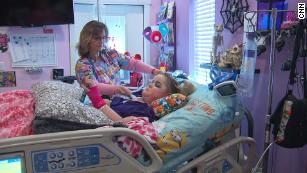
Dr. Benjamin Greenberg, a neurologist who's seen cases of AFM across the country, said that even this year, when AFM has made headlines nationally, parents have told him that doctors have missed the disease and suggested that their children were faking their paralysis.
"The stories I can tell are maddening and saddening," said Greenberg, associate professor of neurology at UT Southwestern Medical Center.
Four years later, Sheehan says, she still feels the scars from her daughter's misdiagnosis.
"You feel violated and wrongly accused," she said.
The dangers of false certainty
Though there's no data indicating how frequently doctors misdiagnose physical conditions as psychiatric ones, experts in the field of diagnosis say they see it all too often.
It typically starts when a patient has a perplexing illness and doctors feel a need to come up with a diagnosis.
"Doctors are uncomfortable with not having answers," Frances said.
The consequences can be "catastrophic," he said, because a misdiagnosis can lead to a patient receiving treatment for a disease they don't have and missing out on treatment for the disease they do have.
"False certainty is much more dangerous than uncertainty," he said.
The American Medical Association and the American College of Emergency Physicians declined requests for comment.
Graber, who is also professor emeritus of medicine at the Stony Brook University in New York, said part of the problem is that medical students are taught that physical symptoms sometimes have a psychological basis. That's true, he said, but doctors need to thoroughly test for physical problems before defaulting to a psychiatric diagnosis.
"Physicians have an obligation to do a thorough workup before turning to a psychological explanation," he said. "When a doctor can't find a cause, that's a great time to get a second opinion or consult with a specialist."
Frances added that it's OK for a doctor to simply say "I don't know."
"Doctors need to learn to embrace medical uncertainty," he said.
Wednesday, August 08, 2018
A commentary on attitudes in medicine, and medical error
I was saddened by the moral dereliction of Jed Mercurio ('We all kill a few patients as we learn', G2, May 18), by the smug disenfranchising of "laymen" from life-and-death issues and the elevation of cover-ups to the high ground of professional solidarity. There is a much smaller degree of separation than he thinks between the driver whose judgment is impaired by six pints of lager and the houseman whose judgment is impaired after being on call for 80 hours.
I'm sure I am not alone in thinking it scary that the only thing that comes between me and my maker in the small hours of the emergency room is the off chance that a passing consultant disseminates insights gained from previous fatal mistakes to the errant novice. About the only thing the article gets right is the proposition that 70,000 fatalities every year in UK hospitals are the result of systemic faults in management and training.
The sooner the medical profession acknowledges that the right to life is as indivisible, under the declaration of human rights, in suburban hospitals as it is anywhere else, the sooner the unacceptable "accidental" mortality rate in the NHS can be reduced through better training, accountability and collaborative working.
Dr Joe Cullen
Tavistock Institute, London
Dr Joe Cullen
Tavistock Institute, London
Friday, July 06, 2018
'During the event I was hyperfocused... but when it was over, it hit me hard'.
The need for recovery time after serious incidents, and acceptance and understanding that sometimes, people won't be quite the way they were before.
Article in JAMA 'What I learned about adverse events from Captain Sully - it's not what you think' (, and the authors reflections on the responses to her article.
https://jamanetwork.com/journals/jama/article-abstract/2091992?utm_source=silverchair+information+systems&utm_medium=email&utm_campaign=master%3ajamalatestissuetocnotification01%2f27%2f2015#.VMgMwHIauxM.twitter
http://www.marjoriestieglermd.com/thank-you/?hvid=4JrJqi
Article in JAMA 'What I learned about adverse events from Captain Sully - it's not what you think' (, and the authors reflections on the responses to her article.
https://jamanetwork.com/journals/jama/article-abstract/2091992?utm_source=silverchair+information+systems&utm_medium=email&utm_campaign=master%3ajamalatestissuetocnotification01%2f27%2f2015#.VMgMwHIauxM.twitter
http://www.marjoriestieglermd.com/thank-you/?hvid=4JrJqi
Friday, June 01, 2018
“Don’t worry, doc. It’s just one eye. I’ve got two.”
http://more-distractible.org/musings/2018/5/12/just-one-eye
Article by a primary care doctor in his own direct payment practice in the US, navigating healthcare costs for a patient without insurance, in a healthcare system that is focused on making money, and is procedure heavy, but at times, evidence and effectiveness light. Sobering read.
Article by a primary care doctor in his own direct payment practice in the US, navigating healthcare costs for a patient without insurance, in a healthcare system that is focused on making money, and is procedure heavy, but at times, evidence and effectiveness light. Sobering read.
Friday, May 18, 2018
'The Best Medical Care in the World'
https://www.nejm.org/doi/full/10.1056/NEJMms1802026
The Best Medical Care in the World
Brendan M. Reilly, M.D.
May 3, 2018
N Engl J Med 2018; 378:1741-1743
'The first few days he was here, they didn’t know about his defibrillator. That would seem shocking in a palliative care hospital where people come to die, but to one who knows Kenneth’s story, it’s no surprise. He didn’t tell them about the ICD, and the doctors didn’t ask. (Why would they? Do you ask your patients if they happen to have an implanted cardioverter–defibrillator?) They’ve seen the computer disk that accompanied Kenneth here in the ambulance, but there’s no way they’ve read the 5000 digitized pages of medical records from the 19 inpatient institutions where he spent the past 18 months. And even if they did, they might easily miss that one-liner buried in his “past” medical history: “S/P CABG and AICD, 2015.” Remarkably, in every one of those institutions — seven acute care hospitals, two psychiatric centers, five acute rehab facilities, and five nursing homes — Kenneth’s ischemic, arrhythmic cardiomyopathy has been the least of his problems. Now, with his defibrillator discovered (and deactivated), it will be part of the solution.1
On the bedside table is a photograph of a handsome young man with his beautiful blonde wife. Kenneth’s friends wince when they see it: his aging is not the work of time alone. With his snow-white beard and twinkly blue eyes, he’d make a fine Santa Claus if he hadn’t lost a hundred pounds. Instead, at 68, he’s a dead ringer for his father when the old man was dying at 91. Kenneth’s siblings don’t know that this “mortality gap” is the national mean for people with severe mental illness, though another brother, also “touched with fire,” died in his 40s.2,3 But like Kenneth’s big heart, 50 years of mania and depression aren’t why he’s here.
He asks me to reposition his legs. His instructions are detailed, precise, experienced: first the right leg, then the left, hands on the midcalf, not the ankle or knee, don’t lift it, please, just slide it, no, not there, a bit more, there, yes, there. Even this passive activity fatigues him, makes him thirsty. I hold the cup, the straw, so he can drink. “Ah!” he says, licking his lips, so grateful, so cheerful. Hemingway’s “grace under pressure” doesn’t begin to describe it. When a friend comes to visit and play the flute — tunes from West Side Story are his favorite — Kenneth sings along loudly, joyfully, too moved by the music to just lie there and listen. He didn’t sing before he lost the use of his arms and legs. Now, quadriplegic, he sings.
For months, Kenneth had declined to file a malpractice claim. A graduate of a top-tier law school — Kenneth was a senior executive administrator at a major university before he turned 30 — he knows whereof he speaks. But it’s not his legal knowledge that makes him less litigious; it’s his empathy for his caregivers, his capacity to forgive. I’m not an easy case, you know? They did the best they could. He reconsidered only when a friend mentioned Kenneth’s kids, so young years ago when he went off the rails for good. Wouldn’t you like to leave them something after you’re gone? Bankrupted by medical bills, Kenneth said with a hitch in his voice: Yes. Yes, I would.
The negligence is indisputable. The only dilemma will be whom to blame; the suspect list is long and libelous. Is it the first hospital, where the police brought him, incoherent and incontinent, after his fender-bender? (Kenneth complained of neck and arm pain a few days later, but his transfer to the psych hospital had been approved, not an opportunity to miss.) For the next month, Kenneth, still in pain, was confined to a wheelchair; the psych hospital’s putative purpose was patient safety. Is that where they missed it? Or was it the rehab facility where he went next, “weak and deconditioned, in need of intensive physical therapy”? The staff there heard his pain: they obtained a cervical spine x-ray (“mild degenerative changes”) and prescriptions from the doctor who “saw” Kenneth. Combined with his four psychotropic medications, those opioids and sedatives had the desired effect. But whenever relatives telephoned him, day or night, the staff would answer. He’s asleep. Do you want us to wake him? Kenneth’s sister, his legal guardian, flew west to visit him. Inexperienced in medical matters but alarmed by Kenneth’s stillness, his “refusal” even to hold a spoon, she asked about his arms and legs. Yes, Kenneth’s nurse reassured her, isn’t it remarkable what the mind can do? It’s like his head isn’t connected to the rest of his body!
Hard to believe? The next three institutions missed his quadriplegia, too. When he was transferred from the rehab facility to a local hospital (a different one) for “suspected bowel obstruction and renal failure,” Kenneth’s quietude from the neck down elicited no curiosity. Unnerved by Kenneth’s persistent “refusal” to answer the telephone, a brother who lived far away asked his nurse: Has he had a neurological examination? The nurse was righteous: That’s not why he’s here. He’s here for a GI workup. This mission was accomplished — the workup comprised a plain film of his abdomen plus “careful observation” — his discharge diagnosis read “acute paralytic ileus and urinary retention” (my italics, but I kid you not). After transfer to an acute rehab facility (a different one), Kenneth’s new bladder catheter worked but the high-fiber diet didn’t. Soon he was back in the hospital (a different one) where, at his brother’s insistence, someone examined Kenneth’s limbs. Sure enough, there seemed to be a problem. This discovery prompted a consultation — by a psychiatrist.
Kenneth was depressed, the consultant concluded, his “psychomotor retardation” likely to benefit from a change in his psychopharmacology. On the telephone with Kenneth’s brother, the psychiatrist conceded that he might be depressed too if he couldn’t move his arms or legs. Largely to appease the brother, the psychiatrist recommended a neurology consult. The neurologist wanted STAT imaging of Kenneth’s cervical spine — his neuro exam was “clearly myelopathic” — but the defibrillator nixed the MRI. After plans were initiated to transfer him urgently to a tertiary care center, Kenneth’s brother called again. He hasn’t been moved yet? What’s the delay? On the phone, a voice whispered frantically in the background: No, no! That’s the doctor brother! We can’t talk to him!
The lawyers, of course, will want to know the rest of the story. (Legally, it’s not the negligence that matters, it’s the loss incurred, the damage done.) Given the delay in diagnosis — CT myelography showed “multiple disc herniations with severe cord compression at C3-C5” — Kenneth’s neurosurgeon predicted postoperative results no better than “improvement of neck pain and possible return of some upper extremity function.” And indeed, 6 months later, Kenneth’s neck felt better and he could wiggle fingers on one hand. But the neurosurgeon never heard the rest of the story. Months of drug-induced stupor and delirium. Repeated hospitalizations for “urosepsis” (never documented), each time treated with weeks of broad-spectrum antibiotics. Intractable colicky diarrhea (refractory C. difficile). And finally, that Stage 4 sacral decubitus the size and smell of a large rotten pizza. Surely, this saga would satisfy the lawyers’ need for “pain and suffering.” They will want to depose Kenneth soon, get it all on video before he dies, especially that bedsore.
It’s hard to know how much of this debacle to blame on the “passivity driven by pernicious bias” against patients with psychiatric disease.2 Kenneth described this phenomenon decades ago. Once they find out you have a mental illness, he said, it’s like the lights go out. In her incisive essays about medical care for the mentally ill, Rosenbaum highlights the larger problem: “Care integration is an attitude.”2 But this “attitude problem” affects countless U.S. patients, not just those with mental illness (or severe physical disabilities, like quadriplegia).3,4 Whose attitude, then, needs adjustment?5 Many doctors and nurses seethe about the profit-driven dis-integration of our health care “market” yet insist they can’t fix this mess themselves. Kenneth, no stranger to cognitive dissonance, said, Well, if they can’t fix it, who the hell can?
This question becomes more urgent as our health care system’s balkanization becomes increasingly “normalized.” Consider, for example, Kenneth’s transfer from his fifth acute care hospital to his fourth rehab facility. There, finally, the specter of care integration seemed to materialize; the rehab facility shared a building with both the hospital and an inpatient psychiatric center. Surely here Kenneth could receive all needed care. The admitting rehab doctor noticed that Kenneth was severely anemic. Iron-deficient with heme-positive stool, Kenneth needed a “real” GI workup. Never mind why this problem hadn’t been addressed in the hospital or why no one knew about Kenneth’s subtotal colectomy years ago for a large premalignant villous adenoma (or his brother’s death from colon cancer). No harm, no foul, right? The hospital’s GI endoscopy suite was about 30 paces from Kenneth’s rehab room.
Unfortunately, the rehab facility was a “separate institution” from the hospital; it merely rented space in the building. So wheeling Kenneth down the hall to the hospital’s endoscopy suite would require discharging him from the rehab facility and “readmitting” him to the hospital, a punishable offense.6 Instead, Kenneth required transportation in a specially equipped ambulance to an outpatient endoscopy center across town, first for his preprocedure visit and then again for the procedure. Weeks later, Kenneth had been transfused with red cells and treated with parenteral iron, but the endoscopy center refused to do the procedure, concerned that Kenneth wouldn’t tolerate conscious sedation (though he’d been consciously sedated for months). Entreaties to perform the procedure at the hospital down the hall were rebuffed because Kenneth’s problem did not meet criteria for “emergent hospitalization.”
The absurdity upset even Kenneth’s equanimity. He became anxious, couldn’t sleep, needed psychiatric help. That couldn’t be arranged, either. The psychiatric center, one floor above Kenneth’s room, was a separate institution, too.
Ultimately, his family brought him home. A private “angel” air transport service flew him east for half price, only $15,000. (Read the fine print before trying to fly a quadriplegic person on a commercial airliner.) Kenneth was admitted to the best hospital in his hometown, where he’d received all his care before he went west several years ago. There, finally, it was all sorted out: not one cancer but two, both still technically curable but, in the big picture, untouchable. Kenneth died peacefully at the palliative care hospital shortly thereafter, surrounded by loved ones (and undisturbed by his defibrillator).
He never heard about his lawsuit. A big-league personal injury attorney concluded that Kenneth’s case had “obvious merit” but no potential for compensatory remuneration. In the state where all this happened, medical malpractice law caps awards for “noneconomic” damages at such a low level that a successful suit wouldn’t cover attorney expenses, much less leave Kenneth’s kids anything. Had Kenneth known that the law valued his future (poverty-level) income more than his pain and suffering, he would have said this was just another example of our attitude problem.
At the funeral, folks reminisced about Kenneth’s mischievous grin and big laugh, so easy to love, such fun to be around. When Kenneth’s sister thanked the doctor-brother who “made sure Kenneth got the best medical care in the world,” people nodded knowingly, confident they would get the best when their time came, too. The only one there who knew the real story didn’t speak, resting silently on the altar in an urn. But the doctor-brother says Kenneth’s been speaking to him every day now, and he says Kenneth wants you to know the real story, too.'
The Best Medical Care in the World
Brendan M. Reilly, M.D.
May 3, 2018
N Engl J Med 2018; 378:1741-1743
'The first few days he was here, they didn’t know about his defibrillator. That would seem shocking in a palliative care hospital where people come to die, but to one who knows Kenneth’s story, it’s no surprise. He didn’t tell them about the ICD, and the doctors didn’t ask. (Why would they? Do you ask your patients if they happen to have an implanted cardioverter–defibrillator?) They’ve seen the computer disk that accompanied Kenneth here in the ambulance, but there’s no way they’ve read the 5000 digitized pages of medical records from the 19 inpatient institutions where he spent the past 18 months. And even if they did, they might easily miss that one-liner buried in his “past” medical history: “S/P CABG and AICD, 2015.” Remarkably, in every one of those institutions — seven acute care hospitals, two psychiatric centers, five acute rehab facilities, and five nursing homes — Kenneth’s ischemic, arrhythmic cardiomyopathy has been the least of his problems. Now, with his defibrillator discovered (and deactivated), it will be part of the solution.1
On the bedside table is a photograph of a handsome young man with his beautiful blonde wife. Kenneth’s friends wince when they see it: his aging is not the work of time alone. With his snow-white beard and twinkly blue eyes, he’d make a fine Santa Claus if he hadn’t lost a hundred pounds. Instead, at 68, he’s a dead ringer for his father when the old man was dying at 91. Kenneth’s siblings don’t know that this “mortality gap” is the national mean for people with severe mental illness, though another brother, also “touched with fire,” died in his 40s.2,3 But like Kenneth’s big heart, 50 years of mania and depression aren’t why he’s here.
He asks me to reposition his legs. His instructions are detailed, precise, experienced: first the right leg, then the left, hands on the midcalf, not the ankle or knee, don’t lift it, please, just slide it, no, not there, a bit more, there, yes, there. Even this passive activity fatigues him, makes him thirsty. I hold the cup, the straw, so he can drink. “Ah!” he says, licking his lips, so grateful, so cheerful. Hemingway’s “grace under pressure” doesn’t begin to describe it. When a friend comes to visit and play the flute — tunes from West Side Story are his favorite — Kenneth sings along loudly, joyfully, too moved by the music to just lie there and listen. He didn’t sing before he lost the use of his arms and legs. Now, quadriplegic, he sings.
For months, Kenneth had declined to file a malpractice claim. A graduate of a top-tier law school — Kenneth was a senior executive administrator at a major university before he turned 30 — he knows whereof he speaks. But it’s not his legal knowledge that makes him less litigious; it’s his empathy for his caregivers, his capacity to forgive. I’m not an easy case, you know? They did the best they could. He reconsidered only when a friend mentioned Kenneth’s kids, so young years ago when he went off the rails for good. Wouldn’t you like to leave them something after you’re gone? Bankrupted by medical bills, Kenneth said with a hitch in his voice: Yes. Yes, I would.
The negligence is indisputable. The only dilemma will be whom to blame; the suspect list is long and libelous. Is it the first hospital, where the police brought him, incoherent and incontinent, after his fender-bender? (Kenneth complained of neck and arm pain a few days later, but his transfer to the psych hospital had been approved, not an opportunity to miss.) For the next month, Kenneth, still in pain, was confined to a wheelchair; the psych hospital’s putative purpose was patient safety. Is that where they missed it? Or was it the rehab facility where he went next, “weak and deconditioned, in need of intensive physical therapy”? The staff there heard his pain: they obtained a cervical spine x-ray (“mild degenerative changes”) and prescriptions from the doctor who “saw” Kenneth. Combined with his four psychotropic medications, those opioids and sedatives had the desired effect. But whenever relatives telephoned him, day or night, the staff would answer. He’s asleep. Do you want us to wake him? Kenneth’s sister, his legal guardian, flew west to visit him. Inexperienced in medical matters but alarmed by Kenneth’s stillness, his “refusal” even to hold a spoon, she asked about his arms and legs. Yes, Kenneth’s nurse reassured her, isn’t it remarkable what the mind can do? It’s like his head isn’t connected to the rest of his body!
Hard to believe? The next three institutions missed his quadriplegia, too. When he was transferred from the rehab facility to a local hospital (a different one) for “suspected bowel obstruction and renal failure,” Kenneth’s quietude from the neck down elicited no curiosity. Unnerved by Kenneth’s persistent “refusal” to answer the telephone, a brother who lived far away asked his nurse: Has he had a neurological examination? The nurse was righteous: That’s not why he’s here. He’s here for a GI workup. This mission was accomplished — the workup comprised a plain film of his abdomen plus “careful observation” — his discharge diagnosis read “acute paralytic ileus and urinary retention” (my italics, but I kid you not). After transfer to an acute rehab facility (a different one), Kenneth’s new bladder catheter worked but the high-fiber diet didn’t. Soon he was back in the hospital (a different one) where, at his brother’s insistence, someone examined Kenneth’s limbs. Sure enough, there seemed to be a problem. This discovery prompted a consultation — by a psychiatrist.
Kenneth was depressed, the consultant concluded, his “psychomotor retardation” likely to benefit from a change in his psychopharmacology. On the telephone with Kenneth’s brother, the psychiatrist conceded that he might be depressed too if he couldn’t move his arms or legs. Largely to appease the brother, the psychiatrist recommended a neurology consult. The neurologist wanted STAT imaging of Kenneth’s cervical spine — his neuro exam was “clearly myelopathic” — but the defibrillator nixed the MRI. After plans were initiated to transfer him urgently to a tertiary care center, Kenneth’s brother called again. He hasn’t been moved yet? What’s the delay? On the phone, a voice whispered frantically in the background: No, no! That’s the doctor brother! We can’t talk to him!
The lawyers, of course, will want to know the rest of the story. (Legally, it’s not the negligence that matters, it’s the loss incurred, the damage done.) Given the delay in diagnosis — CT myelography showed “multiple disc herniations with severe cord compression at C3-C5” — Kenneth’s neurosurgeon predicted postoperative results no better than “improvement of neck pain and possible return of some upper extremity function.” And indeed, 6 months later, Kenneth’s neck felt better and he could wiggle fingers on one hand. But the neurosurgeon never heard the rest of the story. Months of drug-induced stupor and delirium. Repeated hospitalizations for “urosepsis” (never documented), each time treated with weeks of broad-spectrum antibiotics. Intractable colicky diarrhea (refractory C. difficile). And finally, that Stage 4 sacral decubitus the size and smell of a large rotten pizza. Surely, this saga would satisfy the lawyers’ need for “pain and suffering.” They will want to depose Kenneth soon, get it all on video before he dies, especially that bedsore.
It’s hard to know how much of this debacle to blame on the “passivity driven by pernicious bias” against patients with psychiatric disease.2 Kenneth described this phenomenon decades ago. Once they find out you have a mental illness, he said, it’s like the lights go out. In her incisive essays about medical care for the mentally ill, Rosenbaum highlights the larger problem: “Care integration is an attitude.”2 But this “attitude problem” affects countless U.S. patients, not just those with mental illness (or severe physical disabilities, like quadriplegia).3,4 Whose attitude, then, needs adjustment?5 Many doctors and nurses seethe about the profit-driven dis-integration of our health care “market” yet insist they can’t fix this mess themselves. Kenneth, no stranger to cognitive dissonance, said, Well, if they can’t fix it, who the hell can?
This question becomes more urgent as our health care system’s balkanization becomes increasingly “normalized.” Consider, for example, Kenneth’s transfer from his fifth acute care hospital to his fourth rehab facility. There, finally, the specter of care integration seemed to materialize; the rehab facility shared a building with both the hospital and an inpatient psychiatric center. Surely here Kenneth could receive all needed care. The admitting rehab doctor noticed that Kenneth was severely anemic. Iron-deficient with heme-positive stool, Kenneth needed a “real” GI workup. Never mind why this problem hadn’t been addressed in the hospital or why no one knew about Kenneth’s subtotal colectomy years ago for a large premalignant villous adenoma (or his brother’s death from colon cancer). No harm, no foul, right? The hospital’s GI endoscopy suite was about 30 paces from Kenneth’s rehab room.
Unfortunately, the rehab facility was a “separate institution” from the hospital; it merely rented space in the building. So wheeling Kenneth down the hall to the hospital’s endoscopy suite would require discharging him from the rehab facility and “readmitting” him to the hospital, a punishable offense.6 Instead, Kenneth required transportation in a specially equipped ambulance to an outpatient endoscopy center across town, first for his preprocedure visit and then again for the procedure. Weeks later, Kenneth had been transfused with red cells and treated with parenteral iron, but the endoscopy center refused to do the procedure, concerned that Kenneth wouldn’t tolerate conscious sedation (though he’d been consciously sedated for months). Entreaties to perform the procedure at the hospital down the hall were rebuffed because Kenneth’s problem did not meet criteria for “emergent hospitalization.”
The absurdity upset even Kenneth’s equanimity. He became anxious, couldn’t sleep, needed psychiatric help. That couldn’t be arranged, either. The psychiatric center, one floor above Kenneth’s room, was a separate institution, too.
Ultimately, his family brought him home. A private “angel” air transport service flew him east for half price, only $15,000. (Read the fine print before trying to fly a quadriplegic person on a commercial airliner.) Kenneth was admitted to the best hospital in his hometown, where he’d received all his care before he went west several years ago. There, finally, it was all sorted out: not one cancer but two, both still technically curable but, in the big picture, untouchable. Kenneth died peacefully at the palliative care hospital shortly thereafter, surrounded by loved ones (and undisturbed by his defibrillator).
He never heard about his lawsuit. A big-league personal injury attorney concluded that Kenneth’s case had “obvious merit” but no potential for compensatory remuneration. In the state where all this happened, medical malpractice law caps awards for “noneconomic” damages at such a low level that a successful suit wouldn’t cover attorney expenses, much less leave Kenneth’s kids anything. Had Kenneth known that the law valued his future (poverty-level) income more than his pain and suffering, he would have said this was just another example of our attitude problem.
At the funeral, folks reminisced about Kenneth’s mischievous grin and big laugh, so easy to love, such fun to be around. When Kenneth’s sister thanked the doctor-brother who “made sure Kenneth got the best medical care in the world,” people nodded knowingly, confident they would get the best when their time came, too. The only one there who knew the real story didn’t speak, resting silently on the altar in an urn. But the doctor-brother says Kenneth’s been speaking to him every day now, and he says Kenneth wants you to know the real story, too.'
Monday, April 16, 2018
Sunday, April 15, 2018
A doctor's personal account of 'the wildnerness of the medically unexplained'
http://blogs.bmj.com/bmj/2016/08/25/lisa-steen-the-wilderness-of-the-medically-unexplained/
 There were many other minor symptoms too: fatigue, palpitations, cramps in my hands and feet, subtle cognitive impairments, difficulty finding words, memory problems, difficulty coping at work. I had time off sick even though I previously had an intact sick leave record. I had headaches which were worse on standing, also an altered sensation in a glove and stocking distribution, mild tremor, and gradual weight loss without dieting.
 The symptoms did indeed get worse with stressful situations, but this was partly because those situations occurred whilst standing—such as presenting patients on the morning ward round. This had been a factor in stopping work, because there were problems with my word finding and memory. On reaching the patient’s bedside I found myself almost hallucinating in terms of palinopsia, purple haze and blotches, all of which was very distracting whilst trying to contribute to the ward round. It was impossible really to continue working without working life becoming a total humiliation. This did indeed lead to low self worth and anxiety. The low level acute confusional state, as I now see it, meant that I was functioning at a suboptimal level at work, for no clear reason, this then led naturally to anxiety and concern. It was then difficult for me to untangle my own symptoms from psychiatric ones.
'Lisa Steen: The wilderness of the medically unexplained
This patient perspective essay was written by Lisa Steen. She has since died. We have permission to publish the piece from her husband, Raymond Brown.
I am a GP, formerly a trainee psychiatrist and now 43 years old. In July 2014, I was diagnosed as having kidney cancer with multiple bone metastases. The cancer was extremely rare, associated with a succinate dehydrogenase B (SDHB) mutation. This genetic condition was later also found to be the cause of my carotid body paraganglionoma which had appeared when I was 18 and was finally excised when I was 27.
I had felt unwell in terms of dizziness and visual symptoms since August 2012, and presented to my GP in September 2012, nearly two years before my diagnosis was made in July 2014. So I spent two years wandering in the wilderness of the medically unexplained.
In fact I had been feeling tired for several months even prior to this presentation in August 2012, and had felt like I was lacking concentration. I had been put on a series of antidepressants, each of which caused “side effects” which may have been symptoms of illness all along. Fluoxetine caused headaches, sertraline caused diarrhoea, and dosulepin caused visual disturbance—at least that’s what I thought at the time.
I had considerable difficulty describing my symptoms: primarily visual disturbance; a sense of being behind a wobbly TV camera; also of diplopia—another image slightly below causing blurring, and negative palinopsia, prompting the GP to refer me to the eye clinic urgently, where all examinations were shown to be normal.
There were many other minor symptoms too: fatigue, palpitations, cramps in my hands and feet, subtle cognitive impairments, difficulty finding words, memory problems, difficulty coping at work. I had time off sick even though I previously had an intact sick leave record. I had headaches which were worse on standing, also an altered sensation in a glove and stocking distribution, mild tremor, and gradual weight loss without dieting.
My GP sent me to a psychiatrist mainly because I had been on so many antidepressants, and we didn’t know which to choose next. But also because I had initially interpreted these symptoms as SSRI withdrawal or dosulepin side effects.
The psychiatrist’s immediate instinct was that the illness seemed “organic” not psychiatric, and neither was it SSRI withdrawal or dosulepin side effects.
A neurologist’s advice was sought and her first thoughts were of hypothyroidism or low calcium. The neurologist also requested an ultrasound of the neck as I had concerns that it was something to do with my previous carotid body tumour, and I wondered if it had returned.
The ultrasound and bloods proved normal. The neurologist did not find anything abnormal on examination apart from a Horner’s syndrome (longstanding and related to the previous carotid body surgery). An MRI of my head was subsequently normal.
The psychiatrist made a diagnosis of depression and health anxiety.
I did not entirely believe my psychiatrist however, mainly because the visual symptoms were so florid. I considered myself very psychologically aware and was not convinced about the anxiety/depression diagnosis. Though, unfortunately I had proved a highly suggestible subject during the cognitive behavioural assessment, due to having been trained in CBT myself.
The symptoms did indeed get worse with stressful situations, but this was partly because those situations occurred whilst standing—such as presenting patients on the morning ward round. This had been a factor in stopping work, because there were problems with my word finding and memory. On reaching the patient’s bedside I found myself almost hallucinating in terms of palinopsia, purple haze and blotches, all of which was very distracting whilst trying to contribute to the ward round. It was impossible really to continue working without working life becoming a total humiliation. This did indeed lead to low self worth and anxiety. The low level acute confusional state, as I now see it, meant that I was functioning at a suboptimal level at work, for no clear reason, this then led naturally to anxiety and concern. It was then difficult for me to untangle my own symptoms from psychiatric ones.
Since I was being paid to be off sick, I felt it my duty to follow orders. So therefore to pursue psychological cure—though at the same time I was reading about the physical causes of my symptoms.
I spent the next few months trying to address my apparent mental health problems with a psychologist, and I mainly considered myself to have a psychosomatic illness maybe some sort of conversion disorder. Unusually, I worked backwards, as it were, to exclude a psychiatric illness so as to realise I had a medical illness.
But I gradually became convinced that exertion and not anxiety caused the visual symptoms to worsen, I also thought that the nature of the symptoms “felt” organic because of the pronounced and ongoing visual symptoms.
I then started to look for threads, clues, and a way forward to get treatment. This was thwarted by my earlier diagnosis of health anxiety and having medically unexplained symptoms. One could not be dogmatic in further requests for investigations for fear of looking even more “anxious” or suffering from “health anxiety,” aka a hypochondriac. I wanted to ask the GP for a chest x-ray and abdominal ultrasound, and thought about paraneoplastic syndromes but I always tended to think it was not cancer, in view of the normal inflammatory markers and the length of time it had gone on. But I suspect also it was a pitfall of being forced into the “physician heal thyself” situation.
I saw a vascular surgeon, privately, wondering if the carotid was narrowed by scar tissue from the previous surgery, thinking maybe inadequate blood supply to the brain/retina could be occurring—which is the cause of physiological palinopsia. The carotid was not narrowed, but the vascular surgeon who performed the duplex ultrasound suggested that I might have a genetic disorder and have a phaeochromocytoma, which was something that impacted on his field. I persuaded my GP to order a 24 hour metanephrine test which frustratingly came back negative. At my behest the GP also did blood tests for SLE, and infectious serology screen.
In Spring 2013, I presented to A&E with palpitations, whilst on holiday (the palpitations unhelpfully disappeared on arrival in A&E). The heart rhythm was normal, but the A&E doctor was convinced she heard a third heart sound, and suggested a follow up.
So the next relevant thing seemed to be referral to a cardiologist, in June 2013. I suggested to the cardiologist the possibility of a genetic syndrome related to carotid body tumours. The cardiologist was a kindly man, but after exclusion of any cardiac conditions with an echo and 24 hour tape he began to consider the initial health anxiety diagnosis—or at least it looked like that to me. Once again a kind of consulting room glazing occurred and I was left once more looking like a goldfish. My mouth moving but no sound conveyed to the doctor’s ears. This was by now a familiar feeling to me.
The cardiologist did at least acquiesce to my suggestion that I may have POTS syndrome: postural orthostatic hypotension and suggested referral to a specialist. So I could have some excuse for being off sick.
By now I had gone back to work. There had been a rotation, and I was assigned to a consultant psychiatrist, who made it her mission to rehabilitate me back to work.
By August 2013, I hoped that I had found a thread, something tangible that the specialist could investigate secondary causes of. The POTS specialist did at least do a full examination, though he was not worried about my concerns of a possible pulsatile mass on the left flank, and thought my aorta was just rather left of centre. A tilt table test was organised which was “borderline positive.” In February 2014 further urinary and blood metanephrines were normal. All bloods were repeated and normal. The ESR and CRP remained very low.
At this point I gave up my quest: I was back at work, part time with a benevolent boss, and coping, though tired. I had adapted to my visual disturbance and could now function with it, though I was still embarrassed by my word finding difficulties. I tried to be more organised, and write everything down.
I still knew there was something wrong, but it seemed so fruitless going to see specialists. It was so humiliating, feeling like a goldfish with no voice. Watching doctors’ faces glaze over at the multitude of symptoms. Trying to fit it all in with work and looking after my family.
I decided it would have to wait for clinical events to become more diagnosable. I had tried as hard as I felt reasonably possible. It is also taboo to discuss one’s own health in any depth at work, and I was so exasperated by it all that I felt I would cry if anyone were too sympathetic—which doctors might then interpret as a psychiatric symptom.
In February 2014 I had a follow up with an occupational health doctor. This time the occupational health doctor became concerned, and noticed that I had lost weight and suggested seeing a bowel specialist in relation to a change in bowel habit and to see a neurologist about my numb hands and feet.
I went home and gave myself a full examination. This time I was sure. I found a large mass in my left flank.
I saw my GP, but they couldn’t feel it. I saw my POTS specialist a couple of weeks later and he thought it might be an enlarged spleen. He ordered a routine ultrasound.
One evening in June 2014 the junior radiology technician, working on a waiting list initiative, found a solid/cystic mass 10cm in diameter arising from the left kidney.
I was initially jubilant thinking this would turn out to be a phaeochromocytoma—maybe dopamine secreting. And now I could have an “anxietyectomy.” An urgent CT of the abdomen and pelvis was recommended.
The result was not cause for celebration. The CT showed that the mass was arising from the left kidney and was reported as looking like a renal cell carcinoma. There were also multiple sclerotic lesions in the spine, ribs, and pelvis reported as metastases.
By then I had abandoned my psychiatric training. I had felt unable to study because of “brain fog,” however I had managed to get over the many hurdles to get back my GP status, which involved three exams and six months of retraining.
I had just landed a job as GP Lead for Inclusion service, treating patients with drug and alcohol problems. But the news came just a few days after my interview and offer of the post. My progression through medical services was much more efficient after that and I saw an oncologist and the urologist urgently.
***
I do not know how long I’ll live. It probably won’t be for many weeks. But right now I am glad to be alive, I am grateful for the expensive drug which is holding back the cancer. I am angry at being left in the medically unexplained wilderness and I did not like the way my colleagues looked at me, when they believed me to have health anxiety.
If anyone of the doctors I saw had gone another mile they would’ve stumbled upon it. I almost told them the answer; I repeated over and over my belief of a genetic syndrome linked to the carotid body, something related to it, but they were unable to hear the answer from a patient. They were reluctant to lay their hands on and examine a fellow medic. I was disappointed in finding a very poor appetite for a diagnostic hunt, which may in part be the result of protocolisation and superspecialism. I disliked being unable to order my own tests, and I regret not pulling more strings. I was too embarrassed about my “psychiatric” condition, too confused by not having the whole answer ready.
My story is a cautionary tale to all of us health professionals when we get ill. Illness is somehow not the done thing. It upsets our “them/us” belief system, which helps us cope with the horror of what we see. “We do not get ill, they are ill.” We are a lot more military than we realise.
We are trained to keep going, as if there was a war on. Our workloads are superhuman, and we seriously do not appreciate it if those around us “slack off,” particularly those taking sick leave with depression or stress. “Heaven knows the rest of us are depressed and stressed, all right for some putting their feet up.”
I felt deeply ashamed of being too unwell to work.
I felt deeply ashamed of being too unwell to work.
The communication was different, it didn’t go the same way that it would have if I was a non-medic. Doctors do not like being told what to do, and if you try obliquely they don’t notice. They don’t worry much as they assume you’ll come back. But it is hard getting to appointments when one is working, and just how many times can you come back if it gets worse? I was beginning to think that our etiquette for being seriously ill is to drop dead on the job—it is fairly common practice, anecdotally anyway.
Mine is a cautionary tale to those treating health professionals, and those of us who are unwell—doctors do get ill, they don’t always know what is wrong with themselves: give them a class A service because it is actually harder getting treated as a doctor than a lay person.
Note: This blog was edited to remove a small piece of text on 30 August.'
...
What is it like as a doctor turned patient to be in the wilderness of the medically unexplained? @BMJPatientEd http://blogs.bmj.com/bmj/2016/08/25/lisa-steen-the-wilderness-of-the-medically-unexplained/ …


- when doctors get ill. The pitfalls. A dreadful salutary tale http://blogs.bmj.com/bmj/2016/08/25/lisa-steen-the-wilderness-of-the-medically-unexplained/ …
- "My story is a cautionary tale to all of us health professionals when we get ill" Bravely written & so important @bmj_latest @BMJPatientEd
- 1 more reply
- thanks for picking up this story #NETCancer


Subscribe to:
Posts (Atom)