'Tributes paid to Greek baker who fed hundreds of refugees
By Associated Press Reporter,PA Ready News World
Tributes have been paid to Dionissis Arvanitakis, a baker who provided free bread to refugees on a Greek island, after his death at the age of 77.
European Commission President Jean-Claude Juncker released a statement expressing his respect “for an exemplary European citizen” who showed “rare generosity and sensitivity towards the hundreds of unfortunate immigrants”.
Mr Juncker said: “My Europe is the one Dionissis Arvanitakis symbolised.”
Raised in a poor family of 10, Mr Arvanitakis emigrated to Australia at the age of 16 and eventually returned to Greece, settling on the island of Kos in 1970. He opened a bakery with his savings.
In March 2015, he started giving away 100 kilos of bread a day to the large number of refugees arriving in Kos.
Mr Arvanitakis said at the time: “I know what it feels like to have nothing.”'
Let silence take you to the core of life. My soul is from elsewhere, I’m sure of that, and I intend to end up there. There is a candle in your heart, ready to be kindled. There is a void in your soul, ready to be filled. You feel it, don’t you? Be like a tree and let the dead leaves drop. It’s your road and yours alone. Others may walk it with you, but no one can walk it for you. The spirit is so near that you can’t see it! But reach for it… don’t be a jar, full of water, whose rim is always dry. Don’t be the rider who gallops all night and never sees the horse that is beneath him. I want to sing like the birds sing, not worrying about who hears or what they think. These pains you feel are messengers. Listen to them. When the world pushes you to your knees, you’re in the perfect position to pray. I am not this hair, I am not this skin, I am the soul that lives within. Very little grows on jagged rock. Be ground. Be crumbled, so wild flowers will come up where you are. Raise your words, not voice. It is rain that grows flowers, not thunder. As you start to walk on the way, the way appears. I know you’re tired but come, this is the way. You were born with wings. Why prefer to crawl through life? You are not meant for crawling, so don’t. You have wings. Learn to use them and fly. Look at the moon in the sky, not the one in the lake. There is a life-force within your soul, seek that life. There is a gem in the mountain of your body, seek that mine. O traveller, if you are in search of that, don’t look outside, look inside yourself and seek that. Don’t be satisfied with stories, how things have gone with others. Unfold your own myth. Be a lamp, or a lifeboat, or a ladder. Help someone’s soul heal. Walk out of your house like a shepherd.
Love sometimes wants to do us a great favor: hold us upside down and shake all the nonsense out. If you are irritated by every rub, how will your mirror be polished? When someone beats a rug, the blows are not against the rug, but against the dust in it. Concentrate on the Essence, concentrate on the light. Why do you stay in prison when the door is so wide open? The soul has been given its own ears to hear things mind does not understand. Ignore those that make you fearful and sad, that degrade you back towards disease and death. Anything which is more than our necessity is Poison. It may be power, wealth, hunger, ego, greed, laziness, love, ambition, hate or anything. O, happy the soul that saw its own faults. Do not worry if all the candles in the world flicker and die. We have the spark that starts the fire. When I run after what I think I want, my days are a furnace of distress and anxiety; If I sit in my own place of patience, what I need flows to me, and without any pain. From this I understand that what I want also wants me, is looking for me and attracting me. There is a great secret in this for anyone who can grasp it. To me nothing in the world is as precious as a genuine smile, especially from a child. Whenever sorrow comes, be kind to it. For God has placed a pearl in sorrow’s hand. Don’t be sad! Because God sends hope in the most desperate moments. Don’t forget, the heaviest rain comes out of the darkest clouds. Whatever sorrow shakes from your heart, far better things will take their place. Sorrow prepares you for joy. It violently sweeps everything out of your house, so that new joy can find space to enter. It shakes the yellow leaves from the bough of your heart, so that fresh, green leaves can grow in their place. Sorrow… It pulls up the rotten roots, so that new roots hidden beneath have room to grow. Whatever sorrow shakes from your heart, far better things will take their place. The wound is the place where the light enters you. Don’t get lost in your pain, know that one day your pain will become your cure. Be patient where you sit in the dark. The dawn is coming. Prayer clears the mist and brings back peace to the soul. Do good to the people for the sake of God or for the peace of your own soul that you may always see what is pure and save your heart from the darkness of hate. Whatever happens to you, don’t fall in despair. Even if all the doors are closed, a secret path will be there for you that no one knows. You can’t see it yet but so many paradises are at the end of this path…Be grateful! It is easy to thank after obtaining what you want, thank before having what you want. On a day when the wind is perfect, the sail just needs to open and the world is full of beauty. Today is such a day. The breeze at dawn has secrets to tell you. Don’t go back to sleep. Be like the sun for grace and mercy. Be like the night to cover others’ faults. Be like running water for generosity. Be like death for rage and anger. Be like the Earth for modesty. Appear as you are. Be as you appear. You have no need to travel anywhere – journey within yourself. Enter a mine of rubies and bathe in the splendor of your own light. Wherever water flows, life flourishes: wherever tears fall, divine mercy is shown. How do I know who I am or where I am? How could a single wave locate itself in an ocean.
The Prophets accept all agony and trust it. For the water has never feared the fire. On what is fear: Non-acceptance of uncertainty. If we accept that uncertainty, it becomes an adventure! When you go through a hard period, when everything seems to oppose you, when you feel you cannot even bear one more minute, never give up! Because it is the time and place that the course will divert! Those who don’t feel this love pulling them like a river, those who don’t drink dawn like a cup of springwater or take in sunset like a supper, those who don’t want to change, let them sleep. Why are you so enchanted by this world, when a mine of gold lies within you?
The comments below are taken from a post on instagram (link above), from a lady known as laurenpoole94, who posts incredible photos of her sewing projects. She has had some serious illnesses, and spoke eloquently about how craft work has aided the process of recovery. It has sparked a very insightful discussion, from which, much can be learned.
'laurenpoole94#miymarch17 Why? I returned to sewing seriously as part of my recovery for encephalitis (or inflammation of the brain). It was both something pleasant to do and a way to regain the motor skills I had lost. Since then I've also battled cancer and lost part of my thumb (pictured). I've been determined since then to prove how much my hand can still do, everything from detailed embroidery to complex sewing. When people see my dresses, they don't think about my cancer or my amputation, they just think about what I've made. Sewing gives me an identity outside being unwell. #miymarch#sarcomasewing#sarcoma#spoonie#spooniesewing#amputation#thumb#sewersofinstagram#sewistsofinstagram#miyprizeday1
jenlegg4Sewing has been my therapy too when my PA Arthritis has flared my mobility was so bad but sewing kept my mind going although I have a finger that's there but doesn't work! #healthiswealth glad your recovering #inspiration@laurenpoole94💕
laurenpoole94@jenlegg4 it's amazing how being creative can make chronic ill health more tolerable. I've actually been told by doctors that sewing is part of the reason I'm still functioning as well as I do. I was knitting five days after my amputation, and that's got to count for something. Xx
jenlegg4@laurenpoole94 totally amazing ! how lucky are we though with correct medication we can continue to do what we love xx and we have a fantastic wardrobe of clothes too !
jenlegg4P.s love your dresses the Kim pattern has been on my radar for a while. Think I may need to purchase.. keep strong your doing great !
laurenpoole94@jenlegg4 the Kim dress is gorgeous, particularly with a circle skirt. It's just so elegant. Also, the princess seams are really clever that they give shape without being too steep. It's just lovely. Having said that, I want to hack the Kim into a full paneled dress with a huge skirt. I just need to find some real satin...
vicsteroI'm with you on sewing giving an idenity beyond illness. I think that's why I am such a selfish sewer too - having found something that makes me feel alive I have a very intimate relationship with it and find it hard to share lol. Glad you are doing so well xxx
laurenpoole94@vicstero sewing has also shown me that I have the capacity to do things even things are at their most bleak. And that even in the worst of circumstances and the worst of pain, you can still make something that is both beautiful and separate from whatever horrors you are living through.
knitmewarmerCrafting in general has helped make my chronic illness more bearable. It makes me feel productive when I would generally feel completely useless. And you're right, it does give you an identity outside of the illness. It has helped give me some of myself back, I feel like me again and I have been able to do things I'm proud of during the hardest time in my life. And it's lovely to know I'm not alone in this whole thing, thank you for sharing 😊
laurenpoole94@knitmewarmer I'd love to see more people sharing their spoonie sewing. It seems quite a few people with chronic illnesses are also wonderfully creative.
knitmewarmerI was surprised to see so many people in this community have chronic illnesses but I definitely think crafting can be therapy so it makes sense that we'd all come to it like we have. I definitely want to learn to embroider next because I need something to do when I'm stuck in bed and staring longingly at my sewing machine 😂 I love knitting but I do quite big projects and sometimes I want something with more freedom when I'm just laid down feeling unwell
paulalovestosewThis is beautifully written and very insightful. 💕
fabrikefantastikeSo well put. Keeps me sane in hard times, too. Plus it's fun and it feels nice to wear beautiful unique clothing :)'
There are two kinds of intelligence: one acquired, as a child in school memorizes facts and concepts from books and from what the teacher says, collecting information from the traditional sciences as well as from the new sciences.
With such intelligence you rise in the world. You get ranked ahead or behind others in regard to your competence in retaining information. You stroll with this intelligence in and out of fields of knowledge, getting always more marks on your preserving tablets.
There is another kind of tablet, one already completed and preserved inside you. A spring overflowing its springbox. A freshness in the center of the chest. This other intelligence does not turn yellow or stagnate. It's fluid, and it doesn't move from outside to inside through conduits of plumbing-learning.
This second knowing is a fountainhead from within you, moving out.
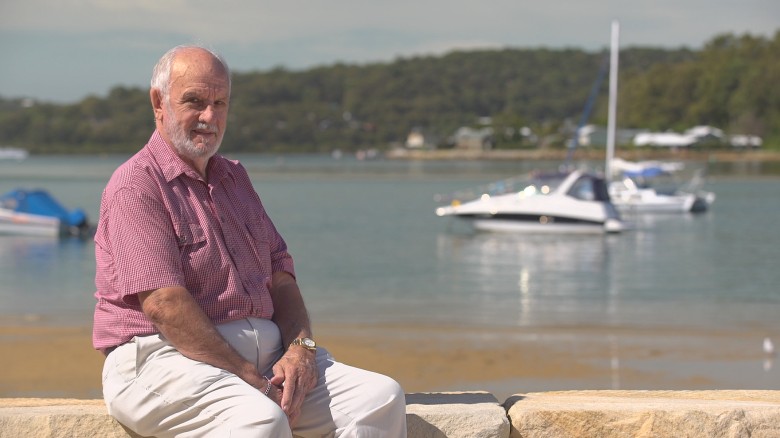
(CNN)Most people, when they retire, get a gold watch. James Harrison deserves so much more than that.
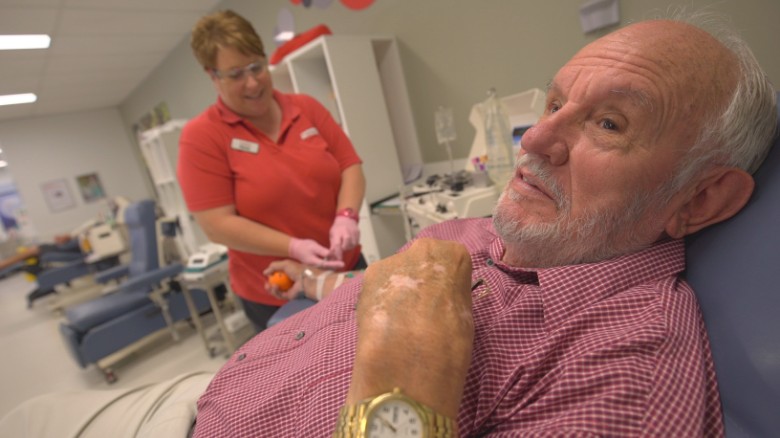
Harrison, known as the "Man With the Golden Arm," has donated blood nearly every week for 60 years. After all those donations, the 81-year-old Australian man "retired" Friday. The occasion marked the end of a monumental chapter.
According to the Australian Red Cross Blood Service, he has helped saved the lives of more than 2.4 million Australian babies.
First, a note about antibodies
Harrison's blood has unique, disease-fighting antibodies that have been used to develop an injection called Anti-D, which helps fight against rhesus disease.
This disease is a condition where a pregnant woman's blood actually starts attacking her unborn baby's blood cells. In the worst cases, it can result in brain damage, or death, for the babies.
Here's why:
The condition develops when a pregnant woman has rhesus-negative blood (RhD negative) and the baby in her womb has rhesus-positive blood (RhD positive), inherited from its father.
If the mother has been sensitized to rhesus-positive blood, usually during a previous pregnancy with an rhesus-positive baby, she may produce antibodies that destroy the baby's "foreign" blood cells. That could be deadly for the baby.
How Harrison made a difference
Harrison's remarkable gift of giving started when he had major chest surgery when he was just 14, the Australian Red Cross Blood Service said.
Blood donations saved his life, so he pledged to become a blood donor.
A few years later, doctors discovered his blood contained the antibody which could be used to create Anti-D injections, so he switched over to making blood plasma donations to help as many people as possible.
Doctors aren't exactly sure why Harrison has this rare blood type, but they think it might be from the transfusions he received when he was 14, after his surgery. He's one of no more than 50 people in Australia known to have the antibodies, the blood service says.
"Every bag of blood is precious, but James' blood is particularly extraordinary. His blood is actually used to make a life-saving medication, given to moms whose blood is at risk of attacking their unborn babies. Every batch of Anti-D that has ever been made in Australia has come from James' blood." Falkenmire said. "And more than 17% of women in Australia are at risk, so James has helped save a lot of lives."
Why his donations were a game changer
Anti-D, produced with Harrison's antibodies, prevents women with rhesus-negative blood from developing RhD antibodies during pregnancy. More than three million does of Anti-D have been issued to Australian mothers with negative blood types since 1967.
Even Harrison's own daughter was given the Anti-D vaccine.
"That resulted in my second grandson being born healthy," Harrison said. "And that makes you feel good yourself that you saved a life there, and you saved many more and that's great.
The discovery of Harrison's antibodies was an absolute game changer, Australian officials said.
"In Australia, up until about 1967, there were literally thousands of babies dying each year, doctors didn't know why, and it was awful. Women were having numerous miscarriages and babies were being born with brain damage," Jemma Falkenmire, of the Australian Red Cross Blood Service, told CNN in 2015. "Australia was one of the first countries to discover a blood donor with this antibody, so it was quite revolutionary at the time."
Why he's a national hero
That would be more than two million lives, according to the blood service, and for that Harrison is considered a national hero in Australia. He's won numerous awards for his generosity, including the Medal of the Order of Australia, one of the country's most prestigious honors.
"It becomes quite humbling when they say, 'oh you've done this or you've done that or you're a hero,'" Harrison said. "It's something I can do. It's one of my talents, probably my only talent, is that I can be a blood donor."
Now that Harrison has given his last blood donation (in Australia you can't donate blood past the age of 81), Falkenmire and others hope people with similar antibodies in their blood will step up and donate.
"All we can do is hope there will be people out there generous enough to do it, and selflessly in the way he's done," she said.
When Javier Artigas began needing kidney dialysis and found himself jobless, he developed an app to make it easier for people to get treatment when travelling. But his breakthrough came completely by chance, after he saved the life of a famous Argentine writer.
Without a job, Javier Artigas needed money to support his family, so he decided to rent out space in his Montevideo home on the home-sharing site, Airbnb.
It went well. One of his guests was the well-known Argentine writer, Hernán Casciari. But two days into his stay, Casciari had a heart attack. He needed to get to hospital quickly.
As chance would have it, Artigas's wife, Alejandra, worked for the Uruguayan senate, and was able to organise a police escort to speed up the journey. Instead of 40 minutes it took just 12. That, and the blood they donated, saved Casciari's life.
Later, once he had recovered and returned to Argentina, the writer left Javier and his wife a five-star review.
"Excellent house for sedentary travellers prone to myocardial infarctions. The area is beautiful and has direct access to the best hospitals. Javier and Alejandra instantly become guardian angels who will save your life without even knowing you. They will rush you to the hospital in their own car while you're dying and stay in the waiting room while doctors give you a bypass. They don't want you to feel lonely, they bring you books to read and they let you stay in their house extra nights without charging you. Highly recommend."
Translation: With the great @Casciari at home, alive and kicking!! Hugs from all the family!
But Artigas was more than a good host and Casciari's newly found guardian angel - he knew from personal experience just how hard it can be to be ill when you're far away from home.
Find out more
Javier Artigas spoke to Outlook on the BBC World Service
In 2007, Artigas was diagnosed with polycystic kidney disease, which caused his kidney function to decline rapidly. By 2014, he required haemodialysis treatment three times a week to do the work his kidneys no longer could. Each dialysis session - during which his blood would pass through an external waste-removing filtration machine before returning to his body - took four hours.
For patients like Artigas, their dialysis sessions need to be set in stone to prevent dangerous toxins from building up in the blood. Regular appointments cannot be missed, so visiting a foreign country where you may not speak the language, understand medical regulations, or be able to find affordable treatment, is a huge challenge.
Artigas's job involved lots of travel to Latin American and African countries where there was a further problem - finding somewhere safe to have dialysis, with uncontaminated water. After he revealed his condition and his need for dialysis to his employers he lost his job.
"I had four children and I didn't know what to do," he says. "Nobody was going to hire me. To be unemployed was a whole unknown world for me. I went into a crisis because I was my family's breadwinner - a deep emotional crisis."
Image captionJavier Artigas having dialysis
It's estimated that chronic kidney disease (CKD) affects one in 10 people around the world, with millions dying every year due to lack of affordable treatment.
Artigas eventually managed to find work in IT, but this also involved some foreign travel. On one occasion he was sent to Córdoba, Argentina, where he had arranged a dialysis session, but when he arrived he was told that there was no record of his appointment. He had no access to the vital treatment he needed because he wasn't a resident of Argentina.
After almost 12 hours of desperate searching, terrified he was going to die from the toxins in his blood, he managed to find a hospital willing to provide him with dialysis.
"On my way back, on that 2,000km trek, I started thinking about this problem," he says.
It was a wake-up call. He decided he wanted to do something to help dialysis users, and in 2015 he developed an app, Connectus, to connect kidney patients with treatment centres when away from home.
"People used to try and find a dialysis centre first, and then plan their holiday," says Artigas. "We do it the other way around. You find the beach where you want to go and we'll find the dialysis centre for you."
Connectus initially launched in August 2015 as a small web platform, costing just $1,700. It focused on connecting patients from Uruguay with a small number of dialysis centres in Argentina and Brazil, the most popular destinations for Uruguayan tourists.
A month later, the Massachusetts Institute of Technology gave Connectus its prestigious Best Innovative Healthcare Solution award. This was a big success, but the breakthrough that enabled Artigas to expand the project to serve people in nearly 150 countries, providing access to more than 14,500 dialysis machines, came about in the most unexpected way - as a result of Hernán Casciari's Airbnb review.
Unbeknown to Artigas, an Airbnb representative in Miami had forwarded the review to Joe Gebbia, the company's multi-billionaire co-founder, who read it and sent Artigas an email.
On 31 December 2015, Artigas and his wife were driving to a beach 100km east of Montevideo to celebrate New Year when Gebbia's email arrived. It said he would like to fly to Uruguay to stay with Artigas's family.
At first, Artigas thought it was a hoax. But he handed the phone to his wife, and she replied to the email. Within an hour Gebbia had booked his flight. He would spend New Year's Eve in the air and arrive on New Year's Day.
As the two men got to know each other, Artigas asked what had driven Gebbia to make his sudden visit to Uruguay.
"He said, 'I've come here because I want to hear first-hand your story. I want to know every detail. I want to know your blood type. Everything you've gone through."
Artigas had not planned on talking to Gebbia about his app, Connectus, but he had already heard about it and asked lots of questions about that too.
Gebbia spent most of his time in Montevideo relaxing and reading in the garden. Then one day he told Artigas to go to his computer and look for an email from San Francisco.
"I thought it was going to be payment for his stay at my house - I wasn't going to charge him. Then all of a sudden I see that there's a contract to go into business with his company. I couldn't believe it," he says.
Since then Connectus Medical has gone from strength to strength. It's not the only app or website of its kind, but it has now been used by nearly 250,000 patients.
Artigas's precarious finances have stabilised and his health has also improved.
Kidney disease runs in the Artigas family. Javier's 22-year-old daughter has it, and his father died of it at the age of 48, only a few years older than Artigas is now.
On 9 August 2017, Artigas had a kidney transplant that changed his life. Two days later, on the anniversary of his father's death, while recovering in the intensive care unit, his doctor played him El Chiquilín de Bachín on the bandoneon, to help him relax. Little did the doctor know, El Chiquilín de Bachín - The Little Boy from the Tavern - was what his father used to call him.
It was a special moment. As he embarked on a new life with a functioning kidney he felt that his father was there, urging him to use the opportunity to the full.
He now no longer needs dialysis, but he continues to work to make life easier for those who do.
 By Associated Press Reporter,PA Ready News World